Ingredients
Method
Infuse the Earl Grey
- Heat the milk just until hot but not boiling, remove from the heat, add the tea bags, cover, and steep for 15 minutes. Press the tea bags well to extract flavor, then discard them, and cool the infused milk until just lukewarm or room temperature before mixing it into the batter. You should still have close to 180 ml — top up with a little extra milk if it's slightly short.
Prep the Pan and Oven
- Heat the oven to 175°C conventional / 160°C fan. Grease a 9x5-inch loaf pan and line it with parchment, leaving overhang on the long sides for easy lifting.
Combine the Dry Ingredients
- Whisk together the flour, baking powder, salt, and finely ground Earl Grey tea leaves in a medium bowl until evenly combined, breaking up any tea clumps well so the flecks distribute evenly through the loaf.
Cream the Butter and Sugar
- Beat the softened butter and sugar together in a large bowl for 3 to 4 minutes until light, creamy, and slightly fluffy. Proper creaming at this stage is what gives the loaf its fine, tender crumb once baked.
Add the Eggs and Flavorings
- Add the eggs one at a time, beating well after each addition and scraping down the bowl as needed. Beat in the orange zest and vanilla — if the mixture looks slightly curdled at this stage, that's normal and nothing to worry about.
Finish the Batter
- Mix the sour cream and orange juice into the cooled Earl Grey milk. Add the dry ingredients to the butter mixture in 3 additions, alternating with the Earl Grey milk mixture in 2 additions, beginning and ending with the dry ingredients, mixing on low speed or folding gently just until combined after each addition. Don't overmix once the flour goes in — the finished batter should be thick, smooth, and evenly flecked with tea.
Bake the Loaf
- Scrape the batter into the prepared pan and level the top, then bake for 55 to 65 minutes, until the loaf is well risen, deeply golden on top, and a skewer inserted in the center comes out clean or with a few moist crumbs. The internal temperature should read about 95–98°C in the center. Tent loosely with foil during the last 15 to 20 minutes if the top is browning too quickly before the center bakes through.
Cool
- Let the loaf cool in the pan for 15 minutes, then lift it out using the parchment and transfer it to a wire rack. Cool completely before glazing — a loaf that's even slightly warm will melt the glaze and let it soak in too much rather than sitting cleanly on top.
Make the Orange Glaze
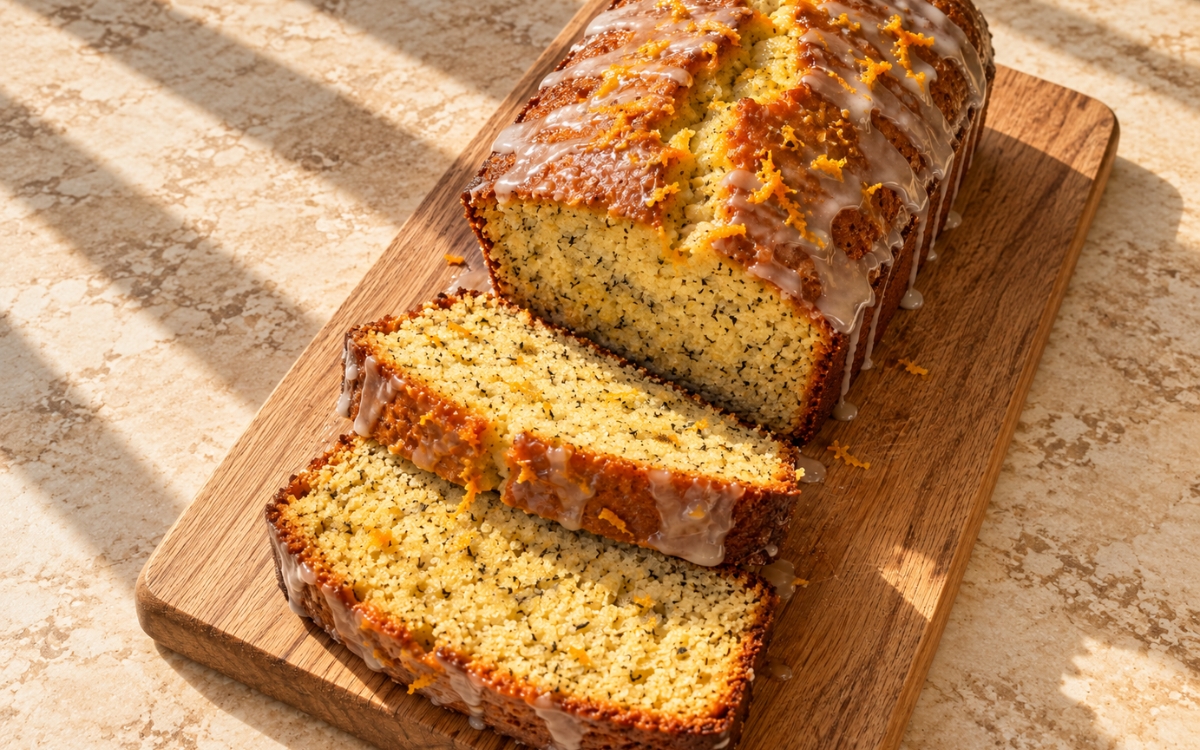
- Whisk together the powdered sugar, orange juice, orange zest, and salt until smooth, adjusting with a few extra drops of orange juice if needed. The glaze should end up thick but pourable, so it drizzles and sets rather than disappearing into the loaf.
Glaze and Finish
- Drizzle the glaze over the cooled loaf and scatter a little extra orange zest over the top while the glaze is still wet. Let the glaze set before slicing into 10 pieces.
Notes
Using the Earl Grey tea in two different forms is a deliberate choice rather than redundancy. The milk infusion carries the tea's flavor subtly through the whole crumb, while the finely ground tea leaves folded into the dry ingredients add visible flecks and a more concentrated tea taste in each bite.
Grinding the tea leaves finely before adding them matters more than it might seem. Large pieces left whole can taste harsh and bitter once baked, and they create an unpleasant, almost gritty texture that fine grounds avoid entirely.
Cooling the infused milk before it meets the creamed butter mixture protects the batter's final texture. Warm milk added at that stage can partially melt the butter that was just carefully creamed, undoing the airy structure that step was meant to build.
Waiting for the loaf to cool completely before glazing deserves the same patience as the baking itself. A loaf with any remaining warmth melts the glaze on contact, letting it soak into the crumb rather than setting as a clean, thin layer on top.