Ingredients
Method
Cook the Rice
- Rinse the 300g of jasmine rice in several changes of cold water until the water runs mostly clear, then drain well. Cook in a rice cooker, or in a covered saucepan with water at your usual jasmine ratio, until the grains are tender and fluffy. Keep the lid on and rest the rice for 10 minutes before fluffing with a fork, and on the stovetop do not lift the lid during steaming or resting. Slightly dry, separate grains suit a bowl better than wet, sticky rice. That covered rest is what lets residual steam redistribute through the grains, giving the glossy chicken a genuinely fluffy base to sit on.
Cook the Broccoli
- Cut the broccoli into even florets, then steam or blanch in lightly salted water for 3–4 minutes, just until tender-crisp and bright green. Drain thoroughly, shaking off excess water and spreading the florets on a tray so residual heat does not dull their colour; if blanched, a brief cold rinse also helps. The broccoli should stay vivid and hold its shape rather than turning soft. That careful draining is what stops the florets from releasing water into the bowl and thinning the glaze beside them.
Marinate the Chicken
- Cut the 800g of chicken thighs into evenly sized bite-size chunks so they fry at the same rate. Mix the chicken in a large bowl with 1 tbsp light soy sauce, 1 tbsp Shaoxing wine, the egg, ¼ tsp white pepper, and ½ tsp salt, then let it sit for 15 minutes. The marinade should lightly coat the pieces, not pool in the bottom of the bowl. That short rest lets the salt and soy begin seasoning the thigh meat through, while the egg gives the dry coating something real to grip.
Prepare the Orange Sauce
- In a saucepan, combine the orange juice, 2 tsp zest, 2 tbsp light soy sauce, rice vinegar, 1 tbsp Shaoxing wine, 70g sugar, honey, garlic, ginger, chili flakes if using, and the 80ml water or stock, then stir until the sugar dissolves. Mix the 2 tsp cornstarch and 2 tbsp cold water in a small bowl and set aside. Taste the base before thickening; it should be bright, sweet, lightly tangy, and savoury. That separate slurry stays loose and lump-free, rather than settling or clumping before the sauce is ready to be thickened.
Coat the Chicken
- Whisk the cornstarch, flour, and baking powder together in a large bowl. Toss the marinated chicken in the dry mix until every piece is well coated, then add 1 tbsp neutral oil and toss again. If the mix looks too dry to cling, add cold water a tablespoon at a time, up to 2–4 tbsp, until it forms craggy clumps in places. The coating should look shaggy and irregular, never smooth like tempura batter, and should not sit for long before frying or it turns gummy. That rough cornstarch-and-flour shell is what fries into the crisp, structured crust the glaze needs to sit on.
Fry the Chicken
- Heat the oil to 175–180°C, with enough oil for the pieces to fry freely. Fry the chicken in small batches for 4–5 minutes per batch, depending on piece size, until deep golden, crisp, and fully cooked through to about 74°C in the centre. Lift each batch onto a rack or paper-lined tray and let the oil recover before adding the next. For extra crispness, rest the chicken 2–3 minutes, then refry for 45–60 seconds. That recovery time between batches protects the oil temperature, which is what keeps the crust crisp instead of greasy and soft.
Finish the Sauce
- Bring the orange sauce base to a simmer. Stir the slurry again, then pour it in while whisking, and simmer for 1–2 minutes until thick, glossy, and able to coat the back of a spoon. If the sauce is too thick, loosen it with a small splash of water or orange juice; if too sweet, add a touch more vinegar; if too sharp, add a little more sugar or honey. That coating-the-spoon thickness is what lets the sauce cling to the fried chicken instead of running thinly into the rice.
Glaze the Chicken
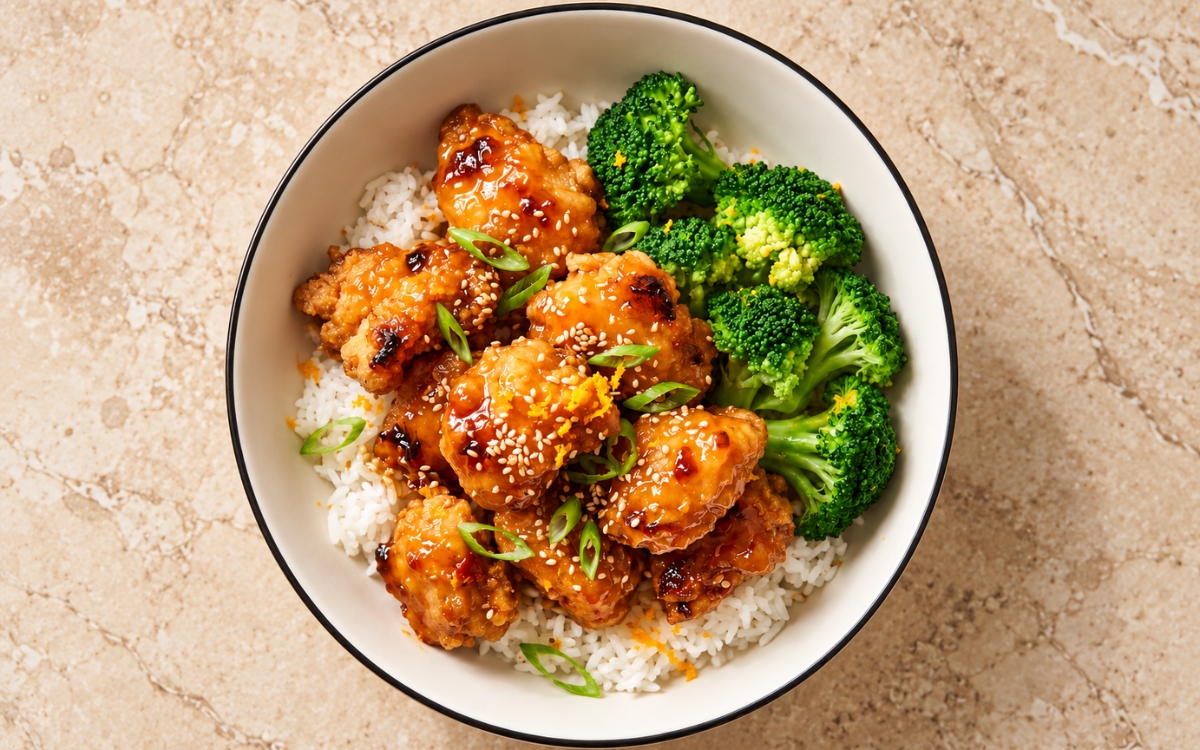
- Tip the fried chicken into a large bowl or wok and pour over enough hot orange sauce to coat generously, tossing quickly until every piece is glazed. Use only as much sauce as the chicken needs, keeping any extra aside, because excess sauce soaks the crust. The finished chicken should look sticky, glossy, and amber-orange with a few caramelised spots. That last-second toss is what preserves the crunch under the glaze, since the crust begins softening the moment sauce touches it.
Assemble the Bowls
- Divide the rice among 4 bowls, then add the orange chicken and a portion of broccoli to each, placing the broccoli to one side rather than mixing everything together. Finish with the sliced scallions, toasted sesame seeds, and a light sprinkle of fresh orange zest. Keep the garnish light so the focus stays on the glossy chicken, and serve immediately. That immediate service matters because the chicken is genuinely at its best while the crust is still crisp under the glaze.
Notes
The shaggy, dry cornstarch-and-flour coating deserves genuine recognition as the technique most directly responsible for whether the chicken stays crisp once glazed. Irregular craggy clumps create far more surface area and tiny air pockets than a smooth batter, and that rough texture is what holds its crunch against the sauce — a smooth coating fries into a flat, dense shell that softens almost on contact.
Frying at a steady 175–180°C in small batches deserves the same attention this technique receives throughout this collection’s other deep-fried dishes. Crowding the pan drops the oil temperature sharply, so the coating absorbs oil instead of sealing quickly — the result is a pale, greasy, genuinely soft crust that no amount of glaze can rescue.
Saucing the chicken only at the very last moment, with just enough glaze to coat, deserves genuine respect as the detail most directly responsible for the bowl’s crunch. A fried coating begins absorbing moisture the instant it meets liquid, so every extra minute between tossing and serving, and every spoonful of excess sauce, trades crispness for sogginess.
Choosing boneless skinless thighs rather than breast deserves attention as a genuine, checkable decision rather than a loose preference. Thigh meat carries genuinely more intramuscular fat and connective tissue, which keeps it juicy through 4–5 minutes in hot oil, while breast cut to the same size tends to turn dry and stringy by the time the crust has coloured.