Ingredients
Method
Brew the Bitter Tea Base
- Bring 240ml of water to a full rolling boil. Combine the black tea bags (or loose tea in an infuser), chamomile tea bag (or loose chamomile in the same infuser), and the strip of orange zest in a heatproof jug. Pour the boiling water directly over the tea and zest and steep for exactly 5 minutes — setting a timer. The 5-minute steep at boiling temperature is specifically appropriate for black tea in this application, unlike the white tea in the peach white tea spritzer where a lower temperature was required. Black tea's catechins and theaflavins extract at boiling temperature to produce the specific rich, tannic, body-giving character that is required here — the tannins providing both the bitterness and the mouthfeel that gives this mocktail its adult, specifically cocktail-adjacent character. Beyond 5 minutes at boiling, black tea becomes increasingly harsh and astringent rather than pleasantly bitter. The chamomile contributes a specifically floral, slightly apple-like aromatic softness alongside the black tea's robustness; the orange zest infuses its aromatic oils into the hot liquid during the steep. After 5 minutes, remove the tea bags and discard; remove the orange zest. Allow the bitter tea base to cool completely to room temperature — approximately 20–25 minutes at room temperature or 10 minutes set in a bowl of ice water.
Build the Bitter Orange Cordial
- Combine the 240ml of orange juice, 80ml of grapefruit juice, 60ml of lemon juice, orange zest strips, grapefruit zest strips, 80g of brown sugar, 1 tbsp of honey, optional hibiscus, crushed coriander seeds, and the small pinch of salt in a small saucepan. The wide-strip citrus zest peeled with a vegetable peeler is the specific technique that maximises the aromatic oil surface area available for extraction during the simmer while allowing easy, complete removal during straining — wide strips are easier to strain out than fine zest and provide comparable aromatic extraction over the simmering period. Place over medium heat and bring to a gentle simmer, stirring until the brown sugar has completely dissolved. Simmer gently for 5–7 minutes — not an aggressive boil, which would drive off the citrus's most pleasant volatile compounds and develop a specifically cooked, slightly caramelised flavour that moves away from the fresh, bitter-orange, Negroni-adjacent character being built. During the simmer the combined citrus juices concentrate slightly, the brown sugar's molasses adds caramel depth, the hibiscus (if using) contributes its deep red-amber colour and additional tartaric acidity, and the coriander seeds' subtle citrusy, slightly spiced character extracts into the surrounding liquid.
Off-Heat Herb Infusion (Optional but Recommended)
- Remove the saucepan from the heat. If using the rosemary or thyme, add the sprig now — immediately after removing from heat. Allow to infuse for 6–8 minutes exactly. This is the most time-sensitive step in the cordial preparation: rosemary and thyme's primary aromatic compounds are highly volatile and extract very rapidly into a warm liquid. At 6–8 minutes in the declining-temperature post-simmer, they contribute a specifically dry, slightly resinous, herbal edge that specifically complements the bitter orange's complexity — the same kind of herbal back-note that appears in the original Campari's botanical formula. Beyond 8 minutes the herb character becomes progressively more dominant and specifically medicinal rather than complementary. Remove and discard the herb sprig at the 6–8 minute mark without exception.
Strain the Cordial and Cool
- Strain the cordial through a fine-mesh sieve into a clean jug, pressing lightly on the zest strips and other solids to extract as much of the aromatic liquid as possible without pressing so hard that the solids contribute astringency. The finished strained cordial should be a deep, warm amber — red-amber if hibiscus was included, golden-amber if not — and specifically fragrant. Allow to cool completely at room temperature.
Combine, Taste, and Adjust
- Once both the bitter tea base and the bitter orange cordial are cold, combine them in a single jug and stir. The combined base should taste intense, bitter-sweet, citrusy, slightly tannic from the black tea, floral from the chamomile and honey, and specifically concentrated — more assertive than the intended final drink because it will be diluted over the large ice cube and the sparkling water. Taste and assess: if the bitterness is insufficient, a small additional quantity of grapefruit juice adds bitterness alongside citrus brightness; if the sweetness is too dominant against the bitterness, additional lemon juice corrects the balance; if the depth and body is insufficient, a small additional steep of black tea added to the mixture will increase it. The combined base at the correct concentration should remind the taster of a complex, bitter-orange cordial rather than a pleasant citrus drink.
Build the Glass and Serve
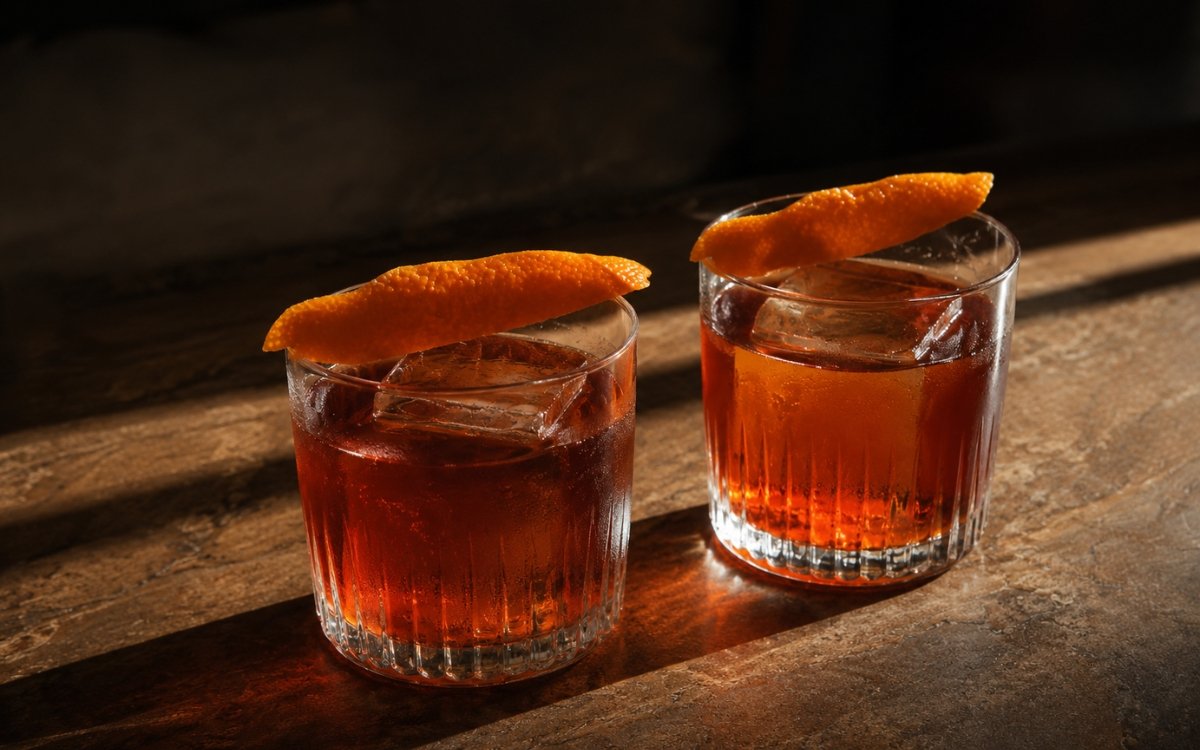
- Place one large, clear ice cube in each old fashioned glass. The large single ice cube is specifically the presentation element that most directly references the Negroni format — large ice in an old fashioned or rocks glass is the classic aperitif format, providing slow dilution from a single impressive piece rather than the rapid dilution of multiple smaller cubes. Pour 90–100ml of the combined bitter orange base over the ice. Top with 75–100ml of chilled sparkling water or dry non-alcoholic sparkling wine. For the more adult, more specifically Negroni-adjacent version, replace 20ml of the sparkling water with tonic water — the quinine's dry bitterness adding the additional bitter layer that moves the drink most specifically toward the original's bitter complexity. Add 2–4 dashes of non-alcoholic aromatic bitters if using. Stir gently once or twice — the combination needs only minimal mixing over the large ice cube. Take a wide orange peel strip, hold it over the glass with the coloured side facing down toward the drink, and pinch it firmly between thumb and forefinger while twisting — the mechanical compression of the peel expresses the aromatic oils from the cells, which spray onto the surface of the drink as a fine, fragrant mist. The expressed oils settle on the liquid's surface, visible as the faintest sheen, providing the specifically citrus-aromatic top note at every subsequent sip. Lay the expressed peel across the rim or drop it into the drink. Serve immediately.
Notes
The Negroni Sbagliato was created at Bar Basso in Milan in the 1970s — allegedly when bartender Mirko Stocchetto reached for prosecco instead of gin while making a Negroni. The resulting combination of Campari, sweet vermouth, and prosecco became the bar's signature drink and eventually a widely recognised cocktail category. The Sbagliato's specific appeal — lighter than the original Negroni from the sparkling wine, still bitter and herbal from the Campari, and refreshing rather than spirit-forward — makes it specifically suited to non-alcoholic interpretation because the format's appeal was never primarily about the alcohol.
The combination of hibiscus and orange juice's anthocyanin-and-carotenoid pigments produces the specifically deep amber-red of a well-made Negroni-adjacent preparation. Without hibiscus the base is golden-amber — beautiful and appropriate, but different from the visual reference of the original red Negroni. The hibiscus quantity specified is specifically calibrated to add colour contribution without making the hibiscus's tart, floral flavour dominant — the drink should taste of bitter orange, not of hibiscus.