Ingredients
Method
Heat the Stock
- Put the stock in a saucepan and keep it hot at a very gentle simmer throughout cooking. Never add cold stock to risotto. Cold liquid drops the pan temperature and interferes with even cooking and starch release. That consistently hot stock protects the rice from a real, sudden temperature drop every time new liquid is added — a drop that would interrupt the gradual, controlled starch release this whole dish depends on.
Brown the Mushrooms
- Heat a large skillet over medium-high heat. Add the olive oil and butter. Once the butter foams, add the mushrooms in a broad layer. Cook without crowding, stirring only occasionally, until the mushrooms lose their moisture and brown well, about 8–10 minutes. Add the garlic and thyme during the last 1–2 minutes. Season lightly with salt and black pepper. Remove about one-third of the prettiest mushrooms and reserve them for finishing on top. Keep the rest aside for folding into the risotto later. Brown the mushrooms properly. If the pan is overcrowded they will steam, turn watery, and dilute the risotto's flavour. That broad, uncrowded layer gives every mushroom piece genuine, direct contact with the hot pan, letting real moisture evaporate and browning develop rather than the mushrooms simply steaming in their own released liquid.
Start the Risotto Base
- In a wide heavy pan or sauté pan, melt the 30g butter with the olive oil over medium heat. Add the shallot and cook for 2–3 minutes until soft and translucent, but not browned. Add the rice and stir for 1–2 minutes so every grain is coated and lightly toasted. The edges of the grains should look slightly translucent while the centers remain opaque. This brief toasting step helps the rice hold its shape while still releasing enough starch for creaminess. That specific, checkable visual cue — translucent edges, opaque centers — confirms the toasting has coated every grain in fat without pushing it far enough to compromise the rice's own eventual bite.
Deglaze with Wine
- Pour in the white wine and stir constantly until it is almost fully absorbed. The pan should smell fragrant rather than alcoholic before you move on. That specific aromatic shift, from sharp alcohol to genuinely fragrant, is a real, reliable cue that the wine's harsher notes have cooked off, leaving only its intended depth behind.
Cook the Risotto
- Add the hot stock one ladle at a time, stirring frequently. Let each addition absorb mostly before adding the next. Continue like this for about 16–20 minutes, adjusting the heat so the risotto cooks at a steady gentle simmer, not a hard boil. After about 10 minutes of cooking, fold in the larger portion of the browned mushrooms. Keep cooking and adding stock until the rice is nearly done: tender on the outside, with a slight bite in the center. Do not cook risotto dry between additions and do not flood it with too much liquid at once. You want gradual starch release and control over texture. That gradual, one-ladle-at-a-time approach is exactly what gives the rice's own starch genuine time to release incrementally, building real creaminess rather than simply boiling the grains in a pool of liquid.
Finish the Risotto
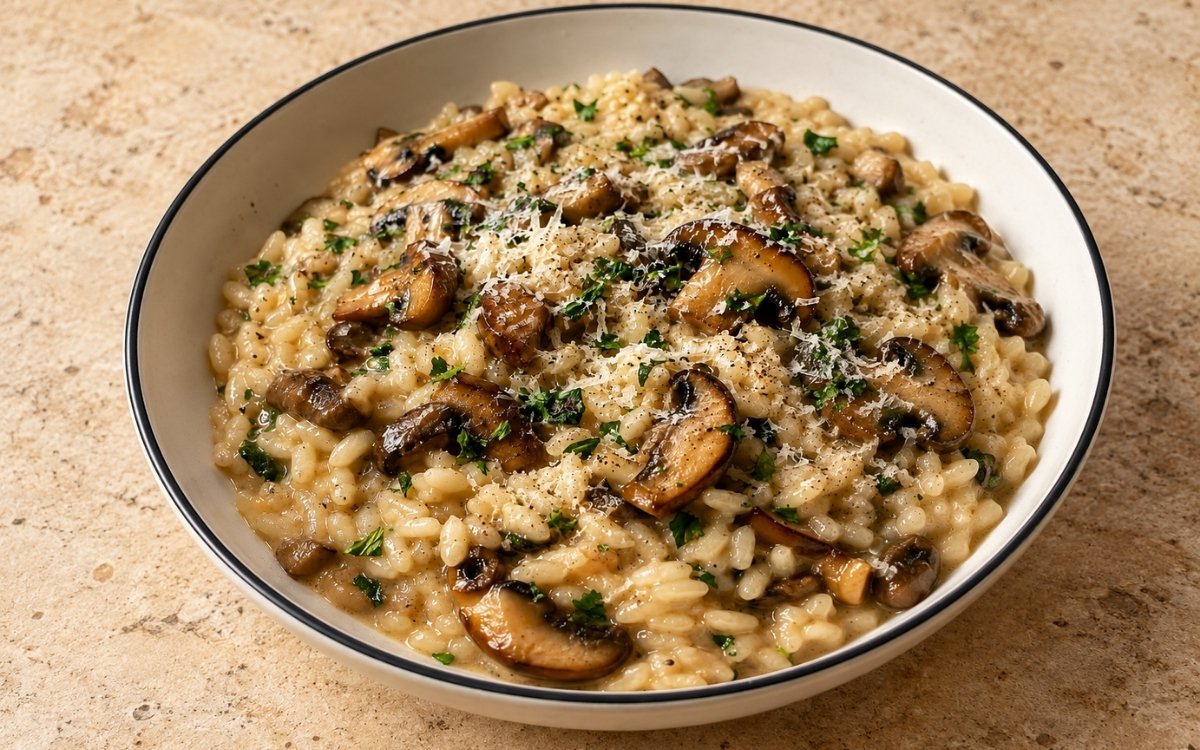
- When the rice is just shy of fully cooked, remove the pan from the heat. Add the grated Parmesan, the cold finishing butter, the parsley, and a few grinds of black pepper. Stir vigorously for 30–60 seconds to emulsify. Add a small splash of hot stock if needed to loosen it. The final texture should be loose, creamy, and spoonable — it should gently spread when spooned into a bowl, not sit in a stiff mound. Taste and adjust salt only now, if needed. The correct finish is all'onda — literally "like a wave." If the risotto looks tight in the pan, it will be too stiff on the plate. Loosen it slightly before serving. Finishing off the heat, with genuinely cold butter, protects the emulsion from breaking under direct heat — that vigorous stirring is what actually binds the fat, starch, and liquid into the risotto's own signature silky consistency.
Serve
- Spoon immediately into warm shallow bowls. Top with the reserved browned mushrooms, a little more Parmesan, chopped parsley, and black pepper. Serve at once. This dish's whole texture depends on that loose, wave-like consistency staying intact — risotto continues thickening as it sits, losing exactly the fluidity this final finishing stage worked to build.
Notes
Browning the mushrooms separately, in their own uncrowded pan, deserves genuine recognition as the technique most directly responsible for whether this risotto tastes deeply mushroomy or diluted. The recipe's own explicit warning that a crowded pan causes mushrooms to steam and turn watery reflects a real, common failure point — that separate browning stage is specifically what builds real, meaty flavour before the mushrooms ever join the rice.
Adding the hot stock gradually, one ladle at a time, deserves the same attention this technique receives throughout classical risotto-making generally. That controlled, incremental approach is what lets the rice's own starch release gradually into the surrounding liquid, building genuine creaminess — flooding the pan with too much liquid at once would instead simply boil the rice rather than coaxing that starch out in a controlled way.
Finishing entirely off the heat, with genuinely cold butter stirred in vigorously, deserves genuine respect as the technique responsible for risotto's whole defining silky texture. That combination emulsifies the fat, starch, and remaining liquid into one cohesive, glossy mass — attempting this same step over direct heat would risk breaking that emulsion rather than binding it.
The recipe's own specific naming of the all'onda finish — "like a wave" — deserves attention as a real, checkable target rather than a loose description. Risotto that looks properly loose and spreadable in the pan is exactly what continues thickening as it sits, which is directly why the dish depends on being served immediately rather than held.