Ingredients
Method
Slice and Marinate the Beef
- Slice the 600g beef thinly against the grain into bite-size strips or small rectangles, about 3–5mm thick. Place the slices in a bowl and add the 1 tbsp light soy sauce, 1 tbsp Shaoxing wine or dry sherry, 1 tsp cornstarch, ¼ tsp baking soda if using and ¼ tsp white pepper. Mix well, then add the 1 tbsp neutral oil and mix again until every slice looks lightly glossy and no dry streaks of cornstarch remain. Leave it to stand for 15 minutes while you prepare the sauce and noodles. If the steak feels too soft to slice cleanly, keep the knife strokes long and steady rather than sawing. That combination of cross-grain slicing and a cornstarch coating is what keeps the beef tender and gives its surface something for the sauce to grip.
Mix the Sauce
- In a bowl, whisk together the 120ml light soy sauce, 2 tbsp dark soy sauce, 80g brown sugar, 2 tbsp oyster sauce, 120ml beef stock or water, 1 tsp rice vinegar, 1 tsp sesame oil and 2 tsp cornstarch. Keep whisking until the sugar has fully dissolved and the cornstarch is completely smooth, with no grains or lumps settling at the bottom. Taste it: it should be dark, savoury and sweet, and slightly too strong on its own. Keep the dark soy to the measured 2 tbsp rather than adding more, since it is there for colour and depth. Set the bowl beside the stove. That fully dissolved, deliberately bold mixture is what lets one sauce reduce evenly and season 600g of noodles in a single toss.
Cook the Noodles
- While the beef marinates, bring a large pot of water to a rolling boil. If using fresh lo mein noodles, loosen the strands with your fingers first, then cook for 2–3 minutes, until just tender with a little bite left. If using dried wheat noodles, cook them to just under al dente according to the packet. Drain very well, shaking the colander until no water drips, and rinse briefly only if needed to stop the cooking. If the strands begin to stick, toss them with the 1 tsp neutral oil. The noodles should look loose, separate and only slightly underdone. That deliberate undercooking matters because the noodles cook again in the wok, and any extra water left on them would dilute the glossy sauce.
Prep the Aromatics
- Thinly slice the 6 garlic cloves and finely julienne or mince enough fresh ginger to give 2 tbsp. Cut the 6 scallions into 4–5cm pieces, keeping the firm white pieces in one pile and the green pieces in another. Thinly slice the 2 serving scallions on the diagonal and set them aside separately. Slice the small red chilli thinly and hold back a few slices for the garnish. Arrange the beef, sauce, noodles, oil, aromatics and the 2 tbsp sesame seeds next to the stove in the order they will be used. That full setup is essential because the stir-fry moves in seconds once the wok is hot, leaving genuinely no time to chop.
Sear the Beef
- Heat a wok or large heavy skillet over high heat until very hot and just starting to smoke. Add 1 tbsp of the neutral oil and swirl to coat. Lay half the beef in a single layer and leave it undisturbed for 45–90 seconds, until the underside is dark brown at the edges, then turn and sear the second side for 45–90 seconds, until nearly cooked through but still slightly pink at the centre. Transfer to a plate. Let the wok reheat fully, add another 1 tbsp oil and sear the remaining beef the same way. If the slices release liquid and turn grey, the wok was crowded or not hot enough. That brief, fierce contact is what caramelises the edges before the thin centres have time to dry out.
Build the Sauce in the Wok
- Lower the heat slightly to medium-high and add the remaining 1 tbsp neutral oil. Add the garlic and ginger and stir-fry for 15–20 seconds, just until fragrant and before the garlic takes on any brown colour. Add the scallion whites and stir-fry for 20–30 seconds, until they turn glossy and just start to soften. Whisk the sauce again, since the cornstarch settles, then pour it into the wok and bring it to a full boil. Let it bubble for 30–60 seconds, until it turns glossy and lightly thickened and coats the back of a spoon. If the garlic darkens too fast, pour the sauce in at once to cool the wok. That boil is what activates the cornstarch so the sauce clings instead of soaking in.
Toss the Noodles and Beef
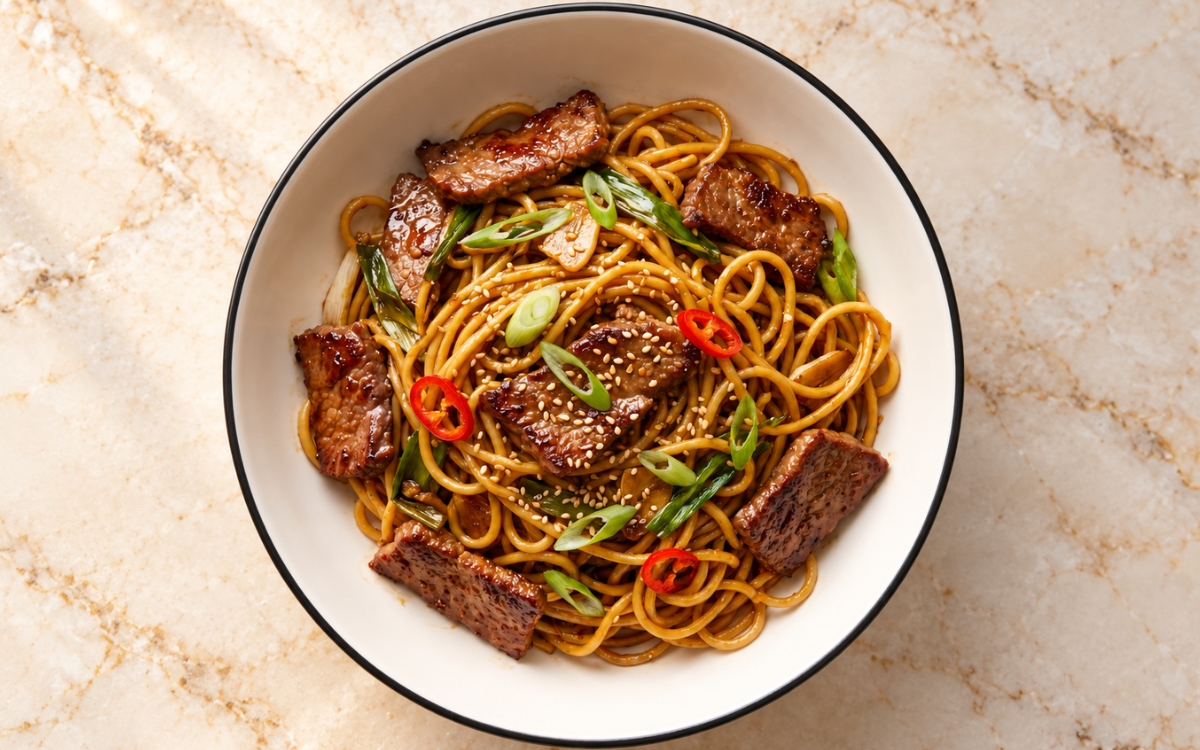
- Return the seared beef and any juices from the plate to the wok, then add the drained noodles. Using tongs or a wok spatula, lift and toss for 1–2 minutes, until every strand is evenly coated in the dark sauce and the beef is heated through. Add the scallion greens, most of the sliced chilli and 1 tbsp of the toasted sesame seeds, and toss for about 30 seconds more, just until the greens wilt slightly and the sauce clings. The noodles should look shiny and lightly sticky, with no liquid pooling at the bottom of the wok. If the coating feels too thick, loosen it with 1–2 tbsp water; if it looks too thin, cook for 30–60 seconds longer. That final short toss is what glazes the noodles without overcooking the beef.
Finish and Serve
- Divide the noodles and beef between 4 bowls, about 150g of noodles and a quarter of the beef in each, with an even share of the scallions and chilli. Scatter the thinly sliced serving scallions over the top, then add the remaining 1 tbsp toasted sesame seeds and the reserved chilli slices. Add a few extra chilli slices to any bowl that should be hotter. Serve immediately, while the sauce still clings and looks glossy. If the noodles start to look dull and dry, they have sat too long, so plate them straight from the wok next time. That last-minute garnish is what keeps the scallions fresh and bright against the warm, glossy noodles and the tender beef.
Notes
Searing the beef in 2 batches deserves genuine recognition as the technique most directly responsible for whether the slices taste caramelised or boiled. The recipe's own warning to "Crowd the pan and the beef will steam instead of caramelize" explains why — 600g of marinated beef dropped into the wok at once cools the metal so sharply that moisture pools around the slices and they turn grey before any browning starts.
Boiling the sauce before the noodles go in deserves the same attention this technique receives throughout this collection's other cornstarch-glazed stir-fries, because the starch needs real heat to work. The recipe's own instruction to "Let the sauce activate and thicken before adding noodles" reflects that chemistry — cornstarch only swells and turns glossy once it boils, so an unheated sauce runs straight into the noodles and leaves the bowl wet.
Measuring the dark soy sauce deserves genuine respect as the detail most directly responsible for the sauce's deep colour without harshness. The recipe's own note that "Dark soy is for color and depth; do not replace all soy with dark soy or it will be too heavy and salty" explains the balance — light soy carries the seasoning, while 2 tbsp of dark soy simply adds a rich mahogany shade and a hint of molasses.
The final noodle texture deserves attention as a genuine, checkable readiness cue rather than a loose approximation. The recipe's own target that "The final texture should be shiny and lightly sticky, not soupy" gives a clear visual test — liquid at the bottom of the wok means another 30–60 seconds over the heat, while a stiff, tacky coating needs only 1–2 tbsp water to loosen.