Ingredients
Method
Brew the White Tea
- Heat 1150ml water to 78 to 82°C. Add the white tea and the pinch of salt, then steep for 3 minutes. Strain immediately and let cool. Do not use boiling water and do not oversteep, or the tea will lose its delicate floral character and turn flat or slightly bitter. White tea undergoes the least processing of any major tea style, leaving its already-subtle compounds especially vulnerable to both overheating and oversteeping at once — the specific temperature and brief steep window protect that fragile character from both directions simultaneously.
Make the Mint-Lime Infusion
- In a small saucepan combine the 180g sugar and 350ml water. Warm over low heat just until the sugar fully dissolves. Do not boil aggressively. Remove from the heat and let cool until just warm or room temperature. Add the lime zest and the lightly bruised mint. Cover and refrigerate for 45 to 60 minutes to infuse. This gives you a fresher result than simmering the mint and lime for a long time. Waiting until the syrup has cooled to only warm or room temperature before the mint and zest ever go in is what protects both from direct exposure to genuine cooking heat — that patience is exactly what keeps mint's aroma bright rather than dulled and lime zest's oils fresh rather than altered.
Strain the Infusion
- Strain the mint-lime mixture through a fine sieve, pressing lightly on the mint and zest, but not hard enough to force bitterness into the liquid. Discard the solids. Pressing only lightly, rather than forcing every last bit of liquid through, protects the finished syrup from picking up any bitter compounds that a harder press against the mint leaves or lime zest could release.
Combine and Balance
- In a large pitcher combine the cooled white tea, the strained mint-lime infusion, and the 250ml fresh lime juice. Add 150 to 250ml cold water as needed to balance the flavor. The final yield should be about 2 liters. Taste: it should be light, clean, gently sweet, clearly lime-forward, and softly minty, with the white tea still noticeable underneath. This tasting checkpoint matters directly given how much both lime intensity and mint freshness can vary — building in that adjustment stage accounts for that natural variability rather than assuming a fixed recipe always lands at the same balance.
Chill
- Refrigerate until fully cold, at least 1 hour. That resting period lets white tea's delicate floral base, lime's brightness, and mint's soft lift fully integrate together, producing a more unified flavour than serving the drink immediately after mixing.
Serve
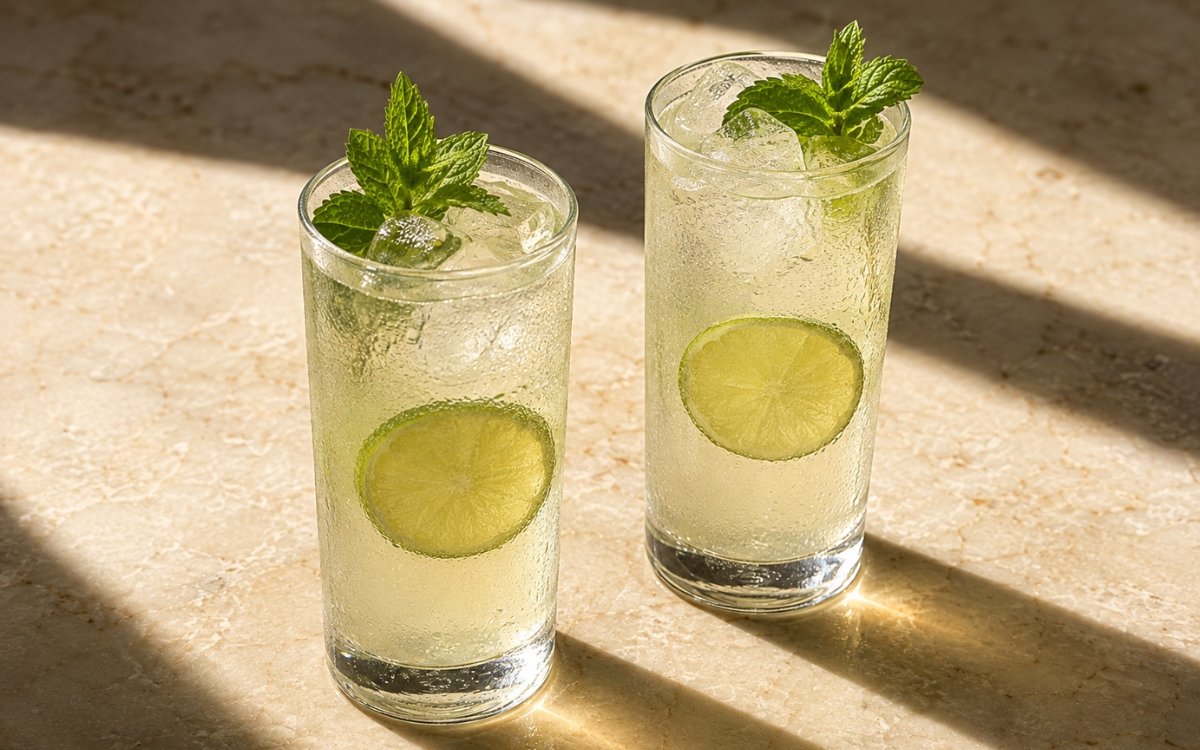
- Fill tall glasses with ice. Add 1 thin lime wheel inside each glass and finish with 1 fresh mint sprig. Pour in the chilled cooler and serve immediately. Using a fresh, uninfused mint sprig specifically for garnish, rather than reusing the spent leaves from the infusion, keeps the visual presentation looking genuinely vivid and fresh.
Notes
Brewing the white tea within that specific 78–82°C window deserves genuine respect as the single detail most responsible for this cooler's delicate character. White tea's minimal processing leaves its already-subtle compounds especially exposed to damage from overheating — water that's too hot flattens the tea's naturally light, floral quality in a way that's difficult to correct once it's happened, which is why this recipe treats that temperature with the same careful attention this collection applies to every white tea recipe.
Cooling the sugar syrup fully before the mint and lime zest are ever added deserves recognition as the technique responsible for this cooler's genuinely fresh, uncooked flavour. Both mint and lime zest carry volatile aromatic compounds that heat readily diminishes — waiting until the syrup has cooled to only warm or room temperature protects those compounds from a fate the earlier active heat stage would otherwise cause.
The light pressing given during straining deserves attention as a real, deliberate technique choice rather than a step to rush through. Both mint leaves and lime zest can release bitter compounds under firmer pressure, and the gentle handling specified here is what keeps the finished infusion clean and bright rather than picking up any of that unwanted bitterness.
The strict avoidance of white pith when zesting the limes deserves the same careful attention this principle receives across every citrus-forward drink in this collection. Pith carries a real, distinct bitterness entirely separate from lime's natural tartness — even a small amount worked into the zest can introduce a flavour that works directly against this cooler's whole light, clean, elegant identity.