Ingredients
Method
Rinse and Dry the Rice
- Place the long-grain rice in a fine-mesh strainer and rinse under cold running water for 2 minutes, agitating the grains with your fingers until the water runs clear rather than cloudy. The rinsing removes the loose surface starch that would otherwise cause grains to clump and stick together during cooking. Drain the strainer thoroughly, then spread the rinsed rice in a single, even layer on a clean, dry kitchen towel. Allow to air-dry for 5 minutes, patting gently with the towel surface to absorb any remaining surface moisture. This drying step is specific to Mexican-style rice and is not required in other rice preparations — it is necessary here because the next step involves dry-toasting the rice in hot oil, and wet rice entering hot oil behaves very differently from dry rice. Wet rice immediately steams as the surface water flashes to steam on contact with the hot oil, lowering the pan temperature, splattering the oil, and delaying the onset of the browning that the toasting step exists to produce. Dry rice makes immediate, even contact with the hot oil surface and begins browning uniformly from the first moment. Five minutes of air-drying is sufficient — if the grains are still visibly beaded with water after 5 minutes, extend by a few additional minutes before proceeding.
Toast the Rice Until Deeply Golden
- Heat a large, wide skillet — 28–30cm diameter — with a tight-fitting lid over medium-high heat. Add the vegetable oil and allow it to heat until it shimmers visibly across the surface, approximately 60 seconds. Add the dried rice to the hot oil and immediately begin stirring with a wooden spoon or heatproof spatula. Toast the rice, stirring frequently and continuously, for 4–5 minutes. During this time the rice will progress through several visible stages: first the grains will turn from white to cream, then to pale gold, then to a deeper golden color with occasional brown spots appearing on individual grains. The correct stopping point is when the majority of grains are golden and the pan is filled with a distinctly nutty, slightly smoky, toasted grain aroma — similar to toasted sesame or popcorn. Some darker brown spots on individual grains are desirable; they are the most intensely flavored part of the toasted rice. The only incorrect outcome is full browning that tips into a burnt smell — that acrid note means the oil was too hot or the stirring was too infrequent and the step must be started again. This toasting is the single technique that separates authentic Mexican-style rice from plain rice simmered in tomato sauce. The Maillard reaction compounds developed during toasting infuse the finished rice with nutty, caramelised depth that survives the subsequent liquid cooking and defines the dish's flavour character.
Sauté the Aromatics
- Without reducing the heat, add the finely diced white onion directly to the pan with the toasted rice. Stir and cook for 2 minutes until the onion has softened, turned translucent, and released its moisture into the pan — you will hear the sizzle change character as the onion's water hits the hot surface. The onion moisture deglazes the pan slightly and lifts some of the fond — the caramelised rice and oil residue on the pan surface — which adds additional flavour depth to the base. Add the minced garlic and cook for exactly 30 seconds, stirring constantly. Garlic in a hot, dry skillet with oil goes from raw to fragrant to burnt very quickly — 30 seconds at this temperature is sufficient to cook out the sharp, raw edge of the garlic and develop its aromatic sweetness without crossing into bitterness. Keep the spoon moving during these 30 seconds without interruption.
Add Tomatoes, Stock, and Seasonings
- Add the crushed tomatoes directly to the pan, followed immediately by the chicken stock. Using your spoon, scrape the bottom of the pan firmly to lift any browned bits that adhered during the toasting and aromatics stages — these bits are concentrated, caramelised flavour that should be incorporated into the cooking liquid rather than left behind. Add the salt, ground cumin, chili powder, and black pepper, and stir to distribute the seasonings evenly throughout the liquid. Taste the seasoned liquid at this point — it should taste well-seasoned and boldly flavoured because it will be absorbed entirely into the rice during cooking, and its seasoning level determines the final flavour of the finished dish. Bring to a full rolling boil over high heat, stirring once more to ensure everything is uniformly combined.
Simmer Covered Without Interruption
- The moment the liquid reaches a full rolling boil, reduce the heat to the absolute lowest setting your burner can produce, cover the pan tightly with the lid, and do not lift the lid for 15 minutes. This sealed, low-heat phase is identical in principle to standard rice cooking: the tight lid traps steam, creating a pressurised humid environment where the rice cooks from both the liquid below and the steam above simultaneously. Every time the lid is lifted during this phase, a burst of steam escapes that cannot be replaced — the water inventory in the pan decreases, the steam pressure drops, the temperature falls, and the grains that were being cooked by steam from above lose their cooking medium. A single lid lift reliably produces rice with unevenly cooked grains — some mushy, some undercooked. The tomato-and-stock cooking liquid adds a specific consideration beyond plain water rice cooking: its slightly higher viscosity means it generates less steam than plain water, so maintaining the full steam pressure with a firmly sealed lid is even more important. If you can hear aggressive bubbling through the lid during the 15 minutes, the heat is too high — reduce further until the sound is barely audible.
Rest, Fluff, and Finish
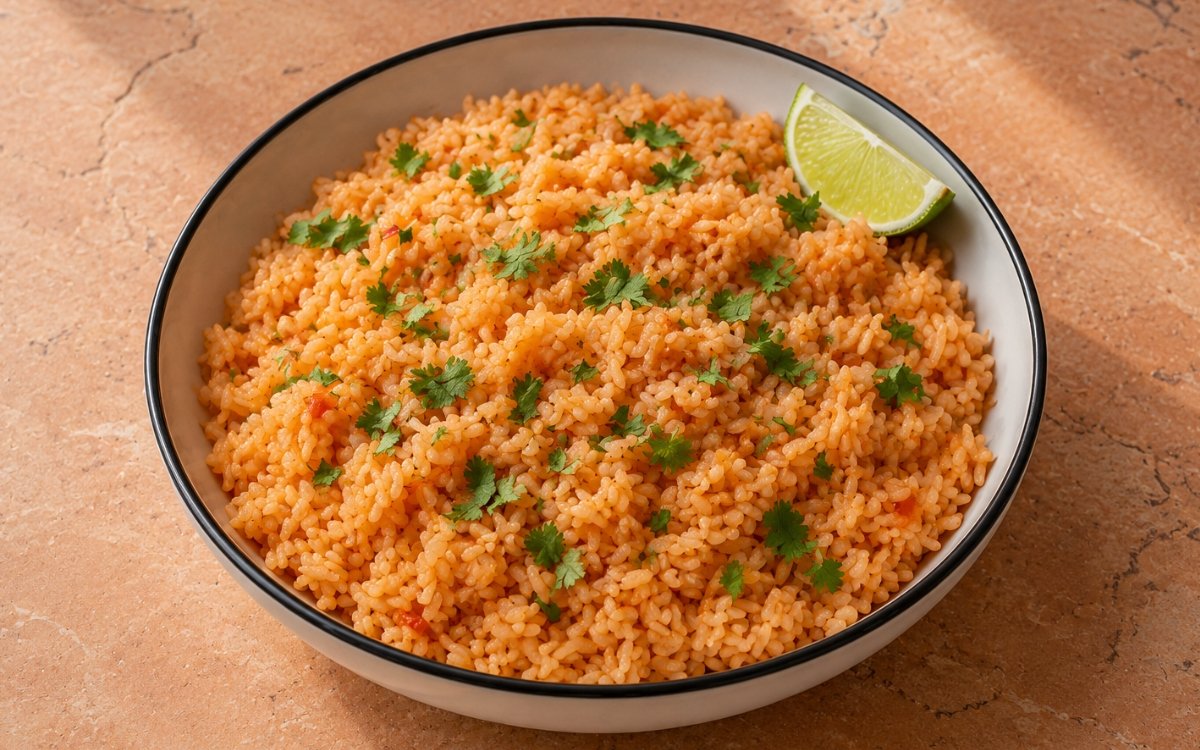
- After 15 minutes, remove the pan from heat entirely and allow it to rest, still covered and undisturbed, for a further 5 minutes. This rest period equalises the moisture distribution throughout the pan — the lower grains have been in contact with the most liquid-rich environment, the upper grains have cooked more in steam, and the rest allows the moisture to redistribute by diffusion until every grain from top to bottom has reached the same moisture level and texture. After 5 minutes, lift the lid and check the rice — if any visible liquid remains in the bottom of the pan, cover and rest for an additional 3–5 minutes without returning to the heat. Fluff the rice gently with a fork using a light, lifting, separating motion from the edges toward the centre. The grains should be deep reddish-orange, dry, separate, and fully cooked. Add the chopped fresh cilantro and fold it through the rice with 2–3 gentle strokes — the heat of the rice will very lightly wilt the cilantro and release its aromatic oils without cooking it. Serve immediately with lime wedges for squeezing directly over each portion at the table.
Notes
The toasting step transforms the dish so fundamentally that the rice deserves to be considered differently before and after it. Without toasting, this recipe produces rice that tastes like rice simmered in tomato sauce — the tomato flavor and the rice flavor exist side by side in the same bowl but do not integrate. The rice retains its neutral, starchy character and the tomato acts as a coating or sauce. With proper toasting, the Maillard reaction compounds that develop in the grain surface during those 4–5 minutes in hot oil create aromatic bridges between the grain's starch compounds and the tomato's acid and sugar compounds during the subsequent cooking — the flavors fuse rather than coexist. The finished rice has an integrated, unified flavor that cannot be separated into its components.
Long-grain white rice is specified rather than jasmine or basmati for a specific reason. Long-grain rice is lower in amylopectin starch — the branched-chain starch responsible for stickiness — and higher in amylose, the linear starch that produces separate, fluffy grains. For a rice that needs to remain distinct and individual through 15 minutes of simmering in a viscous tomato-stock liquid that would cause stickier rice varieties to clump aggressively, the lower amylopectin content of long-grain white rice provides essential protection against over-sticking.
The lime wedges at serving are not optional — they are the finishing element that makes the entire dish come alive. Squeezed over the hot rice immediately before eating, fresh lime juice provides the bright, clean acidity that cuts through the rich tomato flavor and the nutty oil character of the toasted rice. Without the lime, the rice is very good. With it, the dish is genuinely bright and complete.