Ingredients
Method
Prepare the Barbacoa Sauce
- Toast the guajillo and ancho chiles briefly in a dry skillet for 10–15 seconds per side, just until fragrant. Do not let them blacken. Cover them with hot water and soak for 10 minutes until softened. Drain the softened chiles and blend them with the chipotle peppers in adobo, white onion, garlic, apple cider vinegar, lime juice, tomato paste, beef stock, cumin, oregano, ground cloves if using, salt, and black pepper until smooth. The sauce should be deep red-brown and completely smooth. Gritty chile sauce gives the finished barbacoa a rough texture. The brief dry toast blooms each chile's aromatic oils before rehydration — guajillo's fruity tang and ancho's deeper, raisin-like sweetness both come through more clearly toasted than simply soaked from raw.
Sear the Beef
- Pat the beef chunks dry. Heat the neutral oil in a Dutch oven or heavy pot over medium-high heat. Sear the beef in batches until browned on several sides. Do not crowd the pot. Proper browning builds the deep flavour the final bowl needs. Searing in uncrowded batches is what allows real contact between the beef's surface and the hot pot — crowded meat releases moisture and steams rather than developing the dark crust that becomes the foundation of the braising liquid's flavour.
Braise the Barbacoa
- Return all the beef to the pot. Pour in the blended chile sauce and add the bay leaves. The liquid should come partway up the beef, not fully drown it. Add a small splash of extra stock only if needed. Cover and cook at 160°C / 325°F for 2 hours 45 minutes to 3 hours, or until the beef is fully tender and shreds easily with a fork. Remove the bay leaves. Shred the beef directly in the pot or on a tray, then return it to the sauce. Simmer uncovered for 10–15 minutes until the sauce thickens and clings to the meat. This is a major turning point. The barbacoa should be juicy and glossy, not watery. If the sauce is loose, the whole bowl tastes diluted. Keeping the liquid partway up the beef rather than fully submerging it concentrates the sauce's flavour into a smaller volume — a fully drowned braise dilutes both the meat and the eventual sauce, producing a thinner result even after the same reduction time.
Cook the Rice
- Rinse the rice until the water runs mostly clear, then drain well. Heat the vegetable oil in a medium pot over medium heat. Add the rice and cook for 3–4 minutes, stirring often, until the grains look slightly opaque and lightly toasted. Add the diced onion and cook for 2–3 minutes until softened. Add the garlic and cook for 30 seconds. Stir in the crushed tomatoes, chicken stock, sea salt, cumin, chili powder, and black pepper. Bring to a boil, then reduce to low, cover, and cook for 15–18 minutes until the liquid is absorbed and the rice is tender. Turn off the heat and let it rest covered for 10 minutes. Fluff gently and fold in the chopped cilantro. Do not stir aggressively while the rice cooks. Tomato rice needs to steam properly or it turns heavy and sticky. Toasting the rice in oil before any liquid touches it coats each grain in fat, which is what helps the grains stay distinct and separate through the simmer rather than clumping together the way untoasted rice tends to in a tomato-based liquid.
Prepare the Whole Spiced Black Beans
- Heat the oil in a saucepan over medium heat. Add the diced onion and cook for 3–4 minutes until softened. Add the garlic and cook for 30 seconds. Add the drained black beans, cumin, smoked paprika, oregano, salt, pepper, and 80ml water or stock. Simmer gently for 8–10 minutes, stirring carefully so the beans keep their shape. Add a little more liquid only if needed. The beans should be glossy, seasoned, and spoonable, but not soupy and not mashed. Stirring carefully rather than vigorously is the deliberate technique choice here — the goal is fully seasoned, intact whole beans, a genuinely different texture and role in the bowl than the mashed, refried beans used in other dishes in this collection.
Prepare the Garnishes
- Drain the pickled jalapeño slices well. Crumble the cotija. Pick or chop the cilantro. Cut the lime into wedges if not already done. Draining the pickled jalapeños thoroughly protects the rice from picking up excess brine, which would otherwise dull the tomato rice's own carefully built flavour.
Assemble the Bowls
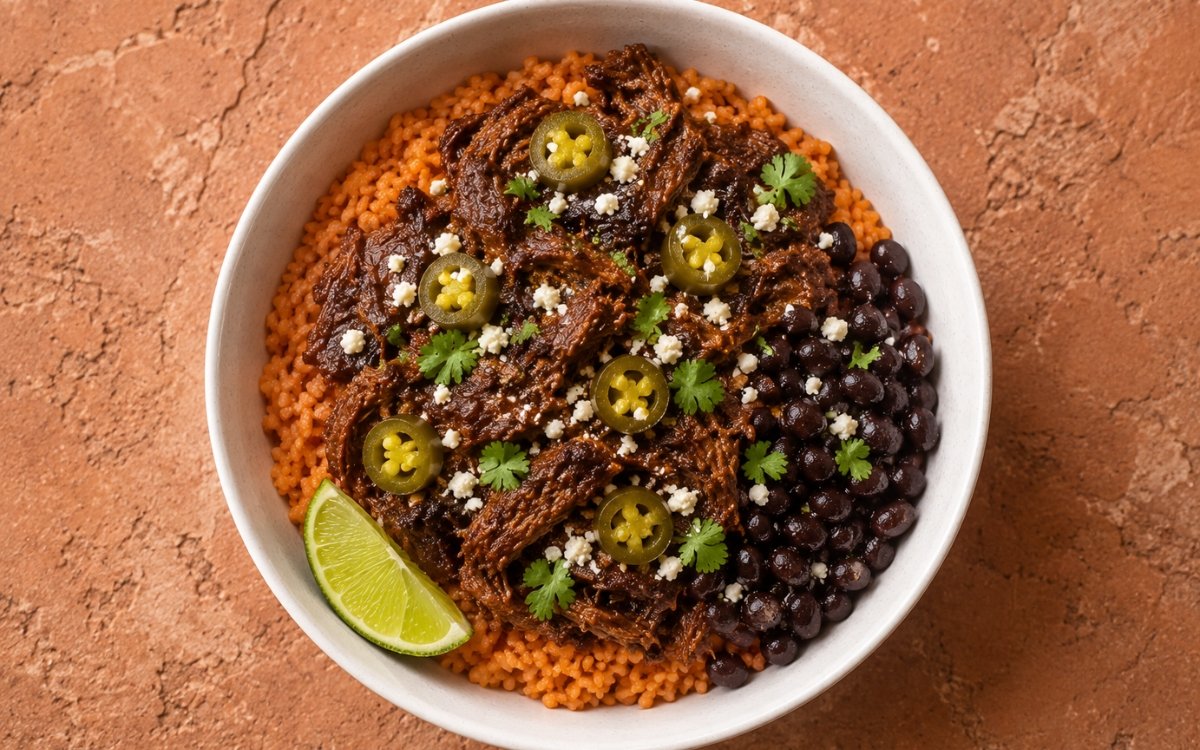
- Divide the Mexican rice between 4 bowls. Spoon the whole black beans along one side of each bowl. Top generously with the barbacoa beef. Scatter over the crumbled cotija, fresh cilantro, and pickled jalapeño slices. Add a lime wedge to each bowl. Keeping the beans in their own section rather than mixing them fully through the rice preserves the bowl's visual structure — each component stays identifiable rather than blending into one uniform mixture.
Serve
- Serve immediately while the barbacoa is hot and glossy, the rice is fluffy, and the beans are warm. Squeeze the lime over the bowl just before eating. The glossy sauce coating the barbacoa is at its best texturally right off the stove — given time to sit, it firms and loses some of that clinging shine, so serving without delay preserves the bowl at its intended texture.
Notes
Reducing the barbacoa sauce after shredding the beef, rather than serving the meat in its full, unreduced braising liquid, is worth understanding as the defining technical decision in this recipe. A long braise naturally produces a fair amount of liquid, and while that liquid carries real flavour, it's too thin on its own to coat the shredded meat properly. Simmering it down after the beef is shredded and returned to the pot concentrates that flavour into something that clings to every strand rather than pooling loosely around it — skip this step, and the beef tastes diluted even though the underlying braise was done correctly.
Keeping the braising liquid at only partway up the beef, rather than fully submerging it, is a related concentration choice worth carrying through consistently. A fully submerged braise spreads the meat's flavour across a larger volume of liquid from the start, which means even after the same reduction time at the end, the resulting sauce will taste thinner than one built from a shallower braise. This is a small adjustment with a real cumulative effect on the finished bowl.
Toasting the rice before adding any liquid is a step that's easy to skip when short on time, but it does real, structural work. The brief toast in oil coats each grain and slightly seals its surface, which helps the grains stay more separate and distinct through the simmer rather than releasing excess starch and clumping together — the difference between light, fluffy tomato rice and a heavier, stickier version often comes down to whether this step was included.
The distinction between these whole spiced black beans and a refried bean preparation elsewhere in this collection is worth being deliberate about. Refried beans are built for a spreadable, cohesive texture that can anchor toppings on something like a sope or tostada. These beans are handled with the opposite goal — gentle stirring specifically to keep them intact — because their role here is to provide a third distinct texture in the bowl alongside the shredded beef and grainy rice, not to bind anything together.