Ingredients
Method
Prepare the Salsa Verde
- Toss the tomatillos, onion wedges, jalapeño, and garlic with olive oil and salt. Broil or roast on a hot tray until the tomatillos soften, collapse slightly, and develop charred spots, about 8–12 minutes. Transfer everything to a blender with the cilantro, lime juice, and water. Blend until spoonable but still slightly textured. Add more water only if needed. Taste and adjust with salt or extra lime juice. The salsa should be vivid green, tangy, and thick enough to sit in a small bowl without looking watery. Broiling rather than simmering the tomatillos develops a light char that gives the salsa real depth — a meaningful difference given how much of this dish's brightness is carried by that small side bowl.
Caramelise the Onion
- Heat the oil and butter in a skillet over medium heat. Add the sliced onion and salt. Cook for 15–18 minutes, stirring often, until soft, golden, and sweet with some browned edges. Do not rush this over high heat. Burnt onion tastes harsh and will overpower the beans. The combination of oil and butter matters here — oil raises the effective cooking temperature so the butter doesn't burn during the extended cook time, while the butter still contributes richer flavour and colour than oil alone would produce.
Cook the Seasoned Black Beans
- Heat 20ml neutral oil in a skillet over medium heat. Add the diced onion and cook for 4–5 minutes until softened. Add the garlic and cook for 30 seconds. Add the drained black beans, cumin, smoked paprika, oregano, salt, black pepper, and water or stock. Cook for 5–7 minutes, stirring often, until the beans are hot and lightly saucy. Mash about one-third of the beans with a spoon or potato masher so the mixture holds together but still has whole beans visible. Finish with lime juice. The beans should be moist and cohesive, not watery. If they are loose, cook for another 2–3 minutes to tighten them before filling the quesadillas. Mashing only a portion of the beans, rather than all or none of them, is a deliberate middle ground — fully mashed beans produce a filling that's cohesive but visually and texturally flat, while unmashed whole beans alone don't bind well enough to stay contained inside the tortilla once it's cut.
Mix the Cheese
- Combine the shredded low-moisture mozzarella and crumbled cotija in a bowl. Mozzarella gives the melt and cheese pull; cotija adds salty sharpness. Do not use only cotija because it will not melt properly. Cotija is a firm, crumbly cheese that holds its shape under heat rather than melting the way mozzarella does — using it in restraint here, as an accent through a primarily mozzarella base, is what gives the filling both stretch and a sharper, saltier note running through it.
Assemble the Quesadillas
- Lay 4 tortillas flat. Divide the mozzarella-cotija mixture over them, keeping a small border around the edge. Add the seasoned black beans and caramelised onion evenly over the cheese. Top each with a second tortilla and press gently. Each quesadilla should be full but not overloaded. Too much filling prevents the tortillas from sealing and makes the wedges collapse when cut. Layering the cheese directly against the tortilla, with the beans and onion on top, means the melting cheese is what ends up bonding the two tortilla halves together as it cooks — a detail that matters for how cleanly the finished quesadilla holds together once sliced.
Cook the Quesadillas
- Heat a wide skillet or comal over medium heat. Add a small amount of butter and let it melt until foaming. Place one assembled quesadilla in the skillet and cook for 3–4 minutes, pressing gently with a spatula, until the bottom is deeply golden-brown and blistered. Flip carefully and cook the second side for another 3–4 minutes, until the tortilla is crisp, the cheese is fully melted, and the filling is hot. Repeat with the remaining quesadillas, adding more butter as needed. Do not use high heat. The tortilla will burn before the cheese melts. Medium heat is the specific setting that lets the tortilla's exterior brown in roughly the same window the cheese fully melts through — higher heat browns the outside well before the interior catches up, leaving a scorched shell around unmelted cheese.
Rest and Slice
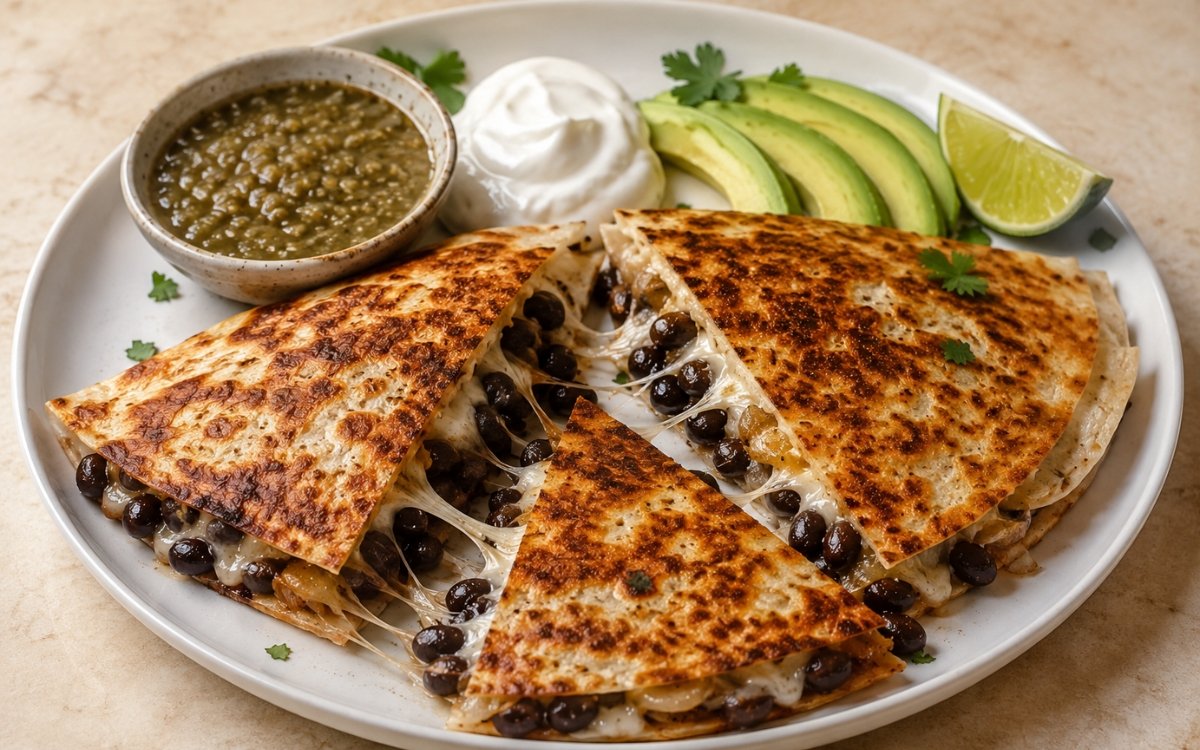
- Transfer each quesadilla to a cutting board and rest for 2 minutes. Cut each quesadilla into 4 quarters. The short rest keeps the cheese from flooding out immediately while still leaving visible cheese pull at the cut edges. Cheese straight off the heat is at its thinnest and most fluid; the brief rest lets it firm up just enough that the first cut doesn't send it running across the board, while it's still fully melted and stretchy by the time it's eaten.
Prepare the Avocado
- Thinly slice the avocados and fan ½ avocado per serving on the plate. Season lightly with salt and black pepper just before serving. Seasoning the avocado directly, right before plating, gives it its own distinct flavour on the plate rather than relying entirely on the quesadilla and salsa verde to carry seasoning for the whole dish.
Serve
- Place one quesadilla, cut into 4 quarters, on each plate. Add a small bowl of salsa verde, a generous dollop of sour cream, fanned avocado slices, fresh cilantro, and lime wedge. Serve immediately while the quesadilla is crisp and the cheese is still melted. The crisp shell begins softening the moment it sits, especially near the moisture of the sour cream and salsa, so serving without delay is what preserves the contrast between crunchy tortilla and melted, stretchy interior.
Notes
The partial mashing of the black beans is worth understanding as a genuine technique decision rather than an approximate instruction. A filling made entirely of whole beans doesn't bind well enough to stay contained once the quesadilla is sliced into wedges — beans simply tumble out at the cut face. A filling made entirely of mashed beans binds perfectly but reads as visually and texturally flat, closer to a bean paste than a distinct filling. Mashing roughly a third gives the mixture enough cohesion to hold together while leaving plenty of whole beans visible and providing real bite.
Caramelising the onion low and slow over 15–18 minutes, rather than rushing it over higher heat in less time, is one of those steps where patience directly and proportionally improves the result. Onion cooked too quickly at high heat browns unevenly and can scorch before it's actually softened and sweetened all the way through, producing a bitter, harsh flavour that will dominate the milder black beans once combined. The slower approach gives the onion's natural sugars time to properly caramelise into genuine sweetness.
Using low-moisture mozzarella rather than fresh mozzarella is a consistent choice across quesadilla preparations in this collection, and the reasoning holds here as much as anywhere. Fresh mozzarella is packed in brine and releases meaningful water as it melts — trapped inside a folded, sealed quesadilla, that moisture has nowhere to go but into the tortilla itself, undermining the crisp shell from the inside. Low-moisture mozzarella melts with far less released liquid, which is what makes it compatible with this format.
The instruction to rest the quesadilla briefly before slicing, rather than cutting immediately off the heat, addresses a specific structural weak point. Freshly melted cheese is at its thinnest and most fluid the moment it comes off the pan, and cutting through it at that exact point sends a disproportionate amount pouring out rather than staying inside the wedge. A short 2-minute rest firms the cheese just enough to hold its position through the cut while remaining fully melted and stretchy when eaten.