Ingredients
Method
Select and Prepare the Melon
- The honeydew melon's ripeness is the single most important variable in this preparation — as a still, unstrained-fruit-forward agua fresca with no heat concentration and no dominant spice character to compensate, the flavour of the finished drink is directly proportional to the sweetness and aroma of the melon. A ripe honeydew has a specifically intense, sweet, green-fruited aroma detectable from a foot away when the melon is held close to the face; the flesh at the cavity when cut is noticeably juicier and more fragrant than its firm outer zones. The skin should have a slight give at the stem end when pressed, and the colour should be fully golden-cream rather than greenish-white. An under-ripe honeydew produces a pale, mildly flavoured, slightly watery agua fresca regardless of technique; a ripe honeydew produces the specifically vivid, sweet, fragrant result the recipe requires. Cut the honeydew in half, remove the seeds, peel, and cut the flesh into rough 4–5cm cubes. For the freshest result, the melon should be cold from the refrigerator at this stage — cold melon blended with cold water produces a lower starting temperature that extends the cold-keeping quality of the finished agua fresca and specifically preserves the volatile aromatic compounds that warm melon blended with room-temperature water would begin losing during the blend itself.
Blend the Agua Fresca
- Add the 700g of cubed honeydew, 500ml of cold water, 30ml of fresh lime juice, zest of 1 lime, and 60g of honey to a blender. The honey is added directly to the blender rather than dissolved separately — at blending speed the mechanical action of the blades distributes the honey evenly through the liquid without any heating required, producing a uniformly sweet base in a single operation. Blend on high speed for 45–60 seconds until completely smooth — no visible melon pieces remaining and the mixture appears uniformly pale green and slightly frothy. The total yield after blending should be approximately 1 litre of pale green agua fresca. Do not over-blend — beyond 60 seconds the friction of the blades begins warming the mixture slightly and generating additional froth that the subsequent straining will need to remove. One confident high-speed blend of 45–60 seconds is the correct approach.
Cold Mint Infusion
- Transfer the blended agua fresca to a large pitcher or container. Clap the 12 mint leaves between your palms — the same surface-aromatic-release technique used throughout this collection — and add the clapped leaves directly to the blended mixture. Stir once to submerge. Cover and refrigerate for 20–30 minutes. The 20–30 minute window is specifically more careful here than in any other preparation in this collection — because honeydew is among the most delicate flavours in this recipe set and mint's aromatic character, even in cold infusion, becomes progressively more noticeable as infusion time extends. At 20 minutes the mint provides a clean, background freshness that makes the honeydew taste more specifically vivid and refreshing without any detectable herbal flavour. At 30 minutes the mint is at the maximum point where it is still background rather than foreground. Beyond 30 minutes the mint's character begins competing with the honeydew's delicate sweetness rather than amplifying it. Always remove the mint at the 20–30 minute mark and proceed to straining immediately.
Strain and Serve
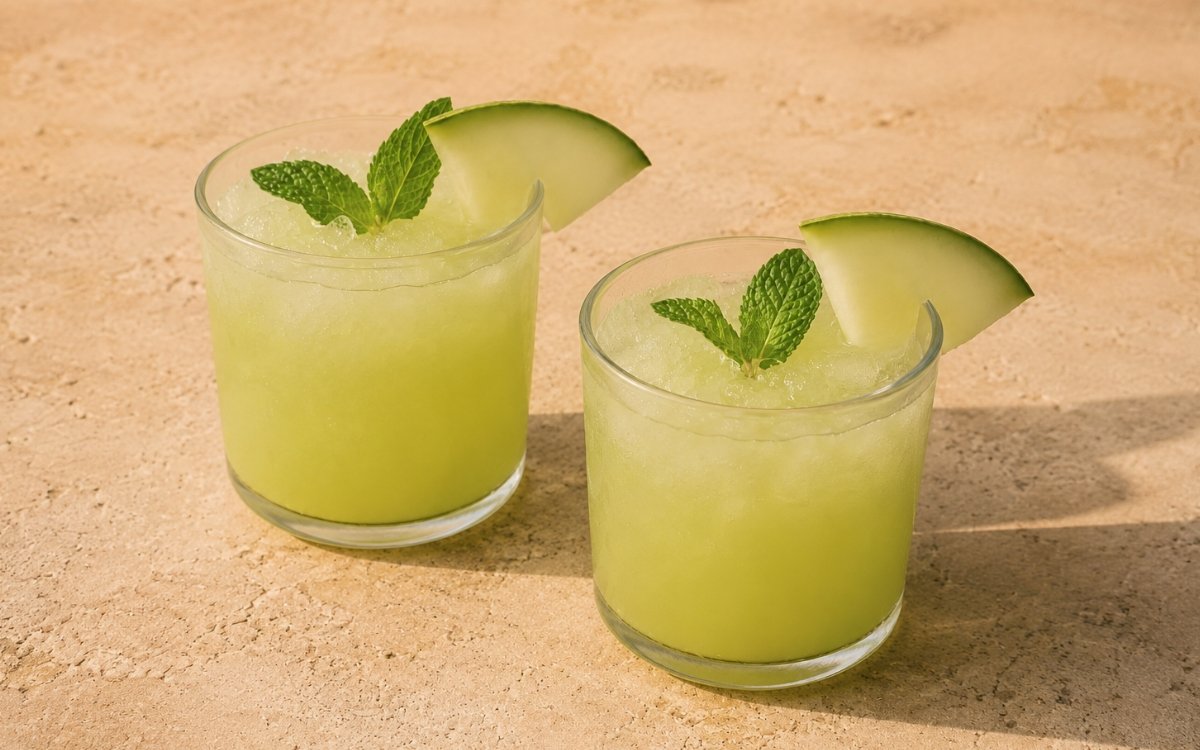
- After the mint infusion, strain the agua fresca through a fine-mesh sieve into a clean pitcher or serving jug — pressing lightly on any remaining pulp and mint leaf solids. The straining removes residual melon fibre and any intact plant material, producing the specifically clear, light-bodied, clean-flowing agua fresca that is the format's signature. Discard the strained solids. Fill four short, wide glasses — tumblers or rocks glasses — generously with ice cubes. Short glasses are the appropriate vessel for a still, cold agua fresca: the format is relaxed and immediate, served in generous proportions over plenty of ice rather than the elegant tall or wine glass formats used for sparkling preparations. Divide the chilled agua fresca evenly among the glasses. Hook a small melon wedge onto the rim of each glass — cut a small slit in the melon's skin to allow it to hook cleanly. Rest a small mint sprig among the ice with the leaves above the rim. Serve immediately and without delay — the agua fresca is at its most flavourful cold and its flavour is most vivid in the first minutes after serving.
Notes
Agua fresca — the category of fruit-water drinks indigenous to Mexico and Central America — is one of the most widely consumed everyday non-alcoholic beverages in Mexican food culture, served from large glass containers at taquerias, markets, and street food stands across the country. The standard agua fresca preparation is simple: fruit or flowers blended or steeped with water, strained, sweetened if necessary, and served over ice. The honeydew version — agua de melón — is one of the most popular alongside watermelon (sandía), hibiscus (jamaica), tamarind (tamarindo), and horchata. The addition of mint and lime in this recipe introduces a specifically refreshing dimension beyond the traditional agua de melón preparation while remaining faithful to the format's core principles.
The honey quantity at 60g is calibrated for a mildly sweet melon of average ripeness. A particularly ripe, very sweet honeydew may require only 40g; a less sweet melon might benefit from 70g. Always taste the blended mixture before the mint infusion and adjust the honey level before straining — adding honey to the strained liquid is significantly harder as it requires whisking to dissolve.