Ingredients
Method
Prepare the Beef Filling
- Heat the oil in a large skillet over medium-high heat. Add the onion and cook for 5 to 7 minutes, until softened and lightly golden. Add the garlic and cook for 30 seconds. Add the ground beef, salt, black pepper, paprika, and cumin if using. Cook for 6 to 8 minutes, breaking the meat into small pieces with a spatula, until the beef is browned and no longer raw. If the filling looks dry, add 30ml water or beef stock and cook for another minute so the meat stays juicy but not wet. Stir in the parsley if using. The filling should be moist and savory, but no liquid should pool in the pan. Wet filling makes the phyllo soggy and can split the burek during baking. That specific, checkable texture — moist but genuinely without pooled liquid — protects the surrounding phyllo from absorbing excess moisture before it ever has the chance to crisp properly in the oven.
Cool the Filling
- Spread the beef filling on a tray or plate and let it cool until just warm or room temperature. Do not fill the phyllo with hot meat. Hot filling softens the phyllo instantly and makes it tear. Cooled filling gives you cleaner rolls and better flaky layers. That cooling period protects the delicate phyllo from a real, immediate risk — hot filling in direct contact with such thin pastry softens it on contact, making it considerably more prone to tearing during the rolling stage that follows.
Prepare the Brushing Mixtures
- Mix the melted butter and oil together in one small bowl. In a second bowl, mix the sparkling water or plain water, oil, and salt. Keep both nearby while shaping. Having both mixtures ready and within reach before the phyllo is even unwrapped protects against any real delay once you start working, since the sheets themselves are genuinely vulnerable to drying out the moment they're exposed.
Prepare the Phyllo
- Unroll the phyllo sheets and cover them with a slightly damp kitchen towel so they do not dry out. Work with one or two sheets at a time, depending on how delicate your phyllo is. Dry phyllo cracks immediately. Keep the stack covered the whole time and only expose the sheets you are using. That damp towel maintains just enough ambient moisture around the unused sheets to keep them pliable, protecting them from the rapid drying that would otherwise make them crack the moment they're handled.
Fill the First Roll
- Lay one sheet of phyllo on the counter. Brush lightly with the butter-oil mixture. Place a second sheet on top and brush again. Spoon a thin line of beef filling along one long edge of the phyllo, leaving a little space at the edges. Roll it up into a long loose rope. Do not roll too tightly. The roll should hold its shape but still feel slightly loose. Tight rolls can burst because the pastry has no room to expand as it bakes. Layering two brushed sheets together, rather than using just one, builds real structural body into each roll — that doubled layer is what gives the finished pastry enough substance to actually flake apart in distinct layers once baked.
Start the Coil
- Place the first filled roll into the center of a greased or parchment-lined round baking pan, coiling it gently into a spiral. A 28 to 30cm round pan works well. Starting the coil at the pan's center and working outward gives the whole spiral a genuine, stable foundation to build around as more rolls are added.
Continue Shaping the Burek
- Repeat with the remaining phyllo and beef filling, placing each new roll around the previous one to build one large round spiral. Brush each roll lightly with the butter-oil mixture as you work. If a sheet tears slightly, keep going. Small tears disappear inside the coil. Keep the filling enclosed inside the roll. If too much meat spills out, the burek will bake unevenly and the exposed filling can dry out. That reassurance about small tears reflects real, practical understanding of phyllo's own fragile nature — minor imperfections get folded invisibly into the finished spiral, while only genuinely exposed filling poses an actual problem.
Brush Before Baking
- Preheat the oven to 200°C. Brush the top of the finished burek generously with the remaining butter-oil mixture. Then spoon or brush the light water mixture over the top, especially into the seams. Do not drown it. The pastry should be moistened lightly, not soaked. The fat crisps the phyllo, while the small amount of salted water helps the inner layers steam and stay tender. Too much water makes the bottom heavy. That specific two-part brushing — fat for crisping, a small amount of salted water for gentle interior steam — is what allows this pastry to develop both a crisp exterior and a tender interior at once, rather than sacrificing one for the other.
Bake
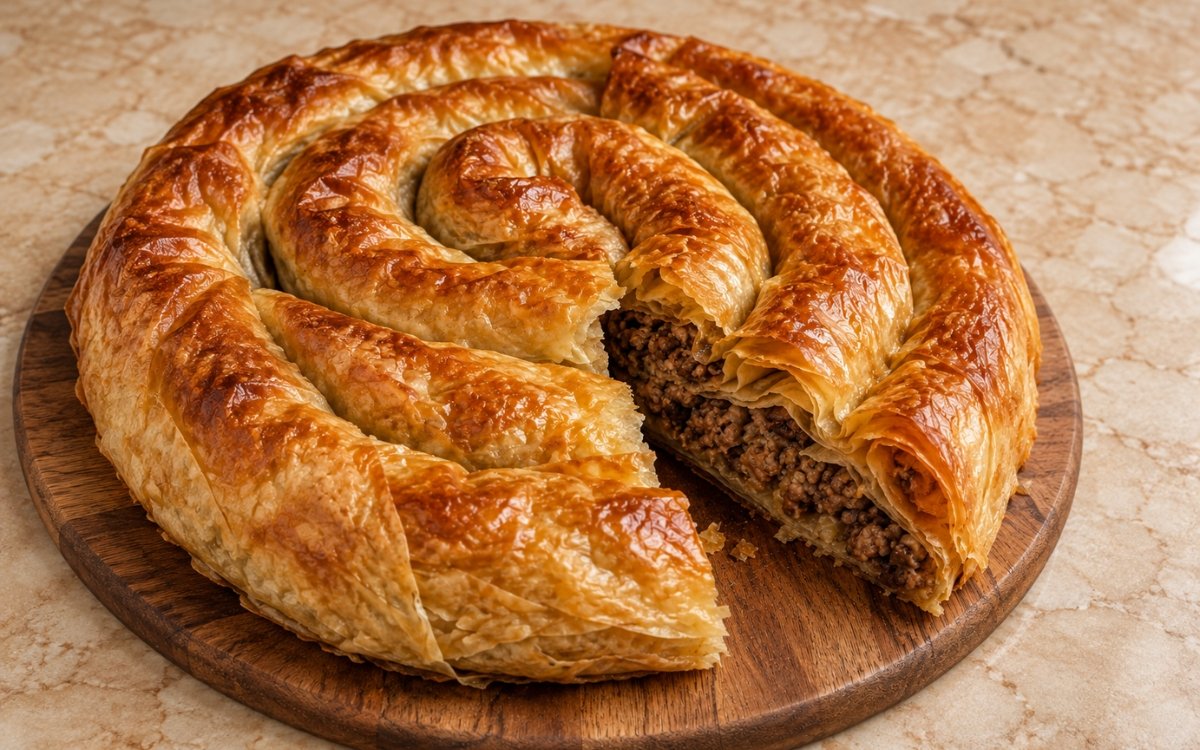
- Bake for 40 to 45 minutes, until the burek is deeply golden-brown, crisp on top, and fully heated through. Rotate the pan once if your oven browns unevenly. The top should be a strong golden-brown, not pale yellow. Pale burek usually means the inside layers are still soft and the pastry has not crisped properly. That deep golden colour reflects real, substantial Maillard browning having taken place throughout the coiled pastry — a paler burek pulled too early would still carry soft, underdeveloped layers despite appearing done at a glance.
Rest and Slice
- Let the burek rest for 10 minutes before slicing. Cut into 8 wedges and serve warm. That brief rest lets the filling's own residual heat settle slightly and the pastry's structure firm up just enough to slice cleanly into distinct wedges without the coiled layers collapsing.
Notes
Cooling the beef filling fully before it ever meets the phyllo deserves genuine recognition as the technique responsible for whether the finished pastry actually holds together in clean, flaky rolls. Phyllo is genuinely thin and fragile, and hot filling in direct contact with it would soften the pastry almost instantly — the cooling stage protects against that immediate, tearing risk before rolling even begins.
Rolling each phyllo strip loosely, rather than tightly, deserves the same attention this technique receives throughout this collection's other coiled or rolled pastry dishes. A tightly wound roll has no room left to expand as the pastry's own layers puff and separate in the oven's heat, and that lack of give is specifically what causes tight rolls to burst — a looser roll leaves genuine room for that expansion to happen safely.
The two-part brushing before baking — a generous fat mixture followed by a light, salted water application — deserves recognition as a deliberate technique for achieving two distinct textural goals at once. The fat is what actually crisps the phyllo's exterior, while the small amount of water helps the pastry's own inner layers steam gently and stay tender, rather than drying out entirely under the oven's full heat.
Keeping the unused phyllo sheets covered with a damp towel throughout the entire shaping process deserves genuine respect as a small but consequential detail. Phyllo dries out and cracks remarkably quickly once exposed to open air, and that damp covering is what protects every sheet not currently in use from becoming unworkable before its turn comes.