Ingredients
Method
Prepare the Dry Mix
- Whisk together the flour, sifted matcha, baking soda, baking powder, and salt in a medium bowl until evenly combined with no matcha lumps remaining. Matcha needs to be fully dispersed at this stage, or the dough ends up with dark, bitter specks running through it.
Cream the Butter and Sugars
- Beat the butter, brown sugar, and granulated sugar together in a large bowl until smooth, creamy, and slightly lightened, 2 to 3 minutes, scraping the bowl well. Don't overwhip to a very airy texture, since that can make the cookies spread too much during baking.
Add the Egg Ingredients
- Beat in the egg, then the egg yolk, then the vanilla, mixing until fully incorporated and glossy. Scrape the bowl again to make sure no butter-heavy streaks remain at the bottom.
Finish the Dough
- Add the dry ingredients and mix on low just until no dry flour remains — the dough should look soft, thick, and evenly green. Don't overmix once the flour goes in, or the cookies can bake up tough.
Portion and Coat
- Line trays or a plate with parchment, then scoop the dough into 24 equal portions, about 35–38 g each. Press or roll the top of each dough ball in the white sesame seeds so the tops are generously coated, keeping the dough mounded rather than flattening it too much — that mounded shape is what helps create thick, wrinkled centers once baked.
Chill the Dough
- Refrigerate the portioned dough for 45 to 60 minutes, until noticeably firmer. This chilling step matters for controlled spread, deeper flavor, and soft, thick centers.
Bake
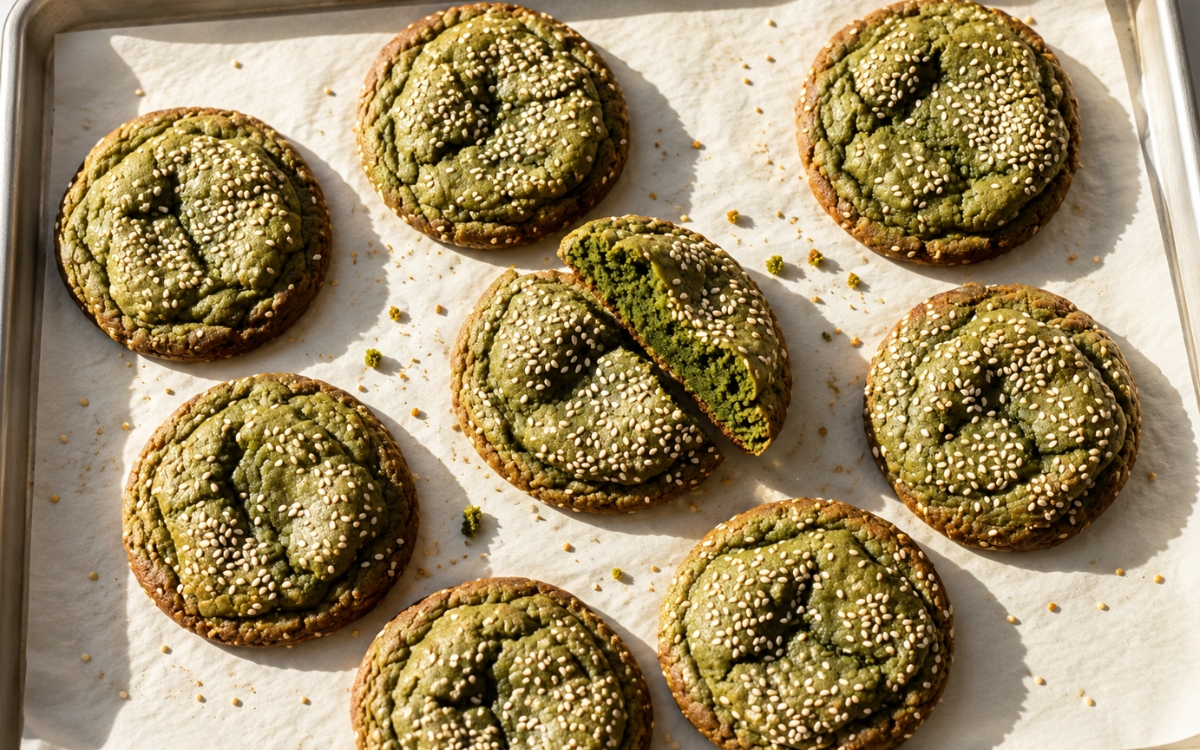
- Heat the oven to 175°C conventional / 160°C fan and line baking trays with parchment. Arrange the cookies with enough space between them, about 6 per tray, baking one tray at a time if possible for the most even result. Bake for 12 to 14 minutes, until the edges are set and slightly darker, the tops are puffed and wrinkled, and the centers still look a little soft and underdone. Don't wait for the centers to look fully baked — they continue setting on the tray and stay soft inside.
Cool
- Let the cookies rest on the baking tray for 10 minutes — this carryover time sets the structure without drying them out. Transfer to a rack and cool completely. One cookie can be broken open once slightly cooled, and the center should look soft, dense, and moist.
Notes
Sifting the matcha before it joins the other dry ingredients isn't a step worth skipping, even though it adds an extra few minutes to the process. Matcha clumps easily on its own, and any lumps that survive into the dough show up as dark, bitter specks rather than blending into the batter's even green color.
Culinary-grade matcha, rather than ceremonial-grade, is the right choice specifically for baking. Ceremonial matcha is milder and more delicate, meant for whisking into tea, while culinary-grade holds its flavor better against the butter, sugar, and heat involved in baking a cookie.
Chilling the portioned dough balls does more than just control spread, although that's part of the reason for it. The chilling time also lets the flour fully hydrate and the flavors deepen slightly, which contributes to the dense, soft interior these cookies are meant to have.
Resisting the urge to bake until the centers look fully set protects the texture the whole recipe is built around. Cookies pulled at that later stage have usually overbaked past the soft, dense center, and the carryover time on the hot tray is what finishes the job without drying them out.