Ingredients
Method
Poach the Tofu
- Cut the 800g tofu into large bite-size cubes, about 2.5cm, using a sharp knife and handling the block gently so the corners stay clean. Bring the 1 litre of water to just below a simmer, about 85–90°C, with tiny bubbles rising but none breaking hard, then stir in the 1 tsp salt. Slide the cubes in and poach for 2–3 minutes, until they are warmed through and feel slightly firmer at the surface. Lift them out with a slotted spoon, or drain them carefully through a sieve without shaking, and leave them in a single layer. That gentle poach is what seasons the tofu lightly and lets the cubes hold together in the final sauce.
Prepare the Sauce Components
- Stir the 2 tsp cornstarch into the 2 tbsp cold water until smooth and set it beside the stove, remembering to stir it again before each use because the starch settles fast. Toast the Sichuan peppercorns in a dry pan over medium-low heat for 1–2 minutes, shaking constantly, until fragrant, then grind them fairly fine so they disperse through the sauce. They should smell citrusy and warm, never scorched. Slice the 3 scallions and set some of the green aside for the finish, then chop the doubanjiang and douchi, mince the garlic and ginger, and measure out the 350ml stock. That full setup matters because the flavour base cooks in minutes and cannot wait for chopping.
Build the Flavor Base
- Heat a wok or sauté pan over medium-high heat until hot, then add the 2 tbsp neutral oil and the 300g ground pork. Cook for 5–6 minutes, breaking the meat up finely with a spatula, until the moisture has cooked off and the pork is genuinely browned and lightly crisp in spots rather than grey. Add the doubanjiang and chopped douchi and stir-fry for 1–2 minutes, until the oil turns red and the mixture smells fragrant. Add the garlic and ginger and cook for just 20–30 seconds, stirring constantly so the garlic does not burn. That patient browning and blooming is what builds the savoury base and the deep red colour the sauce depends on.
Make the Sauce
- Add the 1 tsp Shaoxing wine and let it sizzle for a few seconds, scraping up any browned bits from the base of the pan. Pour in the 350ml stock, then add the 1 tbsp light soy sauce, 1 tsp sugar and the 1–2 tsp chili oil, and bring everything to a simmer. The liquid should look vividly red with oil floating on top, not dull brown. Taste the broth before the tofu goes in; it should already be genuinely bold and well seasoned, and you should resist adding more salt at this point. That early tasting is what protects the dish from over-salting, since the doubanjiang and douchi already carry a lot of salt.
Add the Tofu
- Lower the heat to a gentle simmer and slide the poached tofu into the sauce, spooning some of the liquid over the top. Simmer for 3–4 minutes, until the cubes have taken on the colour and flavour of the sauce. Move the tofu only with a spoon or by gently swirling the pan, never with vigorous stirring, and keep the simmer quiet, with small bubbles rather than a rolling boil. The cubes should stay mostly intact with clean edges. That restraint is what keeps delicate tofu whole instead of crumbling into the sauce.
Thicken and Finish
- Stir the slurry again, then add about half of it to the pan in a thin stream, folding gently with the back of the spoon and simmering for 30–60 seconds. If the sauce still runs thin, add the remaining slurry the same way, until it lightly thickens and clings to the tofu while still pooling between the cubes. Stir in about three-quarters of the ground Sichuan pepper and some of the sliced scallions, then taste and adjust. Finish with a little extra chili oil only if needed for the glossy red sheen. If the sauce turns too thick, loosen it with a splash of hot water. That gradual thickening is what keeps the sauce genuinely silky and spoonable, never pasty.
Serve
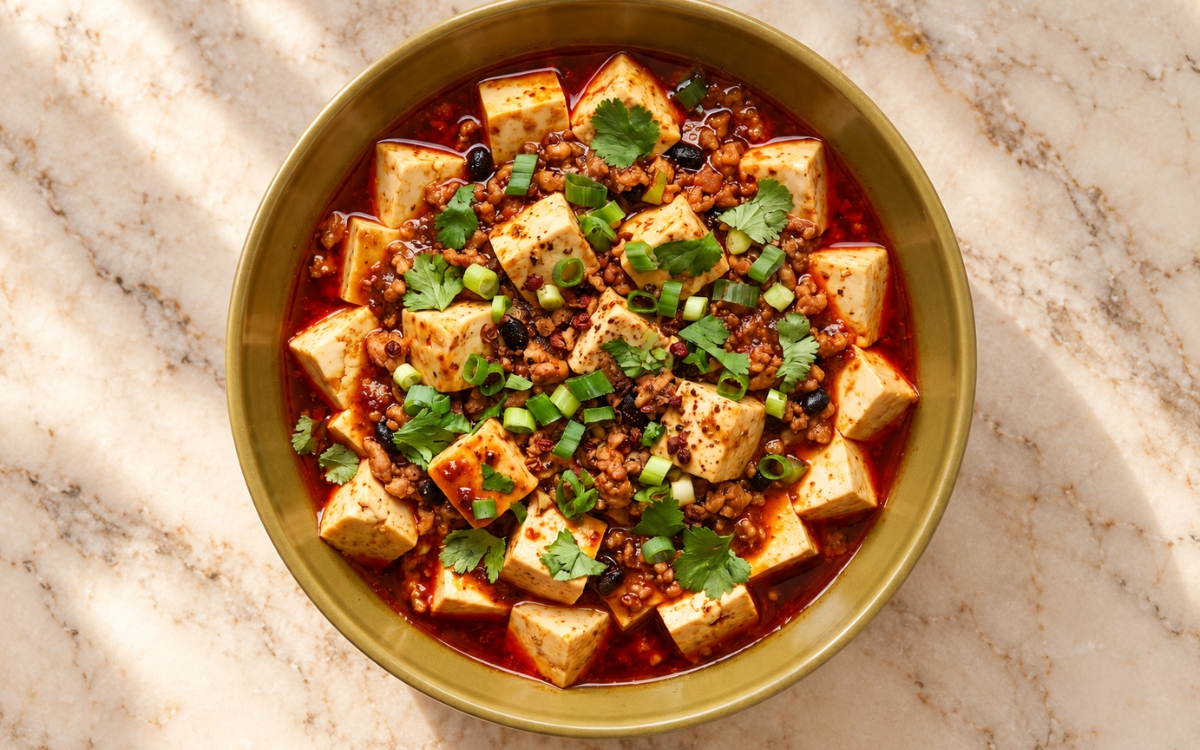
- Spoon the Mapo Tofu into warm bowls or one shallow serving dish, letting the red oil pool around the cubes. Scatter the remaining scallions over the top, then add the rest of the ground Sichuan pepper if desired, and a small amount of the cilantro leaves, used lightly as a fresh garnish. The finished dish should show tofu surrounded by glossy, oil-flecked red sauce, with browned pork scattered over the top. Serve immediately while hot. That immediate serving is what keeps the tofu tender and the sauce at its silkiest.
Notes
Blooming the doubanjiang in oil deserves genuine recognition as the technique most directly responsible for the deep red colour and savoury depth of the sauce. The recipe’s own instruction to fry it “long enough to bloom its color and aroma” reflects how the chili and bean solids release their pigment only into hot fat — added to liquid, they stay dull, brown and raw-tasting.
Poaching and gently handling the tofu deserves the same attention this technique receives throughout other delicate-protein dishes, because soft tofu has almost no structure to spare. The warm salted water firms the surface and seasons the cubes lightly, while the recipe’s warning not to “stir the tofu roughly” protects the clean edges that stop each cube from crumbling into the sauce.
Holding back extra salt until the broth is tasted deserves genuine respect as the detail most directly responsible for a balanced rather than punishing sauce. Doubanjiang and douchi, as the recipe notes, “already bring a lot of salt”, so a second splash of soy sauce added blindly cannot be undone once the tofu has absorbed it.
The sauce consistency deserves attention as a genuine, checkable readiness cue rather than a loose approximation. The recipe’s own standard that Mapo Tofu should be “silky and spoonable, not pasty” is easy to read in the pan — a sauce that pools between the cubes while lightly coating them is ready, while one that holds a ridge behind the spoon has taken too much slurry.