Ingredients
Method
Make the Maple Cinnamon Syrup
- Add the maple syrup, water, cinnamon stick, and salt to a small saucepan. Warm over medium-low heat for 2–3 minutes, just until the mixture is hot and lightly infused. Do not boil aggressively. Remove from the heat, stir in the vanilla if using, and let the cinnamon steep for 5 minutes. Remove the cinnamon stick and let the syrup cool. The syrup should stay fluid and pourable, with a clear maple aroma and a gentle cinnamon warmth. It should not reduce into a sticky glaze. If it gets too thick, it will sink and mix poorly in the drink. Keeping the heat gentle throughout, rather than pushing toward a boil, protects maple syrup's own delicate flavour compounds — aggressive heat risks driving off some of its more nuanced aromatics and pushing the syrup toward reducing further than the fluid, pourable consistency this drink needs.
Brew the Espresso
- Brew 120ml espresso total, equal to 4 standard 30ml shots. Let it stand for 30–60 seconds only if it is extremely hot, but do not let it sit long enough to flatten. The espresso should be fresh, aromatic, and strong enough to stand up to the maple. Maple is softer and rounder than many flavoured syrups, so weak espresso disappears quickly. Maple's naturally mellow, rounded sweetness has real capacity to overshadow a thin or flawed shot in a way a sharper flavoured syrup wouldn't — genuinely fresh, strong espresso is what keeps the coffee clearly present as its own distinct flavour alongside the maple.
Build the Maple Base
- Add 15ml maple cinnamon syrup to each glass. Add a small splash of cold milk to each glass and stir briefly to loosen the syrup. This step matters because maple syrup is denser than standard café syrup. If you skip loosening it, more sweetness stays at the bottom and the drink tastes uneven from first sip to last. Loosening the syrup while the glass is still simple and mostly empty gives it a genuine chance to disperse evenly — attempting the same mixing later, once ice and the remaining milk are already in the glass, would be considerably less effective given maple's own natural density.
Add Ice and Milk
- Fill each glass generously with ice. Pour 150ml cold whole milk into each glass over the ice. The glasses should already look pale and creamy, with a warm golden tint beginning to show. Leave enough room for the espresso and thin foam finish. Building on top of the already-loosened maple base keeps that base's flavour distributed through the glass from the start, rather than sitting as a separate, concentrated layer beneath everything else.
Pour in the Espresso
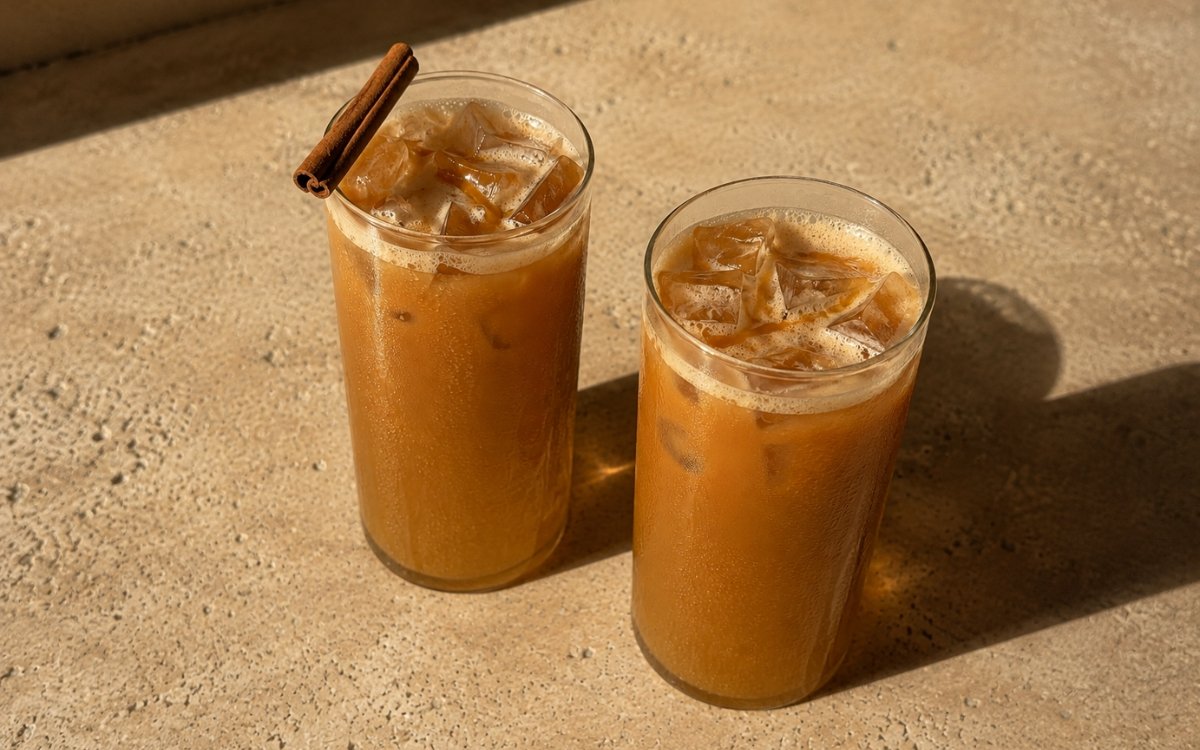
- Pour 60ml espresso into each glass over the milk and ice. Let it swirl through the drink naturally, then stir briefly. The finished liquid should settle into a warm amber-caramel colour, slightly darker and more golden than a plain vanilla or regular caramel iced latte. If it looks too pale, the coffee base is too weak or the milk ratio is too high. This specific colour target — warmer and more golden than a standard vanilla latte — functions as a genuine diagnostic for whether the espresso and maple syrup are properly balanced against the milk.
Create the Thin Foam Layer
- If using the foam finish, froth the extra cold milk very lightly until it forms only a thin soft foam, not a cappuccino cap. Spoon a small amount over the top of each drink. The surface should have only a delicate creamy layer. Too much foam makes it read more like an iced cappuccino than a latte. Stopping well short of a substantial foam is what keeps this drink reading clearly as a latte — pushing the foam any thicker would shift the presentation toward a different format entirely.
Finish and Serve
- Drizzle a very small amount of maple syrup over the foam surface. Rest 1 small cinnamon stick across the rim of each glass and serve immediately. The drizzle should be subtle and glossy, not a heavy sticky topping. The finished drink should smell lightly of maple and cinnamon, while still clearly presenting as an iced latte. This final drizzle is explicitly a finishing detail rather than a real source of sweetness — since most of the drink's sweetness is already built in through the syrup base, this last touch exists purely for aroma and visual polish.
Notes
Loosening the maple syrup with a small splash of milk before the glass is fully built deserves genuine attention given how much denser maple syrup is than a standard simple syrup used in most other iced coffee drinks. That extra density means maple has a stronger tendency to settle and stay concentrated at the bottom of the glass if it isn't actively worked into the milk early — this recipe's explicit warning about that exact outcome reflects a real, easily overlooked failure mode specific to maple's particular consistency.
Using pure maple syrup rather than pancake syrup is worth understanding as a genuine flavour distinction, not a matter of premium branding. Pure maple syrup carries complex, naturally developed flavour compounds from the sap itself; pancake syrup is typically a flavoured corn syrup product designed to approximate maple's taste without any of that underlying complexity. Substituting one for the other in this recipe would produce a noticeably flatter, less interesting drink despite superficially similar sweetness.
Keeping the syrup-making process gentle, avoiding an aggressive boil, protects maple's own delicate character in a way worth respecting. Real maple syrup carries volatile aromatic compounds that can be diminished by excessive heat, and pushing the mixture toward a hard boil risks both driving off some of that aroma and over-reducing the syrup past the fluid consistency this drink needs to mix cleanly.
The specific colour checkpoint given for the finished, stirred drink — warmer and more golden than a plain vanilla or standard caramel latte — is worth using as a genuine diagnostic rather than a vague description. Landing paler than that target signals either a coffee base that's too weak or a milk ratio that's too generous relative to the maple and espresso; getting the colour right confirms the drink's overall balance is on track.