Ingredients
Method
Build the Mango Turmeric Syrup
- Add the 350g of diced mango flesh to a medium saucepan. Using a fork or potato masher, lightly mash the pieces — breaking each cube into rough, irregular fragments that expose maximum flesh surface while leaving some texture. The partial mash serves the same purpose here as in the peach rosemary syrup: maximum juice and flavour extraction during the simmer without reducing the fruit to a smooth purée that would require more straining effort and produce a less clear concentrate. Add the 60g of brown sugar, 300ml of water, and the full 1 tsp of ground turmeric. Unlike the rosemary and thyme in this recipe — which are added off heat specifically to avoid over-extraction — turmeric is added at the beginning and cooked through the full 8–10 minute simmer. Turmeric's primary aromatic and flavour compounds — curcumin and various turmerones — are relatively heat-stable and require direct heat contact to fully dissolve into the surrounding liquid. Turmeric added off heat to a syrup sits as a yellow suspension rather than fully integrating; turmeric cooked into a simmering syrup disperses completely and its earthy, slightly peppery, specifically warm character becomes part of the syrup's base flavour rather than a visible floating powder. The brown sugar's molasses, combined with the turmeric's earthy warmth, produces the specifically complex, slightly caramelised base flavour that white sugar and turmeric together would not. Place over medium-low heat and bring to a gentle simmer. Cook for 8–10 minutes, stirring occasionally, until the mango pieces have significantly softened and broken down into the surrounding liquid, the syrup has taken on a deep golden-amber colour from both the mango and the turmeric, and the liquid is fragrant and visibly thicker than water.
Steep the Orange Zest and Thyme Off Heat
- Remove the saucepan from the heat. Immediately add the 1 tsp of fresh orange zest and the 2–3 fresh thyme sprigs. Allow to steep for 8–12 minutes. The 12-minute upper limit is specifically important for thyme — unlike rosemary, which has relatively stable aromatic compounds, thyme's most prominent volatile compound (thymol) is pleasant at low concentrations from brief steeping and becomes progressively more medicinal and dominant with extended steeping. At 8–12 minutes the thyme contributes a subtle, barely identifiable herbal complexity that makes the finished mocktail more interesting than a plain mango-turmeric drink — the herbal character present as a background note rather than a distinct flavour. Beyond 12 minutes the thyme becomes the primary herbal character rather than a supporting note. The orange zest infuses simultaneously, contributing its aromatic limonene and citrus volatile oils at the same protected off-heat temperature.
Strain, Cool, and Add Orange Juice
- Strain the syrup through a fine-mesh sieve over a clean heatproof jug, pressing firmly on the mango solids to extract as much flavoured syrup as possible. Discard all solids. The finished strained syrup should be a vivid, slightly opaque golden-amber and deeply fragrant — mango-forward with the turmeric's earthiness visible as a background warmth and the thyme as a barely detectable herbal thread. Allow the syrup to cool to room temperature — approximately 15–20 minutes. Once at room temperature, stir in the 60ml of fresh orange juice. The room-temperature addition is the same principle as the lime juice in the hibiscus mocktail — orange juice added to hot or warm liquid loses its fresh, clean acidity and vivid citrus character within 30–60 seconds from heat exposure. The orange juice here is not intended to make the drink taste primarily of orange — its contribution is the acidic brightness that specifically lifts the mango's sweetness and balances the turmeric's earthiness. Without it the syrup tastes rounded but slightly flat; with it the mango and turmeric flavours become more vivid and the overall impression is more refreshing. Transfer to the refrigerator and chill completely — a minimum of 30 minutes.
Assemble and Serve
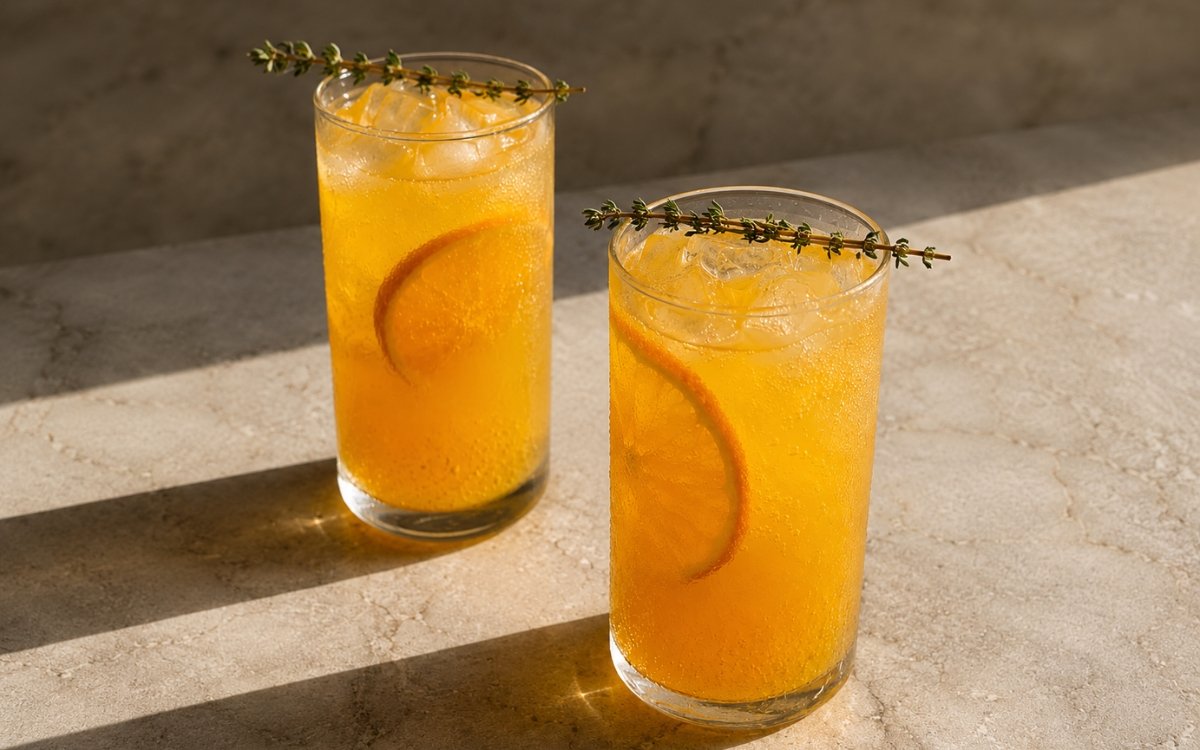
- Fill four tall glasses generously with ice cubes. Divide the chilled mango turmeric syrup evenly — approximately 50ml per glass. Swirl each glass once to chill the syrup against the ice. Top each glass with approximately 125ml of chilled tonic water, pouring gently down the inner side of the glass to preserve the carbonation. The distinction between tonic water and club soda is the specific flavour decision in this recipe — tonic water's bittersweet, quinine-forward character provides a specifically sophisticated counterpoint to the mango's tropical sweetness and the turmeric's earthy depth that club soda's neutral effervescence cannot provide. The tonic's bitterness is present as a finishing note in the completed drink — slightly dry, slightly mineral, specifically adult — that makes the drink taste less like a sweet fruit soda and more like a considered, complex beverage. Stir gently once or twice. Garnish each glass with a thin orange slice pressed against the inner side of the glass and a fresh thyme sprig rested across the rim or tucked into the drink. Serve immediately.
Notes
Ground turmeric stains everything it contacts — cutting boards, fingernails, light-coloured clothing, and white surfaces — with a vivid yellow-orange pigment from curcumin that requires several washes to remove fully. Use a dark or easily cleaned saucepan and wear an apron when stirring the simmering syrup. The staining from cooking is transient and expected; simply being aware of it prevents the yellow-splattered kitchen surface that an unprepared cook encounters.
The mango variety used directly affects the syrup's character. Ataulfo or Alphonso mangoes — small, kidney-shaped, intensely sweet and fragrant with low fibre — produce the most intensely flavoured, most naturally sweet syrup with the least extract-and-strain effort. Tommy Atkins mangoes — the large, commercially dominant variety available at most supermarkets — produce a more mildly flavoured, more fibrous syrup that is perfectly acceptable but requires firmer pressing during straining.