Ingredients
Method
Marinate the Chicken
- Put the 1kg bite-size chicken thigh pieces in a large bowl and add the 1½ tsp fine salt, ½ tsp black pepper, 1 tbsp soy sauce, 1 tbsp neutral oil and 1 tbsp cornstarch. Mix with your hands or a spoon for about 1 minute, until every piece is genuinely evenly and thinly coated with no dry pockets of starch left in the bowl. The coating should look like a light, slightly tacky film on the chicken, never a thick, pasty batter. Leave the chicken to sit at room temperature for 15 minutes while you start the rice. That light cornstarch coating is what helps the thighs brown quickly in the hot pan and gives the glaze a slightly rough surface to cling to.
Cook the Jasmine Rice
- As soon as the chicken is marinating, rinse the 300g jasmine rice in a bowl of cold water, swirling it with your fingers and changing the water several times until it runs mostly clear, then drain well in a sieve. Tip the rice into a medium saucepan with the 450ml water, ½ tsp fine salt and the 1 tsp neutral oil or butter, if using. Bring to a boil over medium-high heat, stir once, then cover tightly, reduce the heat to low and cook for 12 minutes. Turn off the heat and leave the rice to rest, still covered, for 10 minutes, without lifting the lid at any point, then fluff gently with a fork. That trapped steam is what finishes the grains evenly, keeping them soft and fluffy rather than wet on the bottom and undercooked on top.
Sear the Chicken in Batches
- Heat a large skillet or sauté pan over medium-high heat for about 2 minutes, until a drop of water sizzles away at once, and add a thin film of neutral oil only if the pan is dry. Add half the chicken in a single layer, with a little space between the pieces, and sear for 3–4 minutes without moving it, until the underside is deep golden-brown and genuinely releases from the pan. Turn the pieces and cook for 2–3 minutes more, until browned on the second side and nearly cooked through, then transfer to a plate. Repeat with the second batch, keeping any juices that collect on the plate. That two-batch sear is what keeps the pan hot enough to brown and lightly caramelise the edges instead of steaming the thighs pale and wet.
Build the Mango Chutney Glaze
- Lower the heat to medium and add the 1 tbsp neutral oil to the same pan if it looks dry. Add the minced garlic and grated ginger and cook for 20–30 seconds, stirring constantly, until fragrant but still pale. Add the 180g mango chutney, 2 tbsp soy sauce, 1 tbsp lime juice or rice vinegar, 80ml of the water and the ¼ tsp chilli flakes, if using, scraping up the browned bits from the base of the pan. Simmer for 2–3 minutes, stirring, until genuinely smooth, glossy and lightly thickened. Add the 150g mango cubes and cook for 1 minute, just until warmed and coated but still distinct. The glaze should coat the back of a spoon without setting into jam; if it is too thick, add the remaining water 1 tbsp at a time, and if it is too loose, simmer 1–2 minutes longer. That short, controlled simmer is what keeps the glaze clingy and bright rather than sticky and over-reduced.
Finish the Chicken in the Glaze
- Return the seared chicken and all its plate juices to the pan. Toss well and cook for 2–4 minutes over medium heat, stirring often, until every piece is lacquered with glaze and the chicken is fully cooked through. Check the thickest piece with an instant-read thermometer: it should reach 74°C / 165°F, with no pink at the centre. Taste the glaze and add a squeeze of extra lime juice if it needs more brightness. Take the pan off the heat as soon as the chicken is done. That brief finish is what lets the chicken cook through in the glaze without the thighs tightening or the fresh mango flavour turning dull and jammy.
Assemble the Bowls
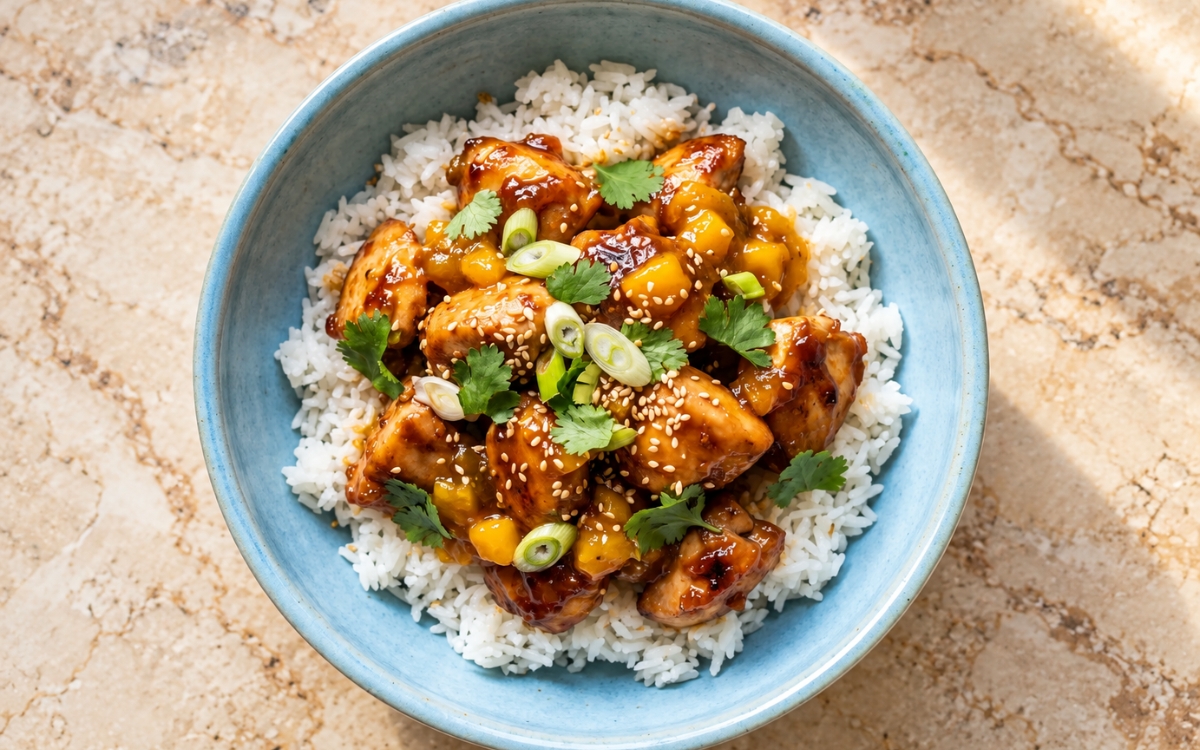
- Divide the fluffed jasmine rice evenly among 4 bowls, shaping it into a loose, even bed. Spoon the glazed mango chutney chicken over the rice, making sure each bowl gets a fair share of the mango cubes and any glaze left in the pan. Scatter the 2 thinly sliced scallions, 2–3 tbsp chopped cilantro and 2 tsp white sesame seeds over each bowl. The bowls should look genuinely glossy and amber, with the glaze sitting neatly on the rice rather than pooling at the bottom. Serve straight away while the chicken is hot. That last-minute garnish is what keeps the scallions crisp, the cilantro bright and the sesame dry and noticeable against the sticky glaze.
Notes
Searing the chicken in two uncrowded batches deserves genuine recognition as the technique most directly responsible for whether this bowl tastes browned and savoury or flat and stewed. The recipe's own instruction to "Do not steam the chicken in a crowded pan" matters because a full pan drops below browning temperature and floods with moisture — the pieces then boil in their own juices, losing the caramelised edges the glaze is meant to coat.
The light cornstarch coating deserves the same attention this technique receives throughout this collection's other glazed stir-fry dishes, because it decides how firmly the sauce holds on. The recipe's own note that "The cornstarch should form only a light coating, not a heavy batter" reflects how a thin starch film browns fast and turns slightly rough, while a thick paste would go gummy once the glaze goes in.
Choosing ripe but firm mango deserves genuine respect as the detail most directly responsible for the bowl keeping visible pieces of fresh fruit. The recipe's own advice to "Use ripe but still firm mango so the cubes stay visible in the glaze instead of dissolving completely" works because firm flesh holds its shape through a 1-minute warm-through, while soft, very ripe mango collapses into the chutney and blurs the contrast.
The finished glaze consistency deserves attention as a genuine, checkable readiness cue rather than a loose approximation. The recipe's own line to "keep the glaze clingy rather than saucy; this dish should sit neatly over the rice, not flood the bowl" means testing the back of a spoon, loosening with water 1 tbsp at a time, or simmering 1–2 minutes longer until it coats.