Ingredients
Method
Prepare the Ingredients
- Thinly slice the red onion — the thickness of the slice makes a specific difference in this sandwich. Too thick and the onion's sharpness dominates the lox's delicate flavour; sliced thinly enough to be nearly translucent, it provides the correct sharp aromatic note without any aggressive crunch. A mandoline produces the most consistent results; a sharp knife and steady hand produce an equivalent result. Thinly slice the tomato — approximately 5mm slices that are substantial enough to hold their shape but thin enough to be bitten through cleanly. Drain the capers in a fine-mesh sieve and shake off excess brine. Pick the dill fronds from their stems, discarding any coarse stem pieces. Pat the lox slices very lightly with a paper towel if they appear wet or excessively brine-moist — the excess moisture is the primary cause of a soggy bagel bottom, and the brief drying prevents the cream cheese from losing its grip on the bread.
Toast and Schmear
- Slice each bagel horizontally in half. Toast both halves to your preferred level of crispness — the toasting decision is personal, but a New York bagel specifically benefits from a level of toasting that produces a firm, golden surface capable of supporting the weight of the toppings without becoming soggy from the cream cheese and tomato moisture. A pale toast produces a softer result that gives way under the fillings; a deeper toast holds the structural integrity of each bite. Spread a generous layer of whipped cream cheese across both halves of each toasted bagel — both halves, not only the bottom. Whipped cream cheese is specified rather than regular block cream cheese for its specific light, airy texture that spreads without resistance and coats the bagel surface in a uniform, smooth layer without tearing the bread. The schmear should be generous — thinly applied cream cheese disappears under the toppings and provides no coating or richness in the finished sandwich. For extra richness, lightly butter the cut surface of each bagel half before toasting — the butter crisps against the toaster and adds a subtle richness beneath the cream cheese.
Assemble the Bagel
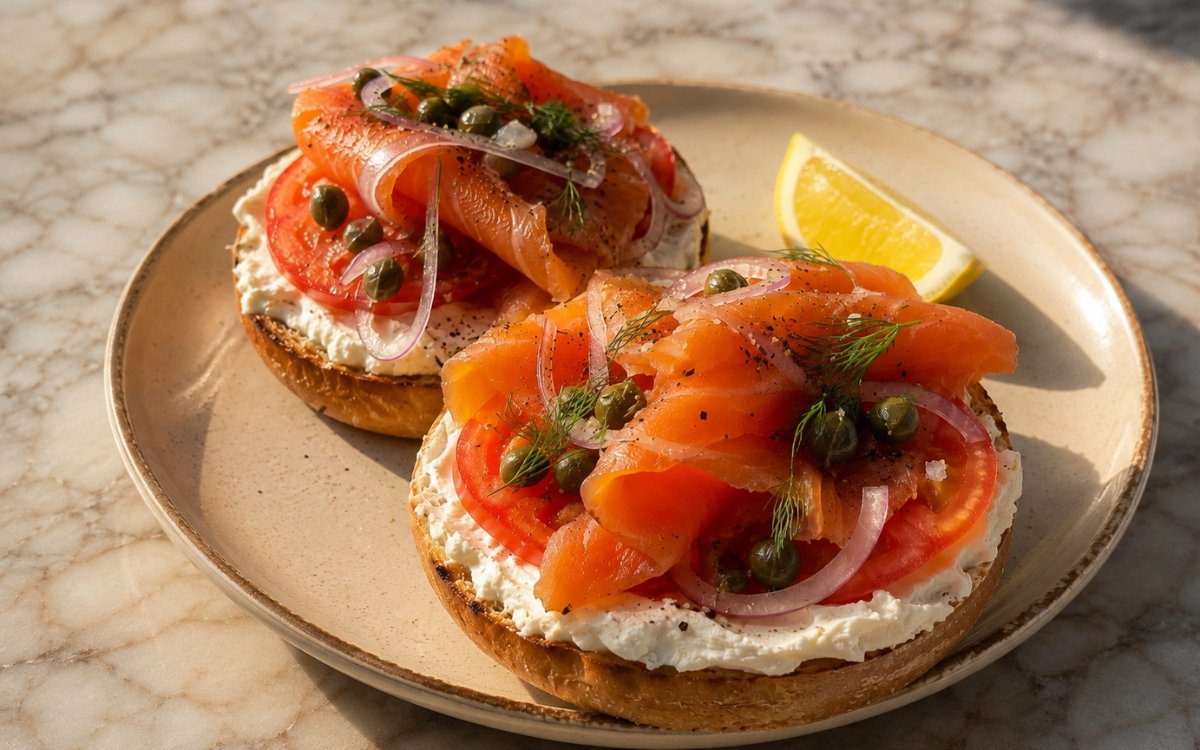
- Place the tomato slices on the cream-cheese-schmeared bottom half of each bagel. Immediately season them with a pinch of flaky sea salt — this is the step that makes the assembled bagel taste complete rather than merely assembled. The salt draws moisture to the tomato's surface and concentrates its natural sweetness while simultaneously seasoning the juice that will be released into the cream cheese below. Unsalted tomato in this sandwich is the difference between a background filler and a contributing component. Allow the salt to sit on the tomato for 30 seconds before the next layer goes on. Drape the lox slices over the salted tomatoes — 60g per bagel, layered in folds rather than laid flat, which provides both visual presentation and the pleasing textured bite of overlapping layers. Scatter the thinly sliced red onion over the lox. Distribute the picked dill fronds across the surface — enough to be present in most bites without overwhelming any single bite with herb. Scatter the drained capers over the assembly — their small, round, briny bursts provide the specific acidic punctuation that makes each bite more interesting. The capers are not decoration; their brine complements the lox's salt and the lemon's acidity in the specific combination that makes this topping combination specifically correct.
Finish and Serve
- Squeeze the lemon wedge over the assembled open-face bottom half — distributing the juice across the lox, onion, and dill. The lemon's acidity cuts the richness of the cream cheese and brightens the lox's flavour in the specific way that transforms the sandwich from rich and savoury to rich, savoury, and vivid. A confident crack of fresh black pepper over the entire assembly. Place the top half of the bagel over the assembled bottom half and press gently. Serve immediately — the toasted bagel's crispness is at its best in the first few minutes before the cream cheese and tomato moisture begins to soften the bread surface.
Notes
Nova lox is the specific type of salmon for this preparation — cold-smoked salmon cured with salt and sugar, producing a silky, delicate texture and a mild, slightly sweet smoke character that is specifically different from hot-smoked salmon's flakier, more assertive result. Nova lox maintains its silky, translucent character when folded and draped rather than falling apart or drying at the edges. It is the standard for a New York-style bagel and the specific product that the combination of capers, cream cheese, red onion, and dill was developed to accompany.
The red onion's role in this sandwich is specifically complementary to the lox rather than simply pungent. Raw red onion's sulfur compounds — the source of its sharpness — are at their most aggressive in thick slices. At the paper-thin slicing thickness this recipe specifies, those compounds are present as a background sharpness and aromatic note rather than a dominating flavour. The onion's mild sweetness also emerges more clearly when sliced thin, and its purple-red colour provides the visual contrast that makes the assembled bagel immediately appetising.
The dill frond — not dill weed, not dried dill — is the aromatic herb that specifically belongs alongside lox. Fresh dill's volatile aromatic compounds produce a clean, slightly anise-like, fresh-green character that complements the salmon's mild smokiness and the lemon's brightness with a specifically Nordic-influenced freshness. Dried dill in this application tastes dusty and muted rather than providing the fresh aromatic counterpoint the sandwich requires.