Ingredients
Method
Cook the Rice
- Rinse the rice until the water runs mostly clear, then drain well. Heat the vegetable oil in a medium pot over medium heat. Add the rice and cook for 3–4 minutes, stirring often, until the grains look slightly opaque and lightly toasted. Add the diced onion and cook for 2–3 minutes until softened. Add the garlic and cook for 30 seconds. Add the crushed tomatoes, chicken stock, salt, cumin, chili powder, and black pepper. Stir once, bring to a boil, then reduce to low, cover, and cook for 15–18 minutes until the liquid is absorbed and the rice is tender. Turn off the heat and let it rest, covered, for 10 minutes. Fluff gently and fold in the chopped cilantro. Do not keep stirring once the liquid is added. That is one of the main turning points between fluffy rice and heavy sticky rice. Toasting the rice before any liquid is added coats each grain in fat and slightly seals its surface, which is what keeps the finished rice light and separate rather than releasing excess starch and turning sticky in the tomato liquid.
Make the Pico de Gallo
- Combine the tomatoes, sweet onion, red onion, jalapeño, lime juice, lime zest, olive oil, salt, and black pepper in a bowl. Toss well and let sit for 10–15 minutes. Taste and adjust seasoning. If it looks very wet, spoon off a little excess liquid before serving. The pico should stay fresh and spoonable, not flood the bowl. The short rest lets the salt draw a little liquid out of the diced tomato before it ever reaches the bowl, which is a small step that pays off directly in how much moisture ends up near the crisp tortilla chips later.
Cook the Chipotle Beans
- Heat the oil in a saucepan over medium heat. Add the diced white onion and cook for 4–5 minutes until softened. Add the garlic and cook for 30 seconds. Add the minced chipotle peppers, adobo sauce, cumin, smoked paprika, oregano, salt, and black pepper. Stir for 30 seconds until fragrant. Add the drained red beans and 120ml water or stock. Simmer gently for 8–10 minutes, stirring occasionally, until the beans are hot and lightly coated in the smoky sauce. Add a little more water only if needed. The beans should stay whole and glossy, not mashed and not soupy. Stirring occasionally rather than vigorously is what keeps the beans intact — this bowl needs whole, distinct beans as their own textural component, a different goal from a refried bean preparation built for a spreadable, cohesive texture.
Make the Guacamole
- Halve and scoop the avocados into a bowl. Mash with the lime juice, fine sea salt, and black pepper until creamy but still slightly textured. Keep it simple and thick. It should hold its shape as a generous spoonful in the bowl, not run like a sauce. Leaving out onion, garlic, and cilantro here is a deliberate choice rather than an oversight — this bowl already has plenty of sharp, raw allium and herb flavour coming from the pico de gallo sitting right beside it, and a plain, clean guacamole gives the bowl a genuinely cooling counterpoint rather than repeating the same flavours twice.
Prepare the Tortilla Chips
- Cut each 20cm tortilla into 6–8 triangles. Heat neutral oil in a skillet or saucepan to about 175–180°C. Fry the tortilla triangles in batches for 1–2 minutes until crisp and golden. Transfer to paper towels and season lightly with fine sea salt while still hot. Do not overcrowd the oil. If the chips steam instead of fry, they soften and lose the crisp texture the bowl needs. Salting immediately while the chips are still hot and glistening with oil is what allows the seasoning to actually adhere — chips left to cool first won't hold the salt nearly as well.
Warm the Corn and Sour Cream
- Drain the sweet corn well. It can be served at room temperature or warmed briefly if preferred. Stir the sour cream or crema until smooth so it can be spooned cleanly into each bowl. A quick stir before serving smooths out any separation that can happen in sour cream or crema sitting in the refrigerator, so it spoons cleanly rather than looking broken or lumpy against the other components.
Assemble the Bowls
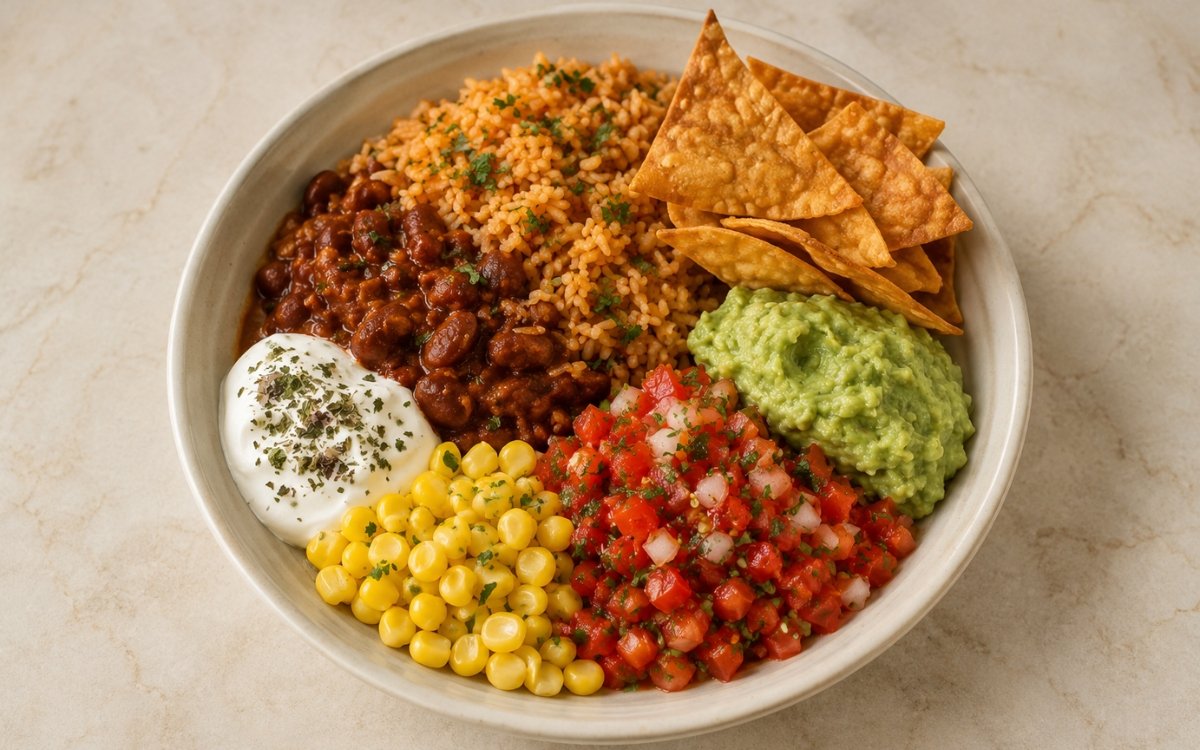
- Divide the rice between 4 bowls, arranging it as one large section. Spoon the chipotle beans beside the rice. Add 50g sweet corn per bowl. Add a generous spoonful of pico de gallo and a heavy spoonful of guacamole. Add 30g sour cream or crema per bowl. Finish each bowl with a pile of fresh tortilla chips arranged at the edge or top side, like the image, so they stay crisp. Keeping every component in its own distinct section rather than mixing them together preserves both the visual impact and the individual textures — mixed together, the rice would soften the chips and dull the pico's brightness far faster than if each stays separate until the person eating actually combines them.
Serve
- Serve immediately while the rice and beans are warm and the pico, guacamole, sour cream, and chips stay fresh and distinct, garnish with dried Mexican oregano for sprinkle and chopped fresh cilantro. The chips are the most time-sensitive element in the whole bowl, losing their crunch within minutes of contact with the surrounding warm, moist components, so serving without delay is what keeps that crunch intact at the table.
Notes
The choice to keep this bowl's guacamole deliberately plain — just avocado, lime, salt, and pepper — is a genuine design decision rather than a simplified shortcut. With pico de gallo already contributing raw onion, jalapeño, and citrus brightness elsewhere in the same bowl, a fully loaded guacamole with its own onion, garlic, and cilantro would essentially repeat those same flavours rather than adding something distinct. The plain version instead gives the bowl a genuinely cooling, clean counterpoint that plays a different role than the pico.
Keeping every component in its own section during assembly, rather than combining everything into one mixed bowl before serving, protects more than just the visual presentation. Rice and beans sitting directly against tortilla chips will soften them within minutes; pico de gallo mixed throughout the whole bowl loses its bright, distinct presence and instead becomes diffuse background moisture. Assembling in sections and letting the person eating combine things themselves, bite by bite, is what keeps every element at its intended texture for as long as possible.
The chipotle beans and the pico de gallo are both built around the same underlying principle of staying distinct rather than blending into a uniform sauce — the beans are simmered gently and stirred carefully to remain whole rather than breaking down, while the pico is only briefly rested and lightly drained rather than cooked at all. Both choices exist to preserve real textural variety across the bowl rather than everything softening toward the same consistency.
Frying the tortilla chips close to serving time is worth planning around rather than treating as flexible. Every other component in this bowl — the rice, the beans, the pico, the guacamole — holds reasonably well for a short window before serving. The chips are the exception, and timing their frying to happen last, right before assembly, is what keeps the bowl's crunch genuinely fresh rather than already softening by the time it reaches the table.