Ingredients
Method
Brew the Japanese Green Tea
- Heat the 1.65 litres of water to 75–80°C. Japanese green teas — Sencha, Bancha, and most bagged Japanese varieties — are specifically more sensitive to temperature and steep time than Chinese green teas or the white teas used in other preparations in this collection. The polyphenols responsible for the specifically harsh, astringent bitterness of over-brewed green tea extract rapidly at any temperature in the green tea preparation range; Japanese varieties are particularly prone to this because of their higher L-theanine and catechin concentrations. At 75–80°C, 2–3 minutes extracts the pleasant, grassy, slightly vegetal, lightly tannic character that makes Japanese green tea specifically refreshing as a base. At boiling water or beyond 3–4 minutes at this temperature, the tea becomes noticeably bitter. Add the 6–7 green tea bags and steep for exactly 2–3 minutes. Remove without squeezing — squeezing releases the concentrated, most astringent liquid held within the bags. Allow the tea to cool until just warm — not cold, specifically warm enough to dissolve the honey in the next step.
Dissolve the Honey While Warm
- Stir in 3 tbsp of honey while the tea is still slightly warm — the warmth facilitating complete dissolution without requiring the cold-process lime-juice technique used in preparations where the liquid was already cold. Stir until completely dissolved and no honey deposits are visible. Allow to cool completely to room temperature.
Prepare the Cucumber Juice
- Prepare the cucumber — peeling it only if the skin is tough, waxed, or tastes specifically bitter. Garden cucumbers and quality English cucumbers have thin, flavourful, unwaxy skins that contribute the concentrated green aromatic compounds discussed throughout this collection's cucumber preparations. Persian cucumbers are the most consistently mild and pleasant skin-on option. Commercial waxed cucumbers should always be peeled. Cut the cucumber lengthwise and scoop out the watery seed channel if present — the seeds and the gel surrounding them are the primary source of the excess water that makes unprocessed blended cucumber produce a watery, slightly diluted result. Blend the prepared cucumber until smooth. Strain through a fine-mesh sieve, pressing gently on the pulp to extract the juice while leaving the fibrous solids behind. The correctly pressed cucumber juice should be almost clear to very pale green, specifically fragrant — cool, mineral, and clean rather than thick or pulpy. This juice-only approach produces the most specifically clean, most delicate cucumber character in the finished tea.
Combine and Cold-Infuse the Mint
- In a large pitcher, combine the cooled green tea, strained cucumber juice, and 60ml of fresh lime juice. Stir gently to combine. Lightly clap the fresh mint leaves between your palms and add to the pitcher. Cover and refrigerate for 20–30 minutes. The mint cold-infusion in this preparation follows the strict 20–30 minute limit applied throughout this collection — in the combined green tea and cucumber juice medium, the mint's aromatic contribution is specifically the clean, cool, menthol-adjacent freshness that amplifies both the tea's grassy lightness and the cucumber's mineral coolness without the grassy, bitter shift that extended steeping produces. After 20–30 minutes, strain out all mint leaves. Taste the finished tea: if additional brightness is needed, add more lime juice in small increments; if additional sweetness is needed, dissolve a small additional amount of honey in a tablespoon of warm water and stir through.
Chill and Serve
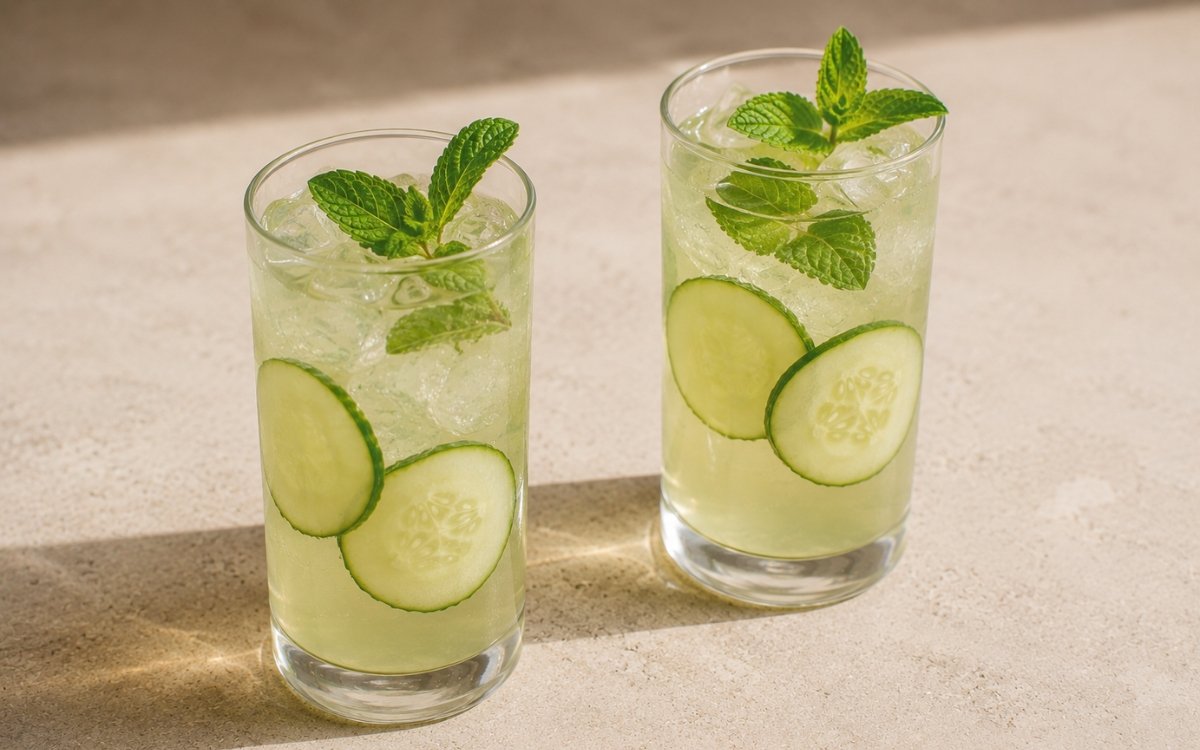
- Transfer the strained tea to a sealed pitcher and chill for 2–4 hours. Overnight chilling is fine after the mint has been removed — the extended cold rest without the mint produces no over-extraction issues and allows the green tea, cucumber, and lime to fully integrate into a unified flavour. Fill glasses with ice. Pour the chilled tea over the ice. Garnish each glass with 2–3 thin cucumber slices and a few fresh mint leaves. Serve immediately while cold and aromatic.
Notes
Japanese green tea — specifically Sencha or the generic Japanese style green tea in most supermarket Japanese green tea bags — has a specifically grassy, fresh, light vegetal character that is different from Chinese green teas (which tend toward a nutty, toasty character from the pan-firing during processing). The Japanese style's grass-and-freshness character is specifically most appropriate for this cucumber-and-mint combination because all three primary ingredients share the clean, cool, green aromatic register. Chinese green tea in the same preparation would add a warm, slightly toasty note that sits differently against the cucumber and mint.
The lime juice rather than lemon is specifically chosen for this preparation — lime's sharper, slightly more tropical citrus acidity is tonally more consistent with the Japanese green tea and cucumber's clean, cool, specifically fresh register than lemon's warmer, more assertive citrus character would be.