Ingredients
Method
Cook the Pasta
- Bring a large pot of water to a full rolling boil and salt generously — the water should taste well-seasoned throughout, not bland. The pasta water seasoning is the dish's primary salt source beyond the garlic-spinach step, and with a short-ingredient-list pasta like this one, under-seasoned pasta produces a flat, one-dimensional bowl regardless of the sauce's quality. Add the orecchiette and cook, stirring occasionally to prevent the cupped pieces from nesting together and sticking, until exactly 2 minutes shy of the package's al dente time. The pasta finishes cooking in residual heat when combined with the sauce off the heat — pulling it underdone prevents the final result from being over-cooked and soft. Before draining, reserve 240ml of the starchy pasta water in a heatproof bowl or jug and keep it warm — the pasta water is the consistency tool for the entire sauce and works significantly better warm than cold. Drain without rinsing.
Wilt the Spinach with Garlic
- While the pasta cooks, heat a large skillet over medium heat and add the 30ml of olive oil. Add the thinly sliced garlic and cook for 45–60 seconds, stirring continuously. The garlic is the flavour foundation of the dish's savoury dimension and must remain very pale — barely golden at its edges, fragrant and sweet rather than browned and bitter. At medium heat in olive oil, thin garlic slices move from raw to correctly pale-golden to browned in approximately 90 seconds; the 45–60 second window with continuous stirring produces the correct fragrant, just-cooked result. Add the 200g of baby spinach, the 3g of salt, and 1g of black pepper. Toss continuously for 1–2 minutes using tongs or a spatula, turning the spinach through the garlic oil. The spinach should collapse completely and turn from its raw, springy volume to a wilted, tender, cohesive mass while remaining bright green — this takes approximately 90 seconds. Remove from the heat if the spinach begins releasing significant liquid and the pan starts to pool — the target is wilted and tender, not stewed and watery. Excess liquid in the skillet dilutes the ricotta sauce when they are combined.
Build the Lemon Ricotta Sauce
- In a large mixing bowl — large enough to eventually toss the pasta in — combine the 250g of whole milk ricotta, 80g of finely grated Parmigiano-Reggiano, lemon zest of the full lemon, 30ml of fresh lemon juice, and the optional 1g of nutmeg. Whisk the dry and dairy components together first, then add 120ml of the reserved warm pasta water gradually while whisking continuously. The warm pasta water loosens the ricotta from its thick, slightly grainy cold texture into a smooth, uniform, pourable sauce — it also begins the starch emulsification that will subsequently hold the sauce to the pasta. The ricotta's fat and protein disperse through the pasta water as the whisking motion forces the two phases together. If the ricotta appears slightly grainy as you begin whisking, continue — friction and the warmth of the pasta water smooth it out progressively. The finished sauce should have the consistency of a thick but spoonable cream — it drops slowly from the whisk in a heavy ribbon rather than flowing freely. This is the correct consistency to add to the hot pasta; it will loosen further from the pasta's residual heat. The lemon zest and lemon juice perform different functions that make both necessary: the zest's volatile oils add aromatic, complex citrus fragrance that infuses throughout the sauce; the juice adds the clean, direct acidity that brightens the ricotta's mild, slightly milky character. Neither alone produces what both together achieve.
Combine Everything Off the Heat
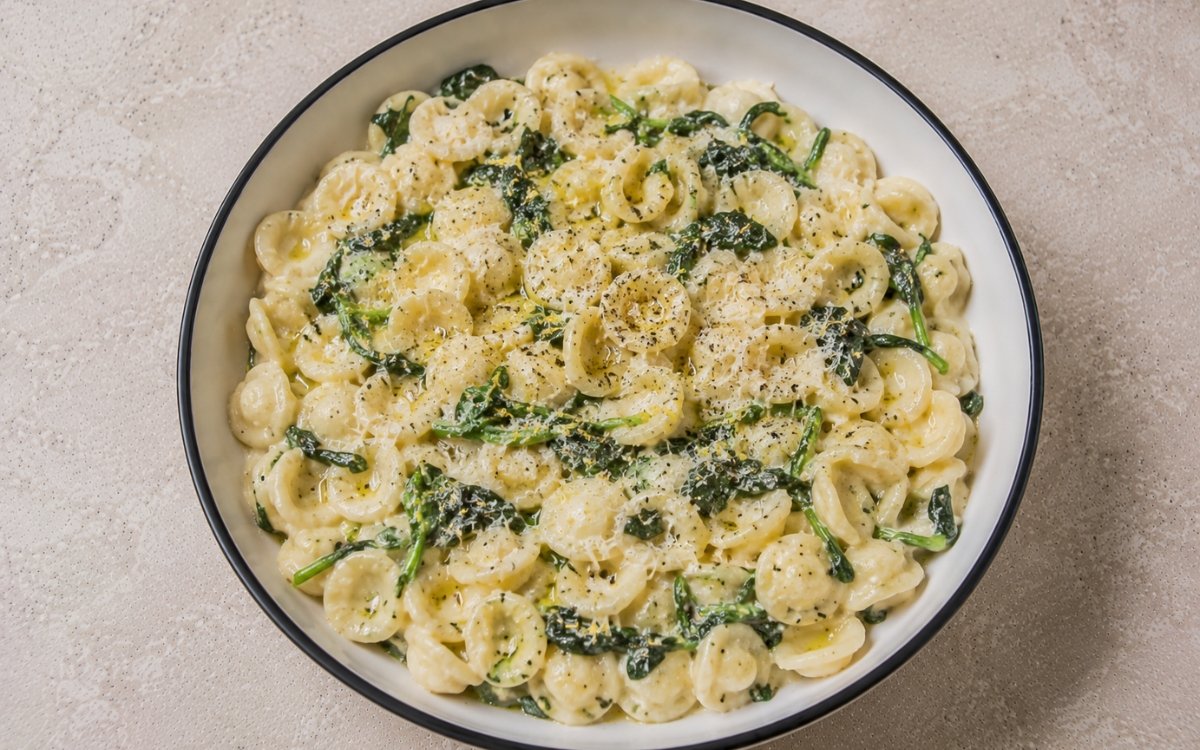
- Add the drained orecchiette directly to the skillet with the wilted garlic spinach. The skillet must be completely off the heat for this and all subsequent steps — this is the single technique requirement that most determines whether the ricotta sauce is silky or grainy. High direct heat causes ricotta's whey proteins to tighten and separate from the fat, producing a grainy, curdled result rather than the smooth emulsification that the recipe depends on. The residual heat of the pasta and the warm pan is precisely sufficient for the correct gentle warming and emulsification — no additional heat is needed or correct. Pour the ricotta mixture over the pasta and spinach. Toss vigorously for 1–2 minutes — turning the orecchiette through the sauce continuously, ensuring the sauce enters the cupped interior of each piece as well as coating the exterior. The pasta's surface starch and the pasta water's dissolved starch combine with the ricotta's fat and the Parmigiano's protein during the tossing to produce the unified, silky emulsification that makes the finished sauce cling rather than pool. If the sauce appears tight, sticky, or too thick, add the remaining pasta water in 30ml increments while tossing after each addition — the correct consistency is a light, glossy coating that fills the cups of the orecchiette without excess sauce pooling at the bottom of the skillet. Taste and adjust with additional salt if needed.
Serve
- Divide among four warm bowls immediately — ricotta-based sauces lose their silkiness progressively as they cool and the sauce sets more firmly around the pasta. Serve within 2–3 minutes of finishing. Finish each bowl with a generous additional grating of Parmigiano-Reggiano, a confident crack of fresh black pepper, and a small drizzle of extra-virgin olive oil if desired.
Notes
Orecchiette — the small, cupped pasta from Puglia, whose name means "little ears" — is the specifically correct pasta for this sauce rather than simply a regional preference. The cup shape collects and holds the ricotta sauce in its interior, producing a concentrated hit of lemony, creamy sauce from inside each piece when bitten. With flat pasta, the same sauce coats the exterior surface but provides no interior contrast — every bite tastes of the exterior coating alone. With orecchiette's cupped shape, every bite contains both the lightly coated exterior and the more concentrated sauce pooled in the interior cup. The difference in eating experience is immediately apparent and is the reason orecchiette appears in Southern Italian cooking specifically alongside ricotta-based sauces.
The warm pasta water for the ricotta sauce preparation is more important than it initially appears. Cold water added to cold ricotta produces a sauce that takes much longer to become smooth, may not fully emulsify the fat, and adds cooling to the pasta combination step that is already off direct heat. Warm pasta water reduces the ricotta's viscosity immediately and begins the emulsification in the bowl before the sauce contacts the pasta — the pasta combination step is then completing an already-initiated emulsification rather than starting it from scratch.
Whole milk ricotta is specified and cannot be substituted with low-fat or fat-free versions for the same reason as every other ricotta application in this collection — the fat content is what produces the silky, smooth emulsification. Low-fat ricotta has insufficient fat to disperse through the pasta water smoothly and produces a thinner, slightly grainier sauce that does not cling to the pasta with the same quality.