Ingredients
Method
Prepare the Lemon Shells
- Cut the lemons in half lengthwise. Carefully scoop out the pulp with a spoon, keeping the shells intact. Trim a very thin slice from the bottom of each lemon half if needed so they sit level, but do not cut through into the cavity. Place the lemon shells on a tray or in a muffin tin so they stay stable while filling. Do not pierce the shells. Even a small hole will cause the posset to leak while setting. That careful, deliberate hollowing protects the shell's own intact structure right through to serving — even a tiny hole would give the still-liquid posset a route to leak out before it has any chance to set.
Extract the Lemon Juice
- Press the scooped lemon pulp through a sieve or squeeze it by hand. Measure 80ml lemon juice. Strain out seeds and pulp. The posset sets because the hot cream reacts with the lemon juice. Use fresh lemon juice, not bottled. That genuine, fresh lemon juice carries the real, active acidity this whole setting reaction depends on — bottled juice, often processed and less acidic, wouldn't reliably trigger the same reaction with the hot cream.
Infuse the Cream with Lemon Zest
- Add the heavy cream, sugar, lemon zest, and a pinch of salt to a saucepan. Place over medium heat and stir until the sugar dissolves. Bring to a gentle boil, then reduce slightly and simmer for 3 minutes, stirring often. The cream should steam heavily and bubble gently, but not boil violently. The cream needs a short simmer to concentrate slightly and dissolve the sugar fully. If it is only warmed, the posset may set too softly. That deliberate, genuine simmer is exactly what concentrates the cream and fully dissolves the sugar — cream only gently warmed simply hasn't undergone the same concentration, leaving the finished posset correspondingly softer than intended.
Add the Lemon Juice
- Remove the pan from the heat. Let it stand for 1 minute. Stir in the 80ml lemon juice. The mixture will thicken slightly almost immediately. Let it sit for 5 minutes to finish infusing, then strain through a fine sieve into a jug. After adding the lemon juice, the cream should look smooth and slightly thicker, not split or grainy. That brief, one-minute pause before the lemon juice is stirred in protects the cream from a real risk — adding acid to liquid that's still at a full, aggressive boil would agitate it enough to genuinely split rather than thicken smoothly.
Fill and Chill
- Pour the posset mixture into the lemon shells, filling each almost to the rim. Transfer carefully to the refrigerator and chill for at least 4 hours, preferably overnight, until fully set. Do not move them once filled if the shells are unstable. A muffin tin or egg carton-style support helps keep the surfaces level. That stable, supported positioning throughout the chill protects the still-liquid posset from tipping or spilling before it has genuinely set into its final, spoonable texture.
Brûlée the Tops
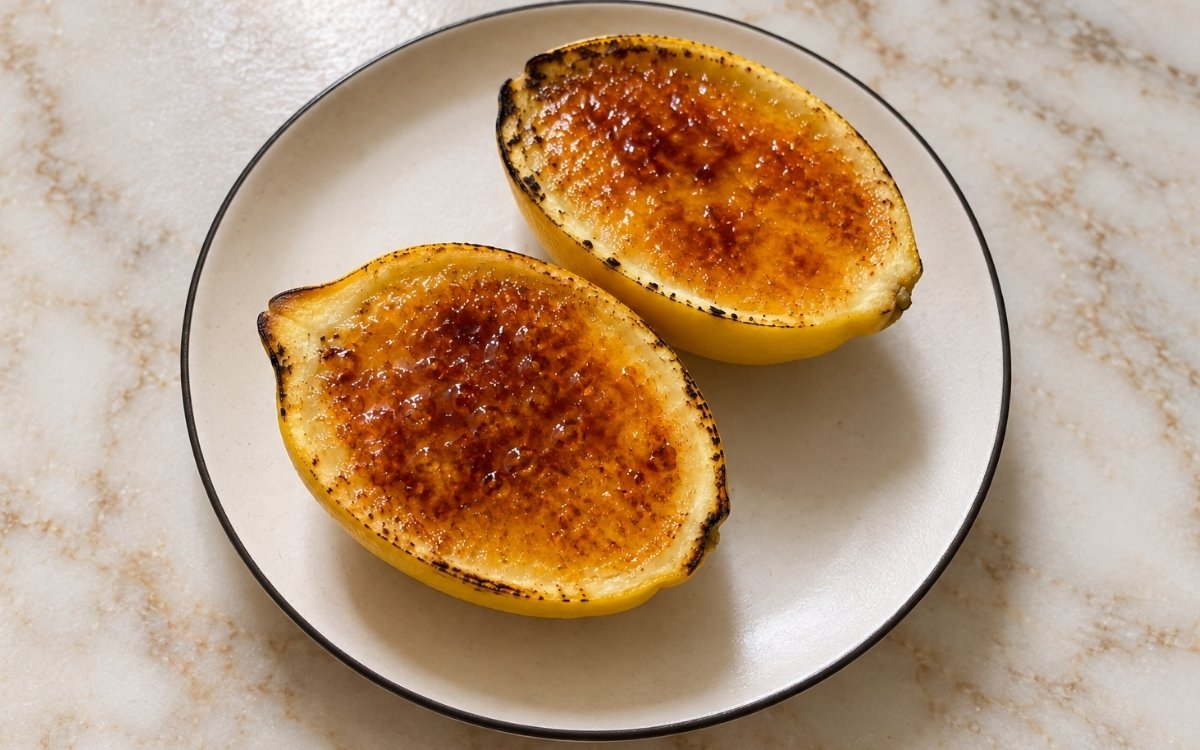
- Just before serving, sprinkle a thin, even layer of caster sugar over each set posset. Use a kitchen torch to caramelize the sugar until amber-brown and glassy, with darker patches in places. Let the caramel sit for 1 minute to harden before serving. Keep the torch moving. If you hold it too long in one place, the sugar burns bitter and the posset underneath can soften. That constant, deliberate torch movement distributes heat evenly across the sugar's own surface — lingering too long in any one spot would concentrate enough heat to both burn the sugar and begin softening the delicate set posset directly beneath it.
Notes
Giving the cream a genuine, short simmer, rather than merely warming it, deserves genuine recognition as the technique most directly responsible for whether this posset sets to its proper, spoonable firmness. The recipe's own explicit warning that cream "only warmed" risks a posset that "may set too softly" reflects a real, common failure point — that deliberate concentration is what gives the finished dessert its intended texture.
Pausing briefly before stirring the lemon juice into the just-simmered cream deserves the same attention this technique receives throughout this collection's other citrus-set custards. That brief cooling window protects the mixture from a genuine risk of splitting — acid introduced into liquid still at a full, aggressive boil would agitate the cream considerably more than this recipe's carefully timed pause allows.
Straining the finished mixture before it ever goes into the lemon shells deserves genuine attention as the technique responsible for the posset's whole clean, silky finish. The recipe's own explicit note that straining "removes zest pieces and gives the posset a clean, silky finish" reflects real, deliberate care about the final texture beyond simply getting the flavour right.
Torching the sugar only right before serving, never in advance, deserves genuine respect as the detail responsible for the brûlée's whole defining crackle. The recipe's own explicit warning that "the caramel softens if refrigerated after brûléeing" reflects a real, time-sensitive process this final step depends on getting right at exactly the correct moment.