Ingredients
Method
Brew the Black Tea Precisely
- Heat the 1.65 litres of water to 90–95°C. Add the 5 black tea bags and steep for exactly 2½–3 minutes — no longer. Black tea over-steeped at this temperature develops harsh tannins that will compete directly with lavender's delicate floral character and make the blueberry syrup taste flat rather than bright. Remove the bags gently without squeezing and allow the tea to cool to lukewarm before proceeding. A lighter black tea — Ceylon or a light breakfast blend — is the correct choice here because it provides structure without the aggressive, malt-forward depth that would overwhelm the floral elements.
Infuse the Lavender
- Add the 1 teaspoon of dried culinary lavender buds, or one small fresh lavender sprig, to the warm tea. Begin checking the aroma at 4 minutes and remove the lavender the moment a soft, clean floral note is clearly detectable in the liquid. The window here is narrower than with any other herb in this collection — lavender crosses from elegantly floral to soapy and medicinal faster than almost any other botanical. Four to six minutes is the range; less is always safer than more. If it smells like soap, laundry, or perfume, the lavender infused too long and the base cannot be fully corrected. Always use culinary-grade lavender — ornamental or craft lavender may be treated with chemicals and will produce an unpleasant, artificial flavour regardless of timing.
Make the Light Blueberry Syrup
- Combine the 300g of fresh blueberries, ¼ cup of white sugar, and ¾ cup of water in a small saucepan. Bring to a gentle simmer over medium-low heat and cook for 8–10 minutes, just until the berries have burst and released their deep purple colour and natural aroma into the liquid. Keep the heat consistently gentle throughout — aggressive boiling reduces the syrup too quickly and pushes the blueberry flavour from fresh and bright toward cooked and jammy, which will make the finished tea taste heavy rather than clean. The syrup at this stage should look vivid and deeply coloured but remain thin and pourable, not thick or reduced.
Strain the Syrup
- Pour the contents of the saucepan through a fine-mesh sieve into a bowl or measuring jug. Allow the syrup to drain naturally under its own weight. Do not press or push the berry solids through the sieve — pressing extracts starchy, cloudy liquid and introduces a cooked, slightly bitter berry character that muddies the syrup's clean colour and flavour. Discard the spent berries and allow the strained syrup to cool completely to room temperature before using. The finished syrup should be thin, deeply coloured, and smell like fresh, ripe blueberries.
Sweeten the Tea Base
- Stir 120–160ml of the completely cooled blueberry syrup into the lavender-infused tea base. Begin with 120ml, taste carefully, and add more only if the balance needs adjustment. The blueberry should register as a gentle, rounded sweetness and a soft fruit depth in the background — present and supportive rather than dominant. The lavender floral note should remain clearly detectable, and the black tea structure should still be felt underneath everything. If the blueberry pushes the drink into obvious sweetness or overwhelms the floral character, pull back. This drink is designed to lean restrained.
Chill Fully
- Refrigerate for 1–2 hours until completely cold and the flavours are fully integrated. Chilling allows the lavender, blueberry, and black tea elements to settle into each other and find their balance. Served warm or partially chilled, the lavender note feels heavy and perfumed, and the blueberry sits disconnected rather than woven into the profile. Full chilling is what transforms a collection of individual flavours into a cohesive, elegant drink.
Serve
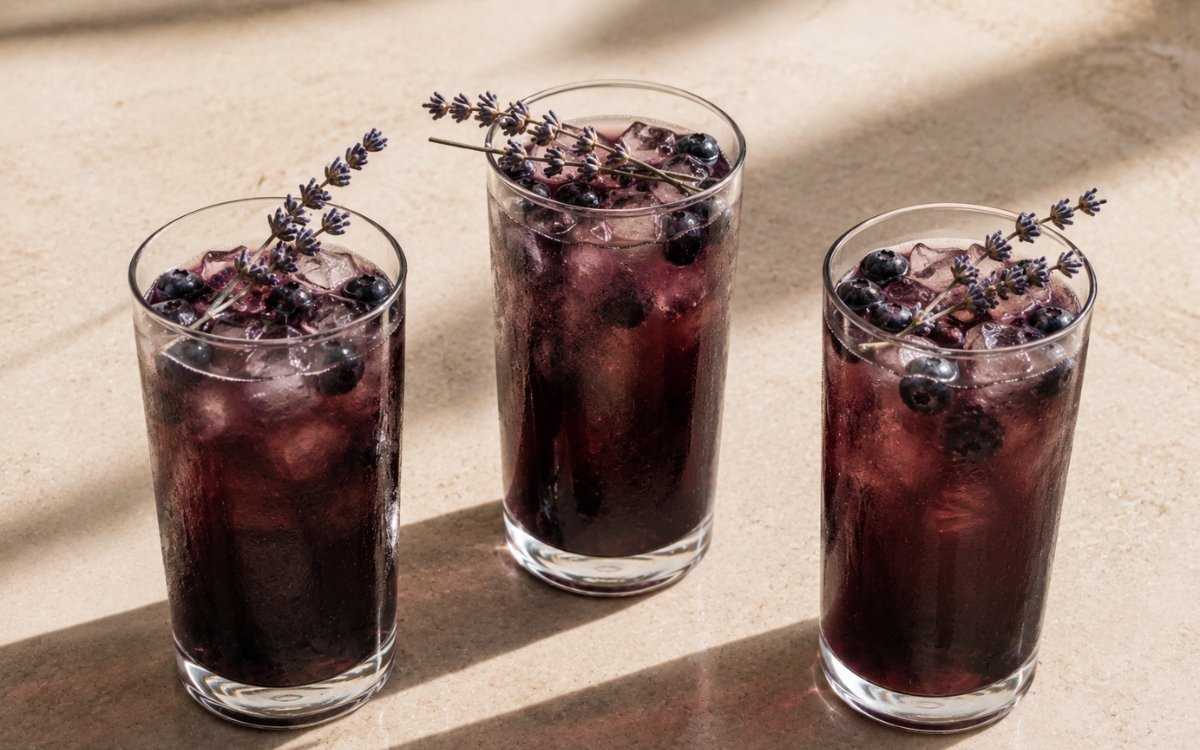
- Fill glasses generously with ice. Pour the chilled lavender blueberry iced tea over the ice and garnish with fresh blueberries and a small lavender sprig. Serve immediately while the colour is at its most vivid and the aroma is cleanest.
Notes
Lavender demands more precision than any other botanical in this collection. One teaspoon of dried buds is a small quantity by most standards, and yet it is entirely capable of ruining a 1.65L batch of tea if left in contact with the liquid for even two or three minutes too long. Treat lavender as a spice with real potency rather than a gentle herb — approach the infusion with full attention and remove it the moment the aroma reaches the correct register. Clean, soft, and floral is correct. Perfumed, soapy, or reminiscent of bath products means the infusion went too far.
Blueberry syrup quality depends on the same variable that governs most fresh fruit preparations in this collection — the ripeness and quality of the fruit. Fresh, ripe blueberries in season produce a syrup with genuine depth, natural sweetness, and a vivid, clean colour. Underripe or out-of-season berries produce a thinner, more acidic syrup without the soft sweetness needed to balance the lavender and black tea. Frozen blueberries, fully thawed before cooking, are a consistently reliable substitute outside of peak season and often outperform underripe fresh fruit in both colour and flavour intensity.
Black tea selection matters more in this recipe than in most of the others in this collection because the tea must provide structure without overpowering the lavender. Ceylon and light breakfast blends are ideal — they deliver enough body and mild tannin to anchor the drink without the aggressive darkness of Assam or Irish breakfast blends, which would compete with the floral layer and make the blueberry syrup taste flat. Five bags rather than six is intentional — this recipe is built around balance and delicacy, and a slightly lighter tea base gives the lavender and blueberry more room to express themselves clearly.