Ingredients
Method
Marinate the Chicken
- Cut the 800g chicken thighs into small, even cubes of about 2cm, trimming away any large pieces of fat so every cube cooks at the same pace. Combine them in a bowl with the 1 tbsp light soy sauce, 1 tbsp Shaoxing wine, 1 tsp cornstarch, 1 tsp neutral oil, ¼ tsp salt and ⅛ tsp white pepper, then mix with your hands until each cube is lightly and evenly coated. The marinade should cling as a thin film rather than sit wet in the bottom of the bowl. Cover and leave the chicken to stand for 20 minutes. That thin cornstarch coating is what gives the chicken a velvety interior and helps the glaze cling later.
Prepare the Sauce
- Whisk together the 2 tbsp light soy sauce, 1 tbsp dark soy sauce, 1½ tbsp Chinese black vinegar, 1½ tbsp Shaoxing wine, 1½ tbsp sugar, 80ml chicken stock or water and 1 tsp cornstarch in a small bowl until the sugar dissolves and no cornstarch lumps remain. Taste a drop: it should read savoury first, then lightly sweet and tangy, without tasting harshly salty. Keep the dark soy to the stated 1 tbsp, since it is there for colour and depth rather than saltiness. Set the bowl beside the stove. That reminder to stir it again right before use is what stops the settled cornstarch from leaving a thin, watery sauce.
Set Up the Mise en Place
- Arrange the 60g peanuts, the halved dried chilies, the 1½ tsp Sichuan peppercorns, the scallion whites and light green parts, the dark green parts, the bell pepper, the 4 chopped garlic cloves and the 20g chopped ginger in separate piles beside the stove. Slice the 4 scallions on the bias, keeping the whites and dark greens apart because they go in at different times, and cut the bell pepper into small pieces about the size of the chicken cubes. Measure out the 3 tbsp oil: 2 tbsp for searing and 1 tbsp for the aromatics. That full setup matters because once the wok is hot, the stir-fry moves in seconds and cannot wait for chopping.
Sear the Chicken
- Heat a wok or large skillet over high heat until very hot and just beginning to smoke lightly, then add 1 tbsp of the searing oil. Add half the chicken in a single layer and leave it undisturbed for 30–45 seconds so the underside browns, then stir-fry for about 3–4 minutes in total, until the outside is genuinely browned and caramelised and the chicken is just cooked through, about 74°C. Transfer it to a plate, reheat the pan briefly, add the second 1 tbsp of searing oil and repeat with the remaining chicken. Thigh meat is ready when it is fully opaque and springy but still juicy. That batch-by-batch sear is what browns the cubes instead of steaming them, and the slight under-cook leaves room for the final toss.
Bloom the Chilies and Aromatics
- Lower the heat slightly to medium-high and add the remaining 1 tbsp oil. Add the halved dried chilies and 1½ tsp Sichuan peppercorns and stir-fry for 10–20 seconds, until fragrant and the oil turns lightly red-tinted, before the chilies darken. Add the scallion whites and light green parts, the garlic and the ginger and stir-fry for another 15–20 seconds, until genuinely aromatic. Add the bell pepper and toss for 30–45 seconds, until bright green and still crisp-tender. If the chilies begin to blacken, lift the pan off the heat for a few seconds. That brief bloom is what flavours the oil without letting the chilies turn bitter.
Combine and Glaze
- Return the chicken and any resting juices from the plate to the wok, add the 60g peanuts and toss for about 10 seconds. Stir the sauce again, then pour it in and toss continuously over high heat for 30–60 seconds, until it boils, thickens and clings to every piece of chicken. The glaze should look glossy and sticky, not watery. If it reduces too far, loosen it with a small splash of water, and if it looks thin, let it boil a little longer while tossing. Add the dark green scallion parts and toss once more. That final high-heat toss is what turns a thin sauce into a glaze and keeps the peanuts distinct and crunchy.
Serve
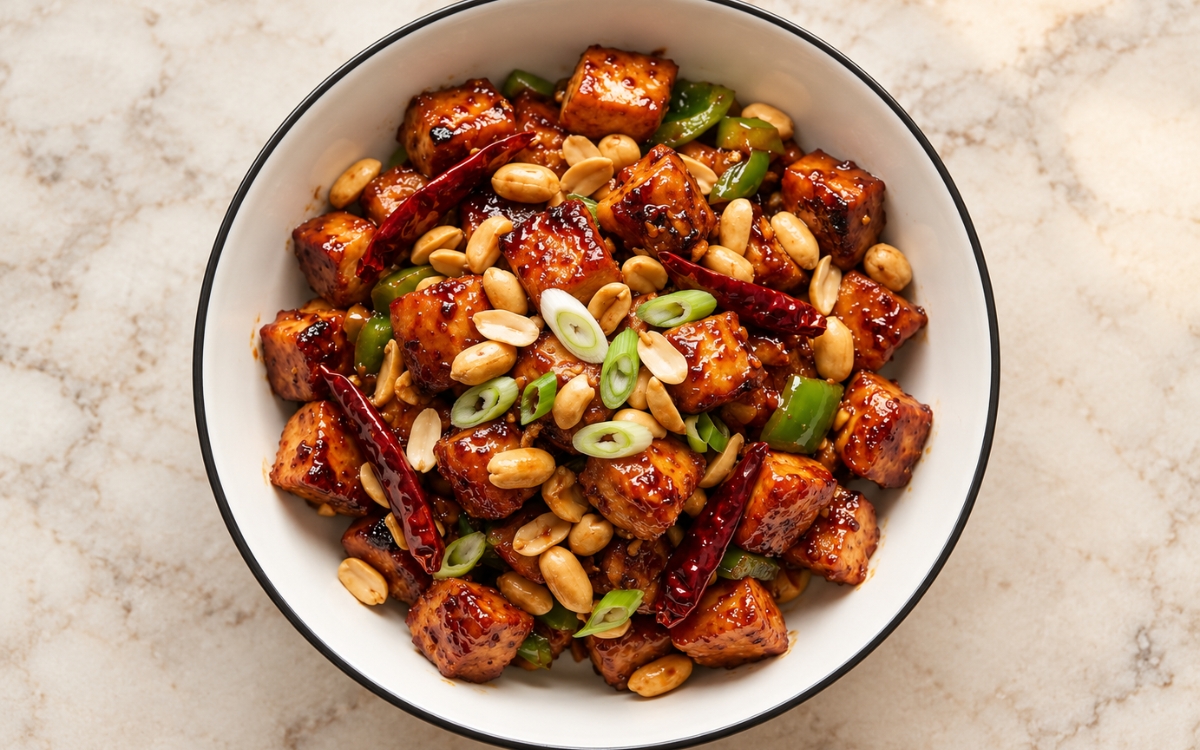
- Transfer the Kung Pao Chicken immediately to a warm serving bowl, scraping in any glaze left in the wok. Garnish with the extra sliced scallion greens and a few extra roasted peanuts. The finished dish should show glossy chicken cubes, whole peanuts, dried red chilies, scallions and green pepper pieces, with the sauce clinging rather than pooling in the bowl. The whole chilies are there mainly for fragrance, so diners can push them aside. That immediate serving is what keeps the glaze shiny and the peanuts crisp.
Notes
Searing the chicken in small batches deserves genuine recognition as the technique most directly responsible for the browned, juicy texture of the finished dish. The recipe’s own warning that an overcrowded pan makes the chicken “steam instead of sear” reflects how crowded meat releases moisture faster than the pan can evaporate it, leaving pale, grey cubes instead of caramelised ones.
Blooming the dried chilies and Sichuan peppercorns deserves the same genuine attention that fast-bloomed spices receive throughout other Sichuan stir-fries, because they turn from fragrant to acrid within seconds. The recipe’s own reminder that “burnt chilies turn bitter very fast” is why the heat is lowered to medium-high and the spices are timed to just 10–20 seconds.
The cornstarch in both the marinade and the sauce deserves genuine respect as the detail most directly responsible for a velvety interior and a clinging glaze. The recipe notes that it creates “the thin protective coating” on the meat, and because the sauce slurry settles quickly, it must be stirred again right before it goes into the wok.
The sauce consistency deserves attention as a genuine, checkable readiness cue rather than a loose approximation. The recipe’s own standard that the finished sauce should be “glossy and sticky, not watery” is easy to read in the wok — a sauce that clings to every cube is ready, while one that pools at the bottom needs another few seconds of boiling and tossing.