Ingredients
Method
Sear the Short Ribs
- Pat the 800g of bone-in short ribs completely dry on all surfaces with paper towels. The thorough drying step is the prerequisite for a genuine Maillard sear — any surface moisture produces steam on contact with the hot oil, which drops the pan temperature and prevents the protein-sugar caramelisation that produces the deep, brown crust contributing the sear fond that defines the braising liquid's depth. Season generously on all surfaces with sea salt and black pepper. Heat the 15ml of vegetable oil in a large Dutch oven or heavy-bottomed pot over medium-high heat until shimmering. Add the short ribs in a single layer — work in batches if needed; a crowded pot produces steamed grey meat rather than the deeply caramelised crust. Sear for 3–4 minutes per side on all four bone and meat surfaces — not just the two large flat sides. The total searing time should be 12–16 minutes for a full set of ribs properly browned across all surfaces. The crust should be deeply mahogany rather than light golden, and the fond on the bottom of the Dutch oven should show dark, concentrated caramelised protein deposits. Remove the seared ribs to a plate and set aside — do not drain the accumulated fat and fond.
Build the Aromatic Base
- Reduce the heat to medium. Add the 200g of thinly sliced yellow onions to the rendered fat in the pot. Sauté for 4–5 minutes, stirring occasionally, until completely softened and showing light golden caramelisation at the edges — the onions at this stage have developed the mild, sweet character that will form the aromatic backbone of the braising liquid. Add the 40g of minced garlic and cook for 1 minute, stirring continuously. Add the 30g of fresh ginger sliced into coins and cook for 1 further minute. The ginger coins, rather than minced ginger, are the specific format for a long-braised application — their size means they release aromatic compounds gradually throughout the 2-hour braise rather than immediately, and they are easily strained from the liquid at the end. The garlic and ginger's aromatic compounds bloom into the onion-flavoured cooking fat during these 2 minutes, building the foundation that the braising liquid's other components — soy, mirin, wine, sugar — will subsequently join.
Build and Deglaze the Braising Liquid
- Pour in the 80ml of soy sauce, 60ml of mirin, and 45ml of rice wine simultaneously. Immediately scrape the bottom of the pot firmly — the soy sauce and wine together dissolve every bit of the concentrated sear fond from the short ribs into the developing liquid. Each scraped-up fragment of caramelised protein represents concentrated flavour that would otherwise be wasted against the pot surface. Add the 30g of light brown sugar and stir until completely dissolved. Add the 500ml of beef stock, the 2 whole star anise pods, and the 5g of gochugaru. Stir to combine fully. The braising liquid at this stage should taste assertively seasoned — the 2-hour braise will extract the beef's internal moisture into the liquid, which dilutes the seasoning intensity. The star anise contributes a specific anise-like aromatic warmth that is present in Korean galbi (braised short rib) preparations — at 2 pods for this quantity of liquid it provides the characteristic background depth that is detectable as fragrant warmth rather than specifically as liquorice.
Braise for Two Hours
- Return the seared short ribs to the Dutch oven, placing them bone-side up and ensuring the meat portions are mostly submerged in the braising liquid. Bring to a boil over high heat, then reduce to the lowest possible simmer — the liquid should show only the occasional bubble breaking the surface, not a vigorous boil. A rapid boil during the braise toughens the collagen-to-gelatin conversion and produces drier, tighter meat rather than the falling-apart tenderness that low, sustained heat achieves. Cover tightly and braise for 2 hours, turning each rib in the liquid every 30 minutes. During the 2-hour braise the collagen in the short ribs' connective tissue converts progressively to gelatin — the specific transformation that produces the silky, slightly sticky mouthfeel of properly braised short rib. The gelatin also enriches the surrounding braising liquid, thickening it slightly and giving it the body that makes the finished sauce coat the beef and rice rather than running off them. After 2 hours the meat should be visibly pulling away from the bone at the edges and yielding to a fork without resistance — fork-tender at its most complete description.
Prepare the Rice
- While the beef braises, rinse the 320g of jasmine rice under cold water until clear. Combine with the appropriate water quantity according to package directions and cook — typically 1 part rice to 1.5 parts water, simmered covered for 15 minutes followed by a 5-minute covered rest off the heat. Fluff with a fork before serving.
Blanch the Bok Choy
- In the final 30 minutes of the braise, bring a separate pot of generously salted water to a full rolling boil. Add the 200g of baby bok choy and blanch for 2 minutes — the leaves should wilt completely and the stems should be just tender when pressed. Immediately transfer to a bowl of ice water — the cold shock halts the cooking instantly and locks the vivid green colour of the chlorophyll, which continues converting from bright green to dull olive at heat even after the bok choy is removed from boiling water. Drain and set aside for bowl assembly.
Shred the Beef and Reduce the Sauce
- Remove the braised short ribs from the liquid and place on a cutting board. Using two forks, shred the meat from the bones — it should come away from the bone completely with minimal effort at this stage of cooking. Discard the bones and any large pieces of excess fat. Strain the braising liquid through a fine-mesh sieve into a clean saucepan, pressing firmly on the onion, ginger, and spice solids to extract as much of the flavoured liquid as possible before discarding them. Return the strained liquid to medium heat and simmer uncovered for 10–15 minutes, stirring occasionally, until reduced by approximately half and visibly thickened to a glossy, syrupy consistency that coats the back of a spoon clearly. The reduction concentrates the sugar, soy, and gelatin into the specific sauce character — deep, glossy, sweet-savoury, and with sufficient body to cling to the shredded beef and pool in the rice. If the sauce remains too thin after 15 minutes, dissolve 5g of cornstarch in 15ml of cold water and stir into the simmering sauce — it will thicken rapidly. Return the shredded beef to the reduced sauce and stir to coat every piece.
Assemble the Bowls
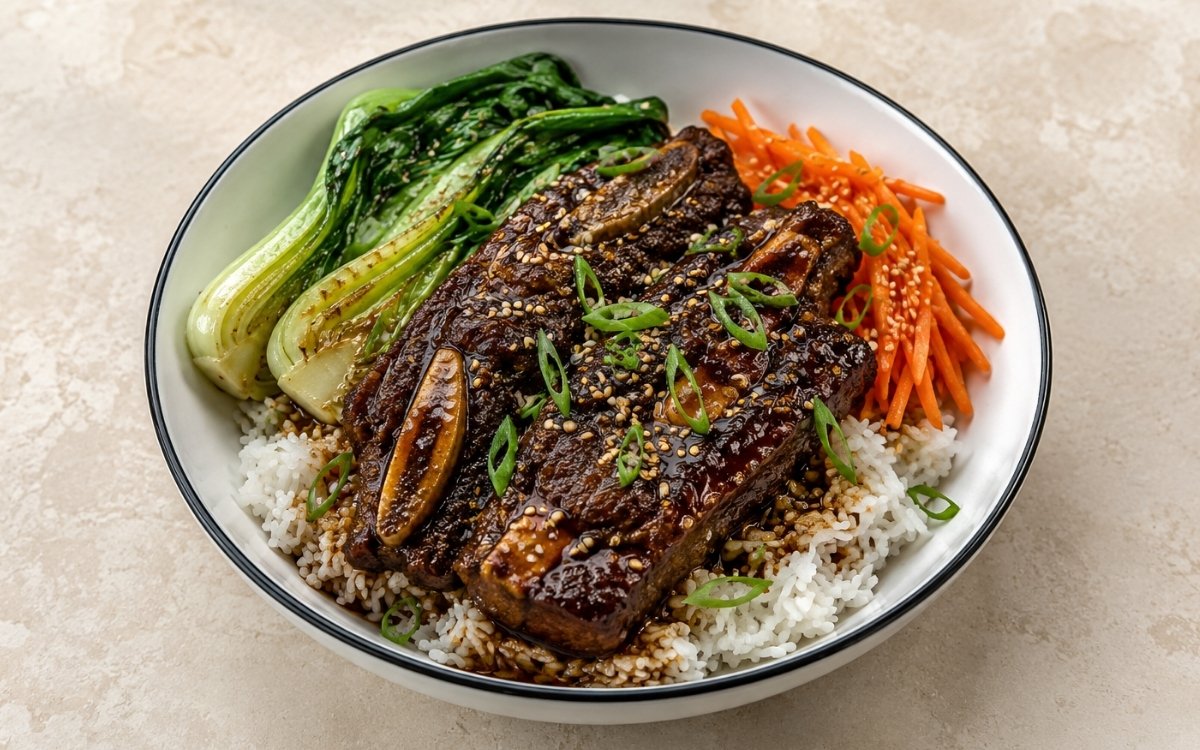
- Divide the cooked jasmine rice among four wide bowls — approximately 200g of cooked rice per bowl. Mound the shredded beef and its sauce generously over the rice centre. Arrange the blanched bok choy, 40g of julienned carrots, and 20g of sliced scallions in distinct sections around the beef. Drizzle additional sauce from the pot over the entire bowl — the sauce should pool slightly around the base of the beef and rice, flavouring every spoonful from the bowl bottom. Scatter the toasted sesame seeds across each bowl. Serve immediately.
Notes
Bone-in short ribs are specified rather than boneless for two specific reasons relevant to this recipe. First, the bone marrow and connective tissue surrounding the bone contribute a disproportionate amount of the gelatin that enriches the braising liquid — boneless short ribs or chuck roast produce a less gelatinous, less body-rich sauce. Second, the bone's presence during the braise slows heat transfer into the meat itself, producing a more gradual, more even cooking that is specifically beneficial for collagen-to-gelatin conversion. Deboning the cooked ribs for serving is effortless — the meat releases from the bone after 2 hours with no cutting required.
The star anise is a flavour element that characterises this preparation as specifically Korean-influenced rather than generically Asian-braised. Korean galbi jjim — the traditional braised short rib dish — frequently includes star anise alongside the soy-mirin-gochugaru base. At 2 pods for 500ml of braising liquid, the star anise contributes aromatic warmth and a background floral-anise depth that people describe as making the sauce taste more complex without being able to identify the specific note. It is subtle but present — and its absence from the recipe produces a measurably less characterful sauce.
The make-ahead quality of this recipe is exceptional. Braised short ribs refrigerated overnight in their sauce develop significantly improved flavour as the aromatics integrate more completely and the gelatin solidifies — the solidified surface fat can be lifted off cleanly the following day, producing a leaner sauce without any skimming technique. Reheated gently over low heat, the day-after version is objectively better than same-day.