Ingredients
Method
Prepare and Mash the Kiwis Skin-On
- Wash the 6 kiwis thoroughly under cold running water, scrubbing the fuzzy skin with a vegetable brush or clean cloth if the skins feel very coarse. Cut each washed kiwi into small rough pieces — 3–4cm sections, including the skin. Transfer to a large bowl. Using a fork, potato masher, or muddler, mash the kiwi pieces thoroughly until the fruit has released as much juice as possible and the mixture is fully broken down into a loose, wet, pulpy mass. No single technique is specifically correct — the goal is complete breakdown of the flesh with the skin remaining in thin, pliable pieces throughout. The skin-on preparation is the specific technique decision that defines this mocktail's character. Kiwi skin — edible, slightly fuzzy, specifically thin on fully ripe kiwis — contains a higher concentration of the fruit's aromatic compounds than the flesh and contributes a slightly earthy, green, more complex character to the pressed juice. It is the same principle as the skin-on preparation in the peach rosemary syrup and the cucumber-with-skin in the elderflower tonic: the skin contains concentrated flavour that peeled fruit cannot contribute. Ripe kiwis have thin, soft skins that press through the cheesecloth without issue; underripe kiwis have tougher, more papery skins that are more unpleasant in both texture and flavour — always use fruit that yields slightly when pressed.
Add Honey, Lime, Salt, and Rest
- Add the 45ml of fresh lime juice and 40g of honey to the mashed kiwi. Continue mashing and stirring until the honey is fully incorporated — honey's viscosity makes it resistant to simple stirring in a cold wet mixture, and the continued mechanical mashing distributes it into every part of the kiwi mash rather than leaving it pooled at the bottom. Add the ¼ tsp of fine sea salt. The salt quantity is small — below the threshold of tasting as salty — and functions specifically as a flavour amplifier: salt at sub-threshold concentrations heightens the perception of sweetness and specifically sharpens and brightens acidic flavours. The kiwi's sharpness and the lime's brightness are both more vivid in the presence of this small pinch than in its absence. Finally, add the zest of 1 lime and stir well to distribute. Cover the bowl and allow the mixture to rest at room temperature for 15–20 minutes. During this rest, the honey dissolves fully into the lime juice and kiwi liquid, the lime zest's aromatic oils release into the surrounding acidic medium, and the salt distributes through the entire mash. The acidity of the lime juice and the kiwi's own natural malic acid begin extracting additional flavour from the skin pieces. The mixture emerges from the rest visibly more liquid, more uniformly coloured, and more aromatic than immediately after mixing.
Press Through Cheesecloth
- Line a fine-mesh sieve with a double layer of cheesecloth and position over a clean bowl. Pour the rested kiwi mash into the cheesecloth-lined sieve. Allow to drain freely for 2–3 minutes — a significant proportion of the liquid will drain without assistance. Gather the cheesecloth into a bundle, twist the top tightly closed, and press and twist firmly over the bowl — applying maximum sustained pressure to force as much remaining liquid from the pulp as possible. Twist progressively tighter as the remaining liquid diminishes. Continue until the bundle feels firm and dry and the pulp remaining in the cheesecloth has a compressed, dry-looking texture. The cheesecloth method extracts significantly more liquid than a sieve-and-spoon approach because the fabric can be twisted to apply pressure from all sides simultaneously — maximising the juice yield from the soft, slightly fibrous kiwi pulp. The finished pressed juice should be a vivid, slightly cloudy jade-to-green colour — varying from pale jade to a more assertively green tone depending on the kiwi variety. New Zealand green kiwis produce a lighter, more yellow-green juice; yellow kiwis (golden kiwis) produce a paler, slightly sweeter, less tart juice; the variety also affects the colour significantly. Discard the pressed solids. Transfer the juice to the refrigerator and chill until cold — a minimum of 30 minutes.
Assemble and Serve
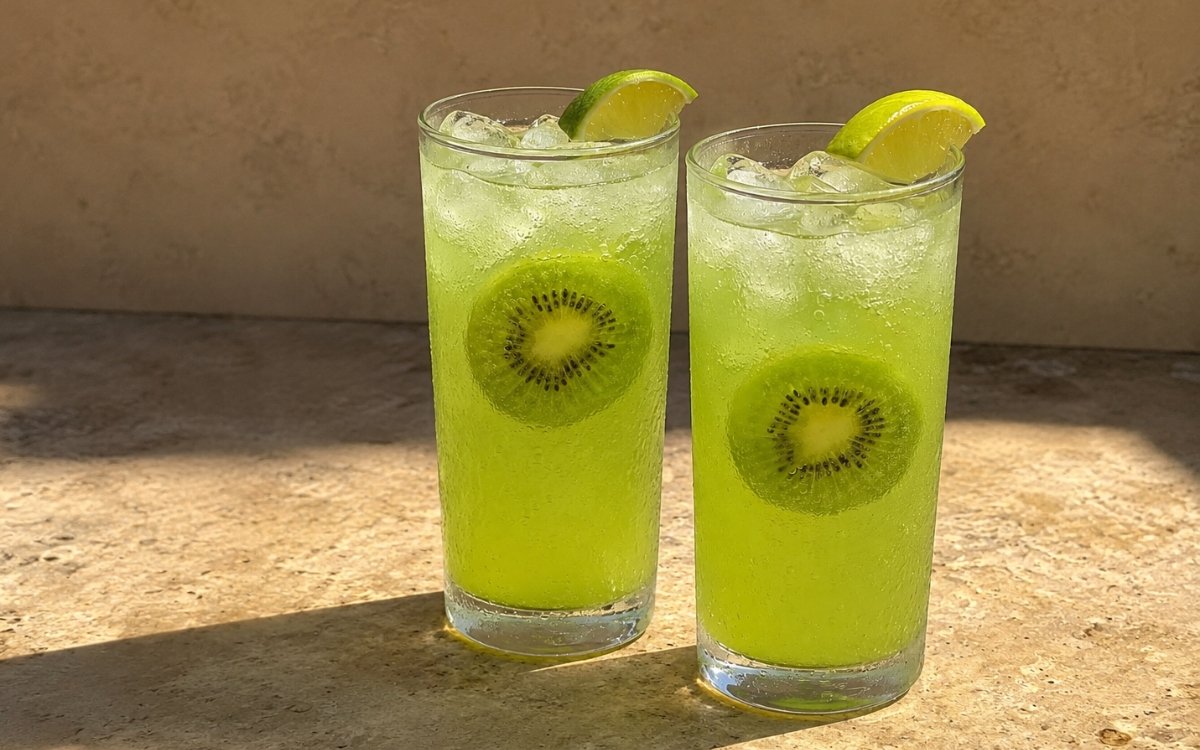
- Fill four tall glasses generously with ice cubes. Divide the chilled kiwi-lime base evenly among the glasses — approximately 80–85ml per glass. Stir briefly against the ice. Top each glass with approximately 125ml of chilled club soda, pouring gently down the inner side of the glass. Stir once or twice gently. Prepare the kiwi garnish: cut 4 thin rounds from a kiwi cross-section — approximately 5mm thick, with the skin still on — and press each round against the inside of the glass below the ice level so the vivid green interior pattern is visible through the drink. Place a lime wedge on the rim of each glass. Serve immediately, with the instruction to squeeze the lime wedge directly into the drink for extra brightness before the first sip.
Notes
Kiwi skin's edibility is under-discussed given how commonly it is discarded. Both the fuzzy green skin and the smooth golden skin of their respective varieties are fully edible, nutritionally valuable (containing more vitamin C and fibre concentration than the flesh), and specifically flavour-contributing in prepared applications. The fuzzy texture is the primary reason most people peel kiwis — in a mashed-and-pressed preparation the texture is entirely irrelevant. Use fully ripe kiwis for the softest, thinnest, most pleasant-tasting skin; the skin of under-ripe kiwis is harder and more papery with a slightly bitter character.
The ¼ tsp of fine sea salt is the small addition that separates this recipe from most fruit mocktail preparations and is specifically worth noting. In sweet applications, salt does not make food taste salty at sub-threshold concentrations — it makes sweet things taste more specifically of themselves and makes acidic things taste more vivid. In this mocktail, the salt is present specifically to amplify the kiwi's natural brightness and the lime's acidity without either becoming detectable as a salt flavour.