Ingredients
Method
Make the Cold Lemon Sugar
- Finely zest the lemons, taking only the yellow outer peel and leaving all white pith behind. Add the zest to the sugar in a bowl and rub it together with your fingertips for 2–3 minutes until the sugar feels damp and very fragrant. Let it sit for 20–30 minutes. This cold extraction pulls the lemon oils into the sugar without heat, which keeps the flavor bright and fresh. Rubbing rather than simply mixing the zest into the sugar is what actually ruptures the peel's tiny oil glands, mechanically releasing those aromatic oils directly into the sugar without needing any heat.
Juice the Lemons
- Juice enough lemons to get 300ml fresh lemon juice. Strain out the seeds. Pour the lemon juice over the lemon sugar and stir until the sugar is mostly dissolved. Let it sit 2–3 minutes, then stir again. If you want a smoother final drink, strain out the zest, pressing firmly to extract all the syrup. The lemon juice's own acidity helps dissolve the sugar while carrying the already-released lemon oils fully into the liquid base, and pressing the spent zest firmly before discarding it captures as much of that flavourful syrup as possible.
Prepare the Kiwi Base
- Add the chopped kiwi to a blender with about 250ml of the cold water. Blend just until smooth. Do not overblend longer than needed. For a classical slightly pulpy texture, keep the kiwi purée as is. If it feels too thick, you can pass only half of it through a sieve and combine it back with the rest. Stopping the blend the moment it reaches smooth, rather than continuing further, is what preserves kiwi's tiny black seeds and some natural pulp intact — that restraint is exactly what gives this lemonade its characteristic, deliberately imperfect texture rather than something fully uniform.
Build the Lemonade
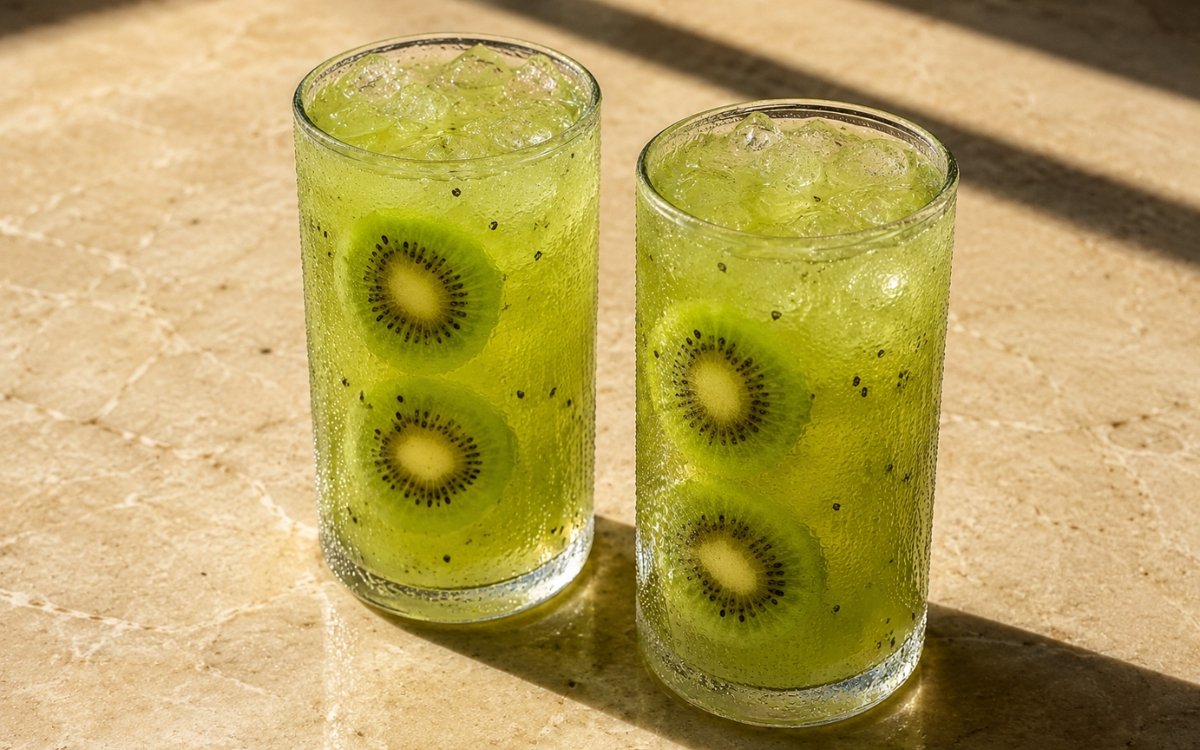
- In a large pitcher, combine the lemon syrup, the kiwi purée, the remaining cold water, and the pinch of salt, if using. Stir very well until evenly mixed. The lemonade should be bright green, slightly pulpy, and dotted with tiny black kiwi seeds. Thorough stirring at this stage is what fully integrates the bright, sharp lemon syrup into the kiwi's own naturally tart, fruity body, producing one cohesive drink rather than two components that merely share a pitcher.
Chill
- Refrigerate for at least 30 minutes so the lemonade is fully cold and the flavors settle. That resting period lets the lemon and kiwi components fully meld together, producing a more unified flavour than serving the drink immediately after mixing.
Serve
- Press 2 thin kiwi slices inside each glass wall. Fill the glasses with ice, then pour in the kiwi lemonade and serve immediately. Pressing the kiwi slices against the glass wall before adding ice, rather than dropping them in loosely afterward, is what keeps them visibly displayed against the glass rather than sinking or floating out of view once the drink is poured.
Notes
The strict avoidance of white pith throughout zesting deserves the same careful attention it receives across every citrus-forward drink in this collection. Lemon pith carries a real, distinct bitterness entirely separate from the fruit's natural tartness — even a small amount worked accidentally into the zest can introduce a flavour that lingers through the whole finished pitcher, competing directly with kiwi's own bright, tart character.
Choosing cold extraction over a boiled syrup protects the lemon zest's volatile aromatic oils from the alteration heat would cause. Rubbing the zest directly into sugar at room temperature is what preserves that brighter, fresher lemon character — a quality that matters directly here, since this drink depends on real citrus sharpness working alongside, rather than being dulled ahead of, kiwi's own natural tang.
Stopping the kiwi blend right at smooth, rather than continuing longer out of habit, deserves genuine respect as the technique responsible for this drink's specific, classic texture. Overblending would break down the fruit's tiny black seeds and any remaining pulp into something closer to a fully smooth juice, losing exactly the deliberately imperfect, slightly pulpy character this lemonade is built around.
The recipe's own guidance about underripe kiwi producing an overly sharp result deserves to be taken seriously rather than dismissed as a minor preference. Kiwi's flavour and sweetness develop considerably as it ripens, and starting from fruit that hasn't fully ripened shifts the whole drink's balance toward excessive tartness that even the lemon-sugar base wasn't calibrated to offset.