Ingredients
Method
Make the Dough
- Mix the flour, instant yeast, sugar, salt, and baking powder in a large bowl. Add the yogurt, oil or ghee, and 260 ml warm water, mixing into a shaggy dough, adding a little more water only if needed — the dough should end up soft and slightly tacky rather than stiff. Knead for 8–10 minutes until smooth and elastic, then transfer to a lightly oiled bowl, cover, and let rise for 1 to 1¼ hours, or until roughly doubled. The dough needs to stay soft through this process — a dry, stiff dough is hard to stuff and won't give the soft naan texture this recipe depends on.
Cook the Keema Filling
- Heat the tablespoon of oil or ghee in a skillet over medium heat. Add the onion and cook for 5–7 minutes until softened and lightly golden, then add the ginger-garlic paste and green chili and cook for 30–45 seconds. Add the ground meat, breaking it up thoroughly, and cook over medium-high heat for 6–8 minutes, stirring and crumbling it well, until it loses its raw color and most of the moisture evaporates. Add the salt, cumin, coriander, chili powder, turmeric, black pepper, and garam masala, cooking for 2–3 minutes more until fragrant. Stir in the cilantro, optional mint, and lemon juice, continuing to cook until the filling looks fairly dry, loose, and crumbly with no pooled liquid. Spread the filling on a plate or tray and cool it completely — a hot or wet filling steams inside the dough during stuffing and makes the naan tear rather than seal.
Make the Yogurt Chutney
- Mix the yogurt, cilantro, mint, optional green chili, roasted cumin, salt, and lemon juice. Taste and adjust the seasoning, then chill until needed.
Divide the Dough and Filling
- Once the dough has risen, turn it out onto a lightly floured surface and divide it into 4 equal pieces, shaping each into a ball. Cover and rest for 10 minutes. Divide the cooled keema filling into 4 equal portions.
Stuff the Naans
- Flatten one dough ball into a round about 12–14 cm wide, keeping the center slightly thicker than the edges. Place one portion of filling in the center, gather the edges up around it, and pinch firmly to seal. Turn seam-side down and rest for 5 minutes, then gently flatten and roll into an oval or round naan about 16–18 cm wide. Repeat with the remaining dough and filling. Roll gently rather than aggressively, pressing from the center outward so the dough doesn't split and the filling stays evenly distributed.
Cook the Keema Naan
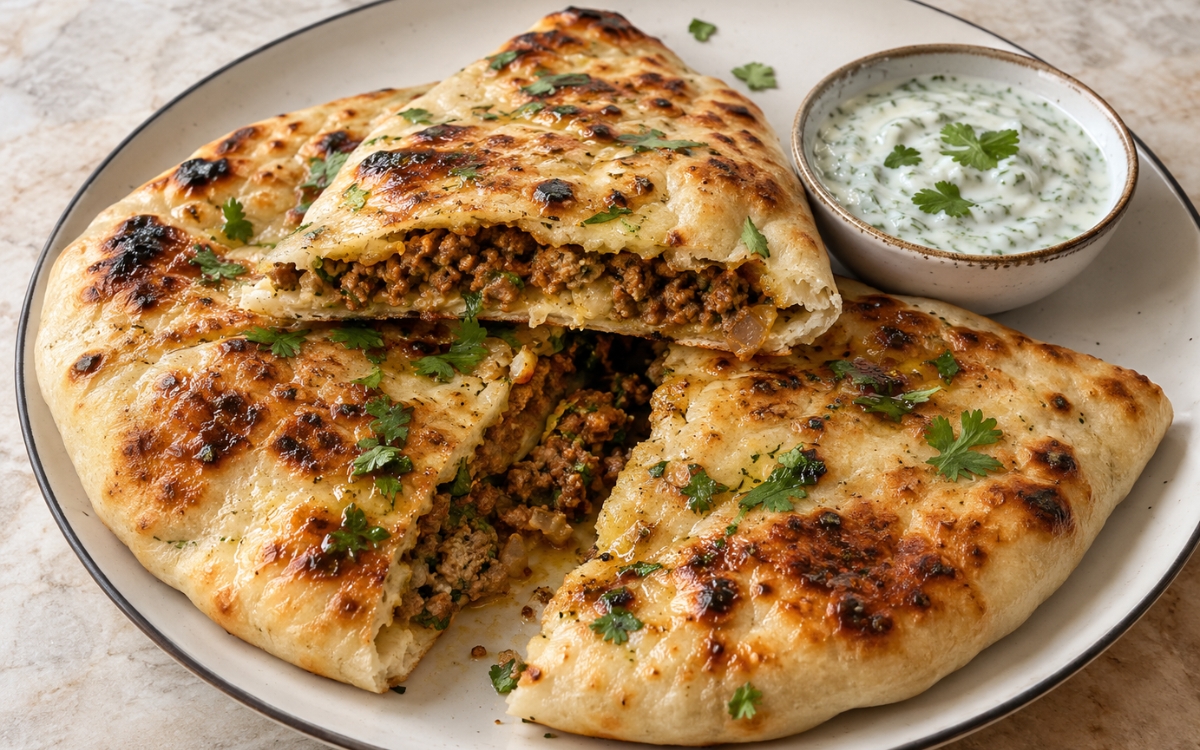
- Heat a cast-iron skillet or heavy tawa over medium-high heat until very hot. Brush off excess flour from one stuffed naan and place it on the dry hot pan, cooking for 1½–2 minutes on the first side, until bubbles form and the underside develops browned spots. Flip and cook the second side for 1½–2 minutes more, pressing gently around thicker areas if needed so the bread cooks evenly. If you like, briefly expose the naan to an open flame for extra blistering. Brush the hot naan with melted butter or ghee and sprinkle lightly with chopped cilantro. Repeat with the remaining naans, reducing the heat to medium after the first one if the outside is browning faster than the dough is cooking through. The finished naan should have dark blistered spots, feel soft but cooked through, and have a hot filling at the center.
Serve
- Serve hot, whole or cut into halves or wedges, with the yogurt chutney on the side.
Notes
Ground lamb gives the most classical flavor for this filling, though ground beef works just as well if that's what's available — both hold up the same way through browning and stuffing.
Chopping the onion very finely matters more here than in an unstuffed curry, since larger pieces can puncture the dough while rolling or cause uneven sealing around the filling.
Cooling the filling completely before stuffing is one of the most important steps in this recipe — warm filling releases steam inside the dough as it cooks, which makes the naan harder to seal and can leave the dough gummy in spots.
A heavy cast-iron skillet or tawa gives noticeably better blistering and color than a lighter pan, since it holds and transfers heat more evenly to the stuffed dough.