Ingredients
Method
Cook the Rice
- Rinse the 300g of Japanese short-grain rice in several changes of cold water until the water runs mostly clear, then drain well and let it stand for 10 minutes. Cook it with the 360ml of water in a rice cooker, or in a covered pot by bringing it to a boil, covering, reducing to very low, and cooking for 12 minutes. Rest the pot off the heat for 10 minutes, then fluff gently and keep warm without over-stirring. That rest and light handling are what keep the grains defined and tender instead of pasty.
Make the Tare
- Combine the 120ml soy sauce, 120ml mirin, 60ml sake, and 30g sugar in a small saucepan, adding the garlic, ginger, and scallion piece if using. Bring to a gentle simmer over medium heat and cook for 8–12 minutes, until slightly reduced, glossy, and just able to coat a spoon lightly. Strain out any aromatics, then divide the tare, keeping about two-thirds in a bowl for basting and about one-third in a clean bowl for finishing. Stopping before it turns thick is what stops it becoming salty and sticky, since it thickens further the moment it hits hot chicken.
Prep the Chicken
- Cut the 700g of boneless skin-on chicken thighs into large bite-size pieces, about 4–5cm, keeping them similar in size so they cook at the same pace. Season lightly with the ½ tsp kosher salt and ¼ tsp black pepper, then let the chicken stand for 10–15 minutes if time allows. If you prefer a classic presentation, thread the chicken and scallion sections alternately onto skewers, soaking bamboo skewers for 20–30 minutes first. That even sizing and brief rest are what let every piece colour and cook through together.
Grill the Chicken and Scallions
- Heat a grill, grill pan, or broiler until quite hot, then lightly oil the grates or pan with the 1 tsp neutral oil. Cook the chicken first without sauce, skin side down, for 3–4 minutes, until browned with visible char marks. Turn and cook for 2–3 minutes more, adding the 6 scallion sections alongside until their edges are lightly charred but they still hold their shape. In a frying pan, use medium-high heat, sear the chicken until browned and nearly cooked through, and add the scallions near the end. That bare, hot start is what builds the char before any sugar reaches the heat.
Glaze in Layers
- During the last few minutes of cooking, start brushing the chicken lightly with the basting portion of tare, turning and brushing 2–3 times until the pieces look lacquered and glossy. In a frying pan, brush or spoon the tare in gradually and let it reduce around the chicken. Check that the thickest piece reaches 74°C / 165°F, with dark grilled spots outside and a juicy interior, and discard any basting tare left over. Thin coats that caramelise on contact are what build a sticky glaze, whereas one heavy pour burns or simply runs off.
Assemble and Serve
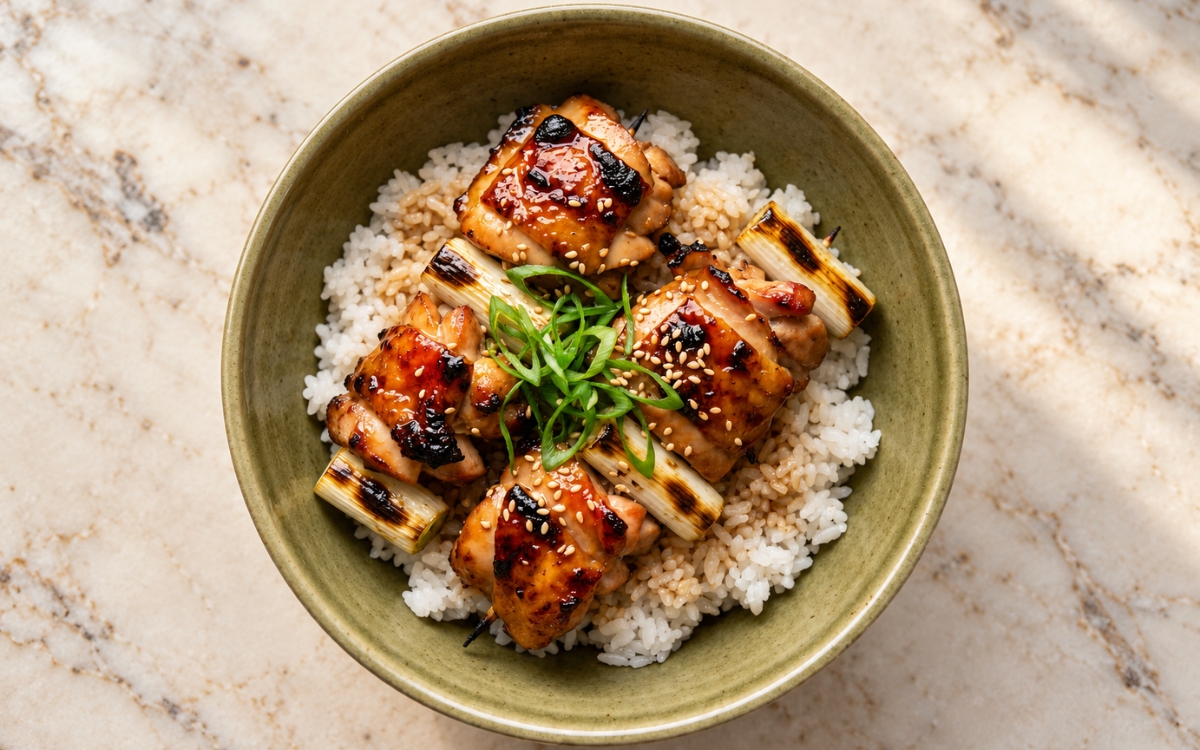
- Divide the hot rice among 4 bowls, leaving it visible around the edges, and spoon a little of the clean reserved tare over each. Arrange the glazed chicken prominently on top rather than buried, tucking the charred scallion sections between the pieces, then spoon a little more finishing tare over the chicken as needed. Scatter the 2–3 finely sliced scallions and the 2 tsp toasted sesame seeds over the centre and serve immediately. That small, clean spoonful of tare is what seasons the rice without drowning the grilled flavour.
Notes
Brushing the tare in thin layers deserves genuine recognition as the technique most directly responsible for the lacquered, glossy finish on the chicken. Thin coats caramelise on contact with hot meat and build up gradually, whereas an early or heavy application steams the surface, drips away, and burns the sugar before the thigh has coloured.
Reducing the tare deserves the same attention this technique receives throughout this collection’s other glaze-based dishes. Eight to twelve minutes of gentle simmering should leave it slightly syrupy and able to coat a spoon lightly, because reducing it further concentrates the soy into something salty and sticky that thickens past usable on the hot chicken.
Using boneless skin-on thigh deserves genuine respect as the detail most directly responsible for the juicy, well-browned texture a classical yakitori bowl needs. The skin renders and browns against the heat while the dark meat stays tender through a fast cook, whereas breast dries out quickly and lacks the fat that carries the smoky char.
The 74°C / 165°F reading deserves attention as a genuine, checkable doneness cue rather than a loose approximation based on colour alone. Glazed and charred pieces can look finished well before the centre is, so a quick probe into the thickest piece confirms safe, juicy chicken without overcooking the rest of the batch.