Ingredients
Method
Optional: Peel the Tomatoes
- This step is optional but worth doing for the best result — particularly with heirloom tomatoes, whose skins can be thick and slightly tough, providing an unpleasant textural contrast against the soft, flavourful inner flesh. Fill a medium pot with water and bring to a boil. While the water heats, prepare an ice bath in a large bowl — fill with cold water and add a generous amount of ice. Using a sharp knife, score each tomato at the base with a shallow cross-shaped cut — penetrate only the skin without cutting deep into the flesh. Lower the scored tomatoes into the boiling water and leave for 30–60 seconds — the heat-cold differential causes the skin to loosen from the flesh beneath it. Remove with a slotted spoon and transfer immediately to the ice bath. Leave for 2 minutes until completely cold — the cold stops the cooking immediately and the thermal shock completes the skin-loosening process. Using a small sharp knife, pinch the scored skin at the base and peel it away — it should come off cleanly in large sections. Peeled tomato produces softer, more cohesive bruschetta cubes without the slightly chewy outer skin pieces that appear in the unpeeled version. If time is short or the tomatoes have thin, delicate skin, skip this step and proceed directly to dicing.
Salt the Tomatoes and Rest
- Dice the peeled or unpeeled tomatoes into approximately 5mm cubes — small enough to sit well on the bread without sliding off, large enough to provide a satisfying, distinct tomato bite in every mouthful. Consistent dice size produces bruschetta that distributes evenly across the bread surface rather than larger pieces sitting unevenly on top. Transfer all the diced tomato to a medium bowl and season generously with fine sea salt and several good cracks of black pepper. Toss gently to coat and allow to rest for 10–15 minutes at room temperature. The salt draws moisture out of the tomato cells through osmosis — during the resting period, a significant amount of liquid will accumulate in the bottom of the bowl. This extracted liquid is not the useful part of the tomato; it is the excess diluting water that, if left in the bruschetta, would immediately saturate the toasted bread and produce a soggy result. The resting step simultaneously removes this diluting moisture and concentrates the tomato flavour in the remaining flesh — producing tomato cubes that taste more intensely of tomato after salting than before. After resting, drain the accumulated liquid from the bowl by tilting and pouring it away. Do not rinse — the salt has penetrated the tomato flesh and rinsing would remove the seasoning along with the surface liquid.
Prepare the Aromatics
- While the tomatoes rest, prepare the shallot and garlic. Peel the shallot and dice as finely as possible — the smaller the pieces, the more evenly the shallot distributes through the tomato mixture without any single piece delivering an assertive raw allium bite. A fine dice of approximately 2–3mm means the shallot is present as background sweetness and gentle sharpness throughout every bite rather than as distinct, identifiable pieces. Mince the garlic clove as finely as possible — grating on a Microplane is even better, producing garlic that dissolves almost invisibly into the tomato mixture and contributes its savory depth without any localised raw garlic concentration. Both the shallot and the garlic are used raw in this recipe, which means their preparation size directly determines their impact — fine is always correct for both.
Prepare and Toast the Bread
- Preheat your oven to 200°C (390°F). Slice the bread of choice into pieces 1.5–2cm thick — this thickness is specific and important. Too thin (under 1cm) and the bread becomes cracker-like after toasting and shatters immediately when the bruschetta is spooned on top. Too thick (over 2.5cm) and the bread's interior remains soft and doughy while the exterior toasts, producing a bread that absorbs the tomato juice and becomes wet and heavy rather than providing the crisp contrast that makes bruschetta work. At 1.5–2cm, the bread toasts through to a slightly firm, crunchy interior with a golden exterior that is robust enough to hold the tomato topping without becoming soggy immediately. Lay the slices on a baking sheet in a single layer and brush both sides generously with the extra-virgin olive oil. The oil on the surface accelerates browning through the Maillard reaction and produces a more deeply golden, more flavourful toast than dry bread produces at the same oven temperature. Bake for 6–8 minutes, flipping once halfway through, until both sides are golden, crispy, and slightly charred at the very edges. Remove from the oven immediately — the bread continues to crisp slightly from residual heat for another minute after removal.
Rub with Raw Garlic Immediately
- While the toasted bread is still hot from the oven, take the halved garlic clove and rub the cut surface firmly over one side of each slice. Work from one end of the slice to the other in firm, overlapping strokes. The hot, slightly porous surface of the freshly toasted bread acts as a grater against the cut garlic, depositing a thin, even film of raw garlic directly onto the bread surface. The garlic is absorbed slightly into the surface pores while the bread is hot and the oils are still warm — as the bread cools slightly, the garlic's aromatic compounds set into the surface and become an integral part of the bread's flavour rather than sitting on top of it. The rubbing happens immediately while the bread is hot — on a cold toast the same rubbing produces barely any garlic transfer. This technique produces a garlic presence that is immediately satisfying without being aggressively sharp because the quantity is controlled by the rubbing motion rather than the addition of minced garlic.
Assemble the Bruschetta Topping
- Add the finely diced shallot and garlic to the drained, salted tomato cubes. Add the fresh basil leaves — torn by hand into pieces approximately the size of the tomato cubes rather than finely chopped. Tearing basil rather than cutting minimises the oxidative damage that chopping causes — a knife's metal blade accelerates the enzymatic browning that turns basil dark within minutes of cutting, while tearing produces larger pieces with less exposed surface area that remain green and fragrant for longer. Add the olive oil and fold everything together gently with a large spoon using a lifting and turning motion. The goal is even distribution of all components without mashing the tomato cubes — the structural integrity of each piece is what maintains the pleasant, distinct texture of the bruschetta. Taste and adjust: more salt if flat, more pepper for additional warmth. The bruschetta should taste boldly seasoned, tomato-forward, and vibrantly fresh.
Spoon Over Bread and Garnish
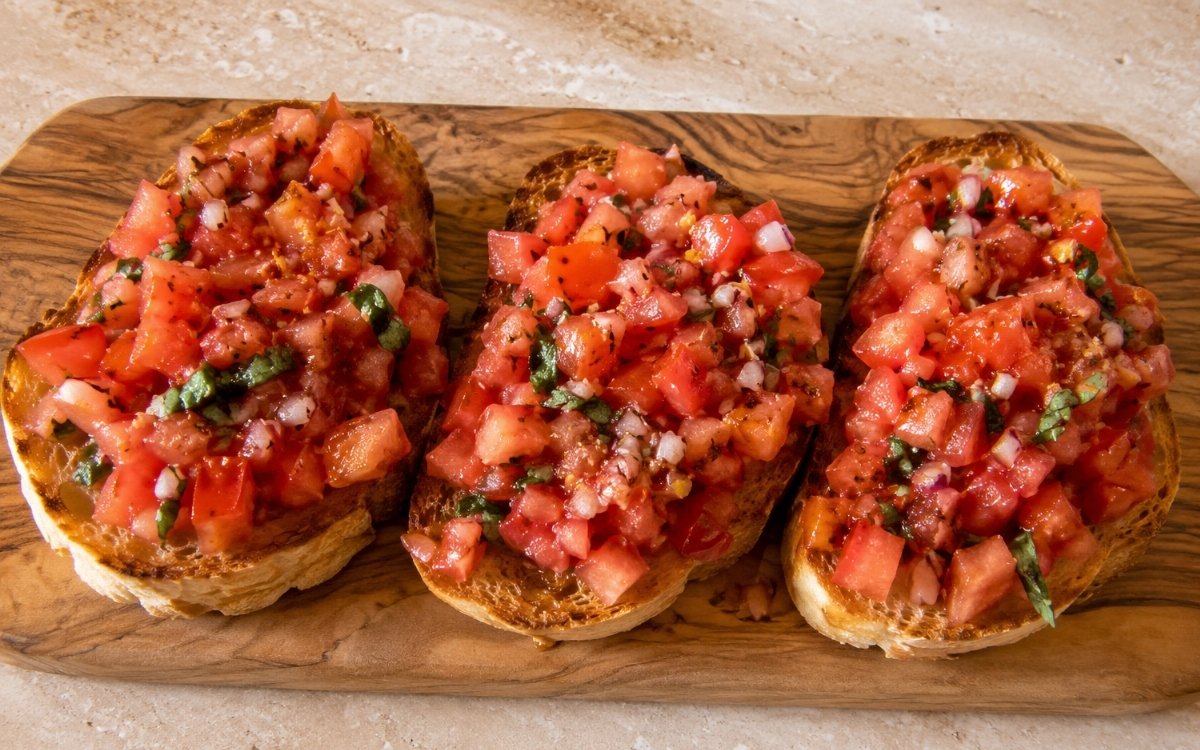
- Spoon the assembled bruschetta generously over each toasted garlic-rubbed slice, distributing it evenly and piling it slightly above the bread surface rather than spreading flat — the slight height and irregular texture is the visual identity of bruschetta. Add the finishing garnishes immediately before serving. Drizzle a few drops of balsamic vinegar over each slice — not a sauce-like drizzle but 3–4 drops per slice, enough to provide occasional hits of sweet-sour depth in certain bites without coating the entire surface. Add a very light pinch of lemon zest over the top of each slice — barely visible, present as a bright aromatic note rather than a citrus flavour. Both the balsamic and the lemon zest are optional but both genuinely improve the dish: the balsamic adds sweetness and acidic depth that the tomato and vinegar alone do not provide; the lemon zest adds an aromatic freshness that lifts the entire preparation. Serve immediately — bruschetta is a dish where the timing between assembly and eating is measured in minutes, not in a leisurely interval. Once the tomato contacts the toasted bread, the moisture begins transferring and the contrast that defines the dish starts to diminish. Assemble, garnish, and serve as quickly as possible.
Notes
Heirloom tomatoes are specified because their flavour complexity — the result of preserving varieties selected for taste rather than uniformity and shelf life — is fundamentally different from commercial Roma or round tomatoes. A ripe heirloom tomato at the height of its season is sweet, acidic, aromatic, and deeply flavoured in a way that a commercially grown tomato is not. Bruschetta al pomodoro has no cooking process to develop or transform the tomato's flavour — the tomato is eaten raw, meaning its quality at the moment of eating is the entire dish. Make this recipe in summer with the best tomatoes available and the result is genuinely extraordinary. Make it in winter with under-ripe, commercially grown tomatoes and the result will be acceptable but flat. The season and the tomato are everything.
The bread choice matters significantly for the textural experience. Sourdough produces the most interesting result — its open crumb structure and tangy flavour complement the tomato's acidity beautifully, and its crust provides a substantial crunch. Ciabatta's enormously open crumb toasts to a light, crackling structure with excellent surface area for garlic rubbing. French baguette produces a smaller, more delicate slice suited to individual appetiser portions. All three are excellent and the correct choice depends on the occasion and personal preference.
The balsamic vinegar garnish should be an aged, thick balsamic rather than a thin, young balsamic — a few drops of genuine aged balsamic di Modena or a balsamic glaze provide the concentrated, complex sweet-sour depth that works as a finishing note. A thin, sharp, young balsamic in quantity would add aggression rather than depth.