Ingredients
Method
Soak the Batter Ingredients
- Rinse the 200g rice in several changes of water until the water runs mostly clear. Place it in a large bowl with the fenugreek seeds, cover with plenty of water and soak for 4–6 hours. Rinse the 100g urad dal separately and soak it in its own bowl of water for the same 4–6 hours. Both should swell noticeably, and a soaked rice grain should crush easily between your fingers when ready. Leave the poha dry for now, since it needs only a short soak just before grinding. That separate soak is what lets the urad dal be ground entirely on its own at the next stage, which is exactly where the idlis' genuine soft lift is built.
Grind the Batter
- About 20 minutes before grinding, cover the 20g poha with water and soak it for 15–20 minutes. Drain the urad dal and grind it first, adding cold water a little at a time, only enough to keep the grinder or blender moving, until very smooth, airy and light, almost mousse-like. Drain the rice and fenugreek and grind them with the drained poha, adding water gradually, until smooth with a very slight fine grain — it should not feel gritty, but it does not need to be absolutely silky. If using a blender, work in batches so the motor does not heat the batter. Combine both mixtures and mix thoroughly by hand until thick, fluffy and pourable, like a thick cake batter. That cold grind is what keeps the urad dal aerated, since warm batter loses lift before fermentation starts.
Ferment and Season the Batter
- Transfer the batter to a bowl with at least twice its volume of headroom, cover loosely and leave it in a warm place, ideally around 26–32°C, for 8–12 hours. It is ready when it has risen by roughly 50–100%, the surface looks bubbly or lightly domed, the texture feels lighter and puffier, and the aroma is mildly sour rather than harsh. In a cool kitchen, give it longer rather than steaming it flat. Once fermented, add the 5g salt and stir gently, just enough to combine without beating out the air. If needed, add a little water so the batter falls from a spoon in thick ribbons; it should never be runny. That gentle stir is what preserves the trapped gas that fermentation spent hours building.
Cook the Toor Dal
- Rinse the 180g toor dal and combine it with the turmeric and 700ml of the water in a pressure cooker or pot. In a pressure cooker, cook for 4–5 whistles, or for 10–12 minutes at high pressure in an Instant Pot with natural release, until completely soft. On the stovetop, simmer for 35–50 minutes, topping up with a little extra hot water if it runs low, until the dal collapses easily when pressed. Mash it thoroughly with a whisk or the back of a ladle until mostly smooth, then set aside. If the grains still hold their shape firmly, cook longer. That complete breakdown is what gives the sambar its body, because firm, intact lentils leave the broth thin and watery.
Make the Coconut Chutney
- Blend the coconut, roasted chana dal, green chilli, ginger, a pinch of salt and 60ml cold water until smooth or lightly textured, as preferred. Add up to 40ml more water gradually, only until the chutney is thick but spoonable — it should hold as a dollop rather than running flat. Taste and adjust the salt. For the optional tempering, heat the 1 tsp oil in a small pan over medium heat, add the ½ tsp mustard seeds and let them crackle for about 30 seconds, then add the curry leaves and asafoetida for a few seconds and pour everything over the chutney. Set aside. That deliberately thick consistency is what lets the chutney sit cleanly in the bowl instead of dissolving straight into the hot sambar.
Build the Sambar Base
- Heat 80ml of the water until hot, soak the 20g tamarind in it for 10 minutes, then squeeze it well and strain, discarding the fibres and seeds. Heat the 1½ tbsp oil or ghee in a pot over medium heat. Add the 1 tsp mustard seeds and let them crackle, then add the cumin seeds, dried red chillies, curry leaves and asafoetida, stirring for a few seconds. Add the onion and cook for 4–5 minutes until softened and lightly translucent. Add the tomato and cook for about 4 minutes until broken down and jammy. Add the carrot, potato, drumstick if using and the sambar powder, and stir for 30–60 seconds until fragrant. That brief toasting of the sambar powder in hot oil is what wakes its spices before any liquid goes in, giving the broth a rounder, deeper flavour.
Simmer the Sambar
- Add the tamarind water, the mashed dal and the remaining 320–420ml water to the pot. Bring to a simmer and cook for 15–20 minutes, stirring occasionally, until the carrot, potato and drumstick are fully tender. The sambar should be pourable and brothy but not watery, coating the idlis lightly while still pooling around them; add extra hot water if it thickens during simmering, since an idli bowl wants a slightly looser sambar than one served with rice. Season with salt and the jaggery if using, then taste: if it seems flat, it usually needs a little more salt, tamarind water or sambar powder. Stir in the 2 tbsp cilantro. That final adjustment is what balances the sambar's sour, spicy and savoury sides into one genuinely rounded broth.
Steam the Idlis
- While the sambar simmers, grease the idli moulds lightly with oil or ghee and fill each cavity about ¾ full with batter. Bring a few centimetres of water to the boil in the idli steamer, place the filled trays inside, cover and steam over medium heat for 10–12 minutes, without opening the lid during the first 8 minutes. The idlis are done when the tops look set and matte rather than wet, they spring back lightly when touched, and a toothpick comes out clean. Turn off the heat, rest them for 1–2 minutes, then unmould with a wet spoon. Repeat with the remaining batter until you have 12 idlis. That restraint with the steaming time is what keeps them soft, since oversteamed idlis turn dry and tight.
Assemble the Bowls
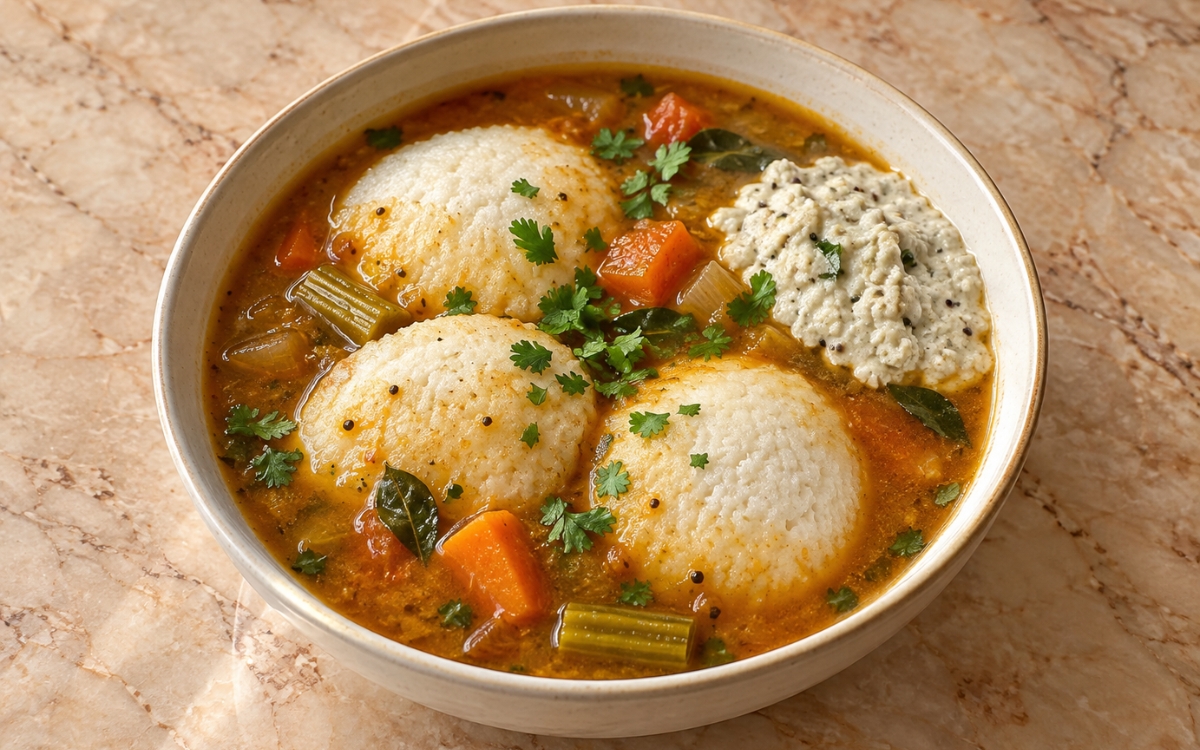
- Place 3 warm idlis in each of 4 wide bowls. Ladle the hot sambar around and partly over them so the idlis stay visible but are clearly surrounded by broth and vegetables. Add 1 spoonful of coconut chutney to each bowl, keeping it modest so the bowl still reads primarily as idli and sambar. Garnish lightly with the extra chopped cilantro. Serve immediately, while the idlis are warm and the sambar is hot. That partial ladling is what lets the idlis soak up broth at their base while their tops stay soft and intact.
Notes
Grinding the urad dal on its own with cold water until smooth, airy and light deserves genuine recognition as the technique most directly responsible for whether these idlis steam up soft or dense. Whipped urad dal holds air and gives fermentation gas a structure to collect in — blended straight into the rice, or warmed by an overworked blender, it loses that aeration, and the idlis come out heavy and tight.
Warm, patient fermentation deserves the same attention this technique receives throughout this collection's other fermented-batter dishes, and the recipe's own note that "Warm fermentation is critical" reflects exactly why. A batter left in a cool kitchen rises sluggishly and steams into flat, dense idlis — judging readiness by a 50–100% rise, a bubbly surface and a mildly sour aroma, rather than by the clock, is what guarantees genuine lift.
Cooking the toor dal until it collapses completely deserves genuine respect as the detail most directly responsible for the sambar's body. Fully broken-down lentils thicken the broth evenly so it stays pourable yet substantial — firm, intact grains leave the liquid thin, and no amount of later simmering with the vegetables will make the sambar taste properly lentil-based.
The sambar's looser, brothy consistency deserves attention as a genuine, checkable readiness cue rather than a loose approximation. It should coat the idlis lightly while still pooling around them, slightly looser than a rice sambar — idlis keep absorbing liquid in the bowl, so a sambar that starts thick turns pasty within minutes, which is why extra hot water goes in whenever it tightens.