Ingredients
Method
Make the Rose Syrup
- Add the sugar, water, and salt to a small saucepan. Warm over medium heat, stirring until the sugar fully dissolves. Remove from the heat and stir in the rose water and vanilla if using. Add the pink colouring only if needed for a softer blush tone. Let the syrup cool completely before using. The syrup should smell floral and clean, not sharp or soapy. Rose water gets aggressive very quickly, so it should smell elegant and restrained rather than like perfume. Adding the rose water only after the sugar syrup is off the heat, rather than while it's still simmering, protects rose water's more delicate aromatic compounds from being driven off by continued heat — those volatile floral notes are exactly what need to survive intact for the syrup to smell properly elegant rather than flat.
Brew the Espresso
- Brew 120ml espresso total, equal to 4 standard 30ml shots. Let it stand for 30–60 seconds only if it is extremely hot, but do not let it sit long enough to lose freshness. The espresso should taste clean and balanced. Rose is delicate, so harsh or burnt espresso cuts across the drink and ruins the softness. A rose-flavoured drink depends on real gentleness throughout, and a harsh, over-extracted or stale shot works directly against that — genuinely clean espresso is what lets the coffee and rose sit together harmoniously rather than clashing.
Build the Rose Base
- Add 15ml rose syrup to each glass. Add a small splash of the cold oat milk to each glass and stir briefly to loosen the syrup. This step matters because syrup left sitting at the bottom creates uneven sweetness and uneven rose flavour. The base should be partly dissolved before the glass is fully built. Loosening the syrup while the glass is still simple and mostly empty gives it a genuine, direct chance to disperse evenly — attempting the same mixing later, once ice and the remaining milk are already in place, would be considerably less effective.
Add Ice and Oat Milk
- Fill each glass generously with ice. Pour 150ml cold oat milk into each glass over the ice. The glasses should already look very pale with a soft blush tint. If the mixture looks too dark at this stage, there is too much syrup or not enough milk. Building on top of the already-loosened rose base keeps that base's flavour and colour distributed through the glass from the start, rather than sitting as a separate, concentrated layer beneath everything else.
Pour in the Espresso
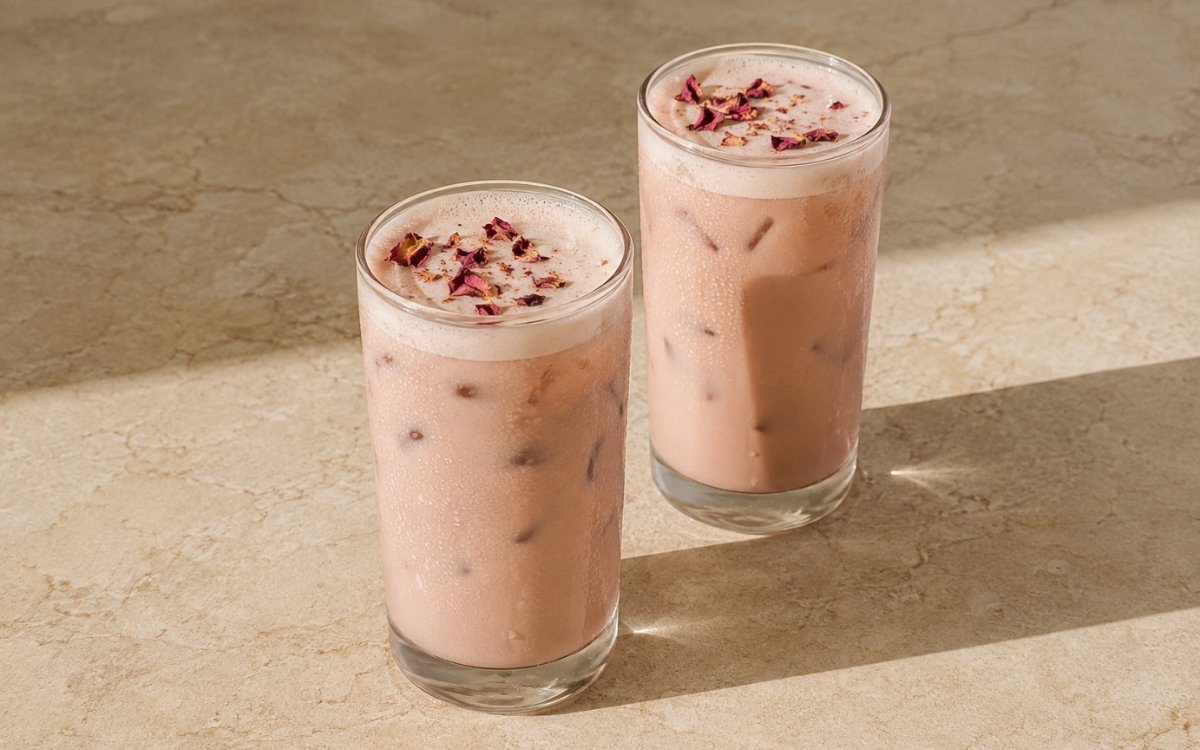
- Pour 60ml espresso into each glass over the milk and ice. Let it swirl naturally, then stir briefly. The finished liquid should settle into a pale pink-beige or blush-rose tone, not a bright artificial pink and not a plain tan latte colour. The rose should be visible in the tone, but the drink should still read as coffee. This specific colour target functions as a genuinely useful check on the drink's balance — landing correctly in that blush-rose zone confirms the syrup, oat milk, and espresso are all properly proportioned relative to one another.
Create the Thin Foam Layer
- If you want the more polished café-style finish, froth the extra cold oat milk very lightly until it forms only a thin soft foam. Spoon a small amount over the top of each drink. The foam should be minimal. Too much foam pushes the drink toward iced cappuccino territory and makes the surface look heavy instead of elegant. Stopping well short of a substantial foam is what keeps this drink's presentation reading as delicate and elegant rather than pushing toward a heavier, more filling format.
Finish and Serve
- Place 1 dried edible rose petal gently on the foam surface of each drink. Serve immediately. The garnish should look delicate and restrained. One petal is enough. More than that starts making the drink look decorative rather than classical and clean. This same restraint applies to the garnish as it does to the rose water itself — a single petal completes the drink's elegant presentation without tipping it toward looking fussy or overdone.
Notes
Rose water's tendency to intensify quickly and tip from pleasantly floral to soapy or perfumed is worth respecting as a genuine characteristic of the ingredient, not simply a matter of personal taste sensitivity. Unlike many flavourings that scale roughly proportionally with quantity, rose water's aromatic compounds can dominate a mixture disproportionately once a certain threshold is crossed — this is exactly why the syrup calls for a specific, modest amount, and why the recipe's own guidance is to reduce it next time if the result tastes perfumed rather than floral.
Adding the rose water only once the sugar syrup is off the heat, rather than while it's still actively cooking, protects those same volatile aromatic compounds from unnecessary heat exposure. Rose water's floral character depends on delicate compounds that can diminish under continued heat, and that loss would work directly against the clean, elegant aroma this syrup is meant to have.
The specific colour checkpoint given for the finished, stirred drink — pale pink-beige or blush-rose, neither bright artificial pink nor plain tan — deserves to be used as a genuine diagnostic rather than a loose aesthetic description. Landing outside that range signals a real, correctable proportion issue between the syrup, oat milk, and espresso, not simply a matter of how the drink happens to look on a given day.
Choosing barista-style oat milk specifically, rather than a standard version, serves this drink's presentation in two distinct ways worth understanding together. Its smoother, more stable body is what allows the finished drink to develop that soft blush tone cleanly, and it also produces a noticeably better thin foam than standard, thinner oat milk would — both qualities matter directly to this drink's specifically delicate, elegant identity.