Ingredients
Method
Prepare the Lemon Peel
- Wash and dry the lemon well. Using a peeler or sharp knife, cut 2 wide strips of lemon peel, one for each drink. Try to take mostly the yellow zest with only a very thin amount of white pith underneath. If using the torch, briefly warm each peel for 1–2 seconds over a low flame or with a small kitchen torch, just until the surface looks glossy and highly aromatic. Do not blacken or burn it. The peel should smell intensely lemony and slightly warm, not scorched or bitter. Gentle heat helps release the citrus oils more aggressively, which gives the finished drink a deeper, more fragrant lemon note. Taking mostly yellow zest rather than a thick strip including pith matters directly for flavour — the pith carries most of a lemon peel's bitterness, and minimising it keeps the expressed oils fragrant rather than sharp.
Brew the Espresso
- Brew 120ml espresso total, equal to 4 standard 30ml shots. The espresso should taste clean, balanced, and aromatic, not harsh or over-extracted. Because the drink is so simple, the espresso quality is very noticeable. Build the drinks soon after brewing so the espresso keeps its freshness, but give it 30–60 seconds to settle if it is extremely hot. With so few ingredients in this drink, any flaw in the espresso itself has nowhere to hide — this simplicity is exactly why brewing quality matters more here than in a heavily flavoured or milk-based drink.
Build the Glasses
- Fill 2 tall highball glasses generously with ice. Divide the cold filtered water evenly between the glasses, 120ml per glass. The glasses should be well packed with ice so the drink chills immediately and stays crisp. Starting with cold water rather than room-temperature water keeps the Americano bright and refreshing instead of diluted and flat. Building the water and ice base before the espresso ever arrives sets up the same clean separation and controlled dilution that governs every espresso-over-ice drink in this style — the water is measured precisely rather than left to the ice's slow melt, which keeps the final strength consistent and predictable.
Add the Espresso
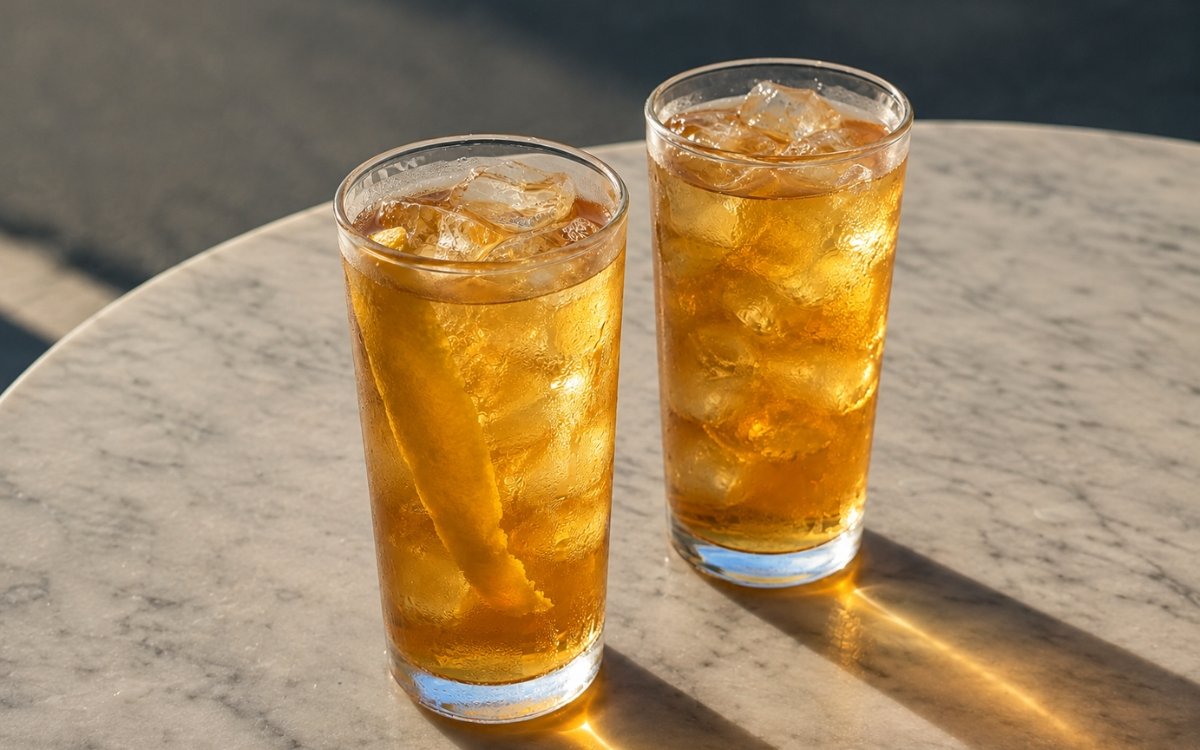
- Pour 60ml espresso into each glass over the ice and water. The drink should take on a pale amber-brown colour — light, clean, and almost translucent when held to the light. That lighter colour is part of the classic character of an iced Americano. Pouring the espresso last, over the already-built ice-and-water base, is what keeps the drink's colour and dilution properly controlled — espresso added before the water would concentrate unevenly and lose the light, translucent character this specific drink is defined by.
Express the Lemon Peel and Finish
- Hold one strip of lemon peel, yellow side facing down toward the drink, and twist it firmly over the surface of the Americano to release the aromatic oils. Rub the peel lightly around the rim of the glass, then drop it into the drink. Repeat with the second glass. Stir each drink once or twice and serve immediately. The finished drink should smell of fresh espresso with a subtle citrus top note. The lemon should lift and perfume the Americano, not turn it sour like lemonade. Twisting the peel firmly, yellow side down, aims the expressed oil spray directly onto the drink's surface where it does the most aromatic work — twisting it away from the glass, or too gently, wastes much of that citrus oil into the air instead of into the cup.
Notes
Taking mostly yellow zest with only a thin trace of white pith is worth treating as a genuine technique decision rather than a minor detail of peeling. The pith beneath a lemon's skin carries a meaningfully bitter, less refined flavour than the zest itself, and a thick peel that includes much of it will express oils that taste sharper and more bitter than the clean, fragrant lift this drink is built around.
Briefly warming the peel, whether over a low flame or with a small torch, addresses a real difference in how citrus oils release under heat versus at room temperature. A gentle, brief warm — stopping well short of any scorching — makes those aromatic oils express more readily and forcefully when the peel is twisted, producing a noticeably deeper, more perfumed citrus note than a cold peel would give under the same twist. The window here is genuinely narrow, though, since even light burning turns that same effect into unwanted bitterness.
The build order — ice, then cold water, then espresso poured over the top last — mirrors the same sequencing principle used throughout this collection's iced espresso drinks, adapted here to a simpler, milk-free format. Measuring the water precisely and adding it before the espresso, rather than relying on ice to melt and dilute the espresso over time, is what keeps this drink's strength and colour consistent and predictable rather than left to chance.
Twisting the lemon peel with the yellow side facing directly down toward the drink's surface is a small positioning detail with a real effect on how much of the expressed oil actually reaches the cup. A peel twisted at the wrong angle, or held too far from the surface, sends much of that fine citrus oil spray into the air rather than onto the drink — aiming it precisely is what maximises the aromatic payoff from this final step.