Ingredients
Method
Make the Remoulade
- In a small bowl, combine the mayonnaise, Dijon mustard, whole grain or Creole mustard, lemon juice, hot sauce, garlic, diced cornichons or pickles, capers if using, parsley, and paprika. Mix until smooth and evenly combined. Season with fine sea salt and black pepper to taste. Cover and refrigerate until needed. The finished remoulade should taste creamy, tangy, lightly sharp, and just a little spicy, thick enough to cling to a hush puppy rather than run off it. Combining two mustards rather than one gives the sauce layered sharpness — Dijon's smoothness alongside the coarser, more assertive bite of whole grain or Creole mustard, together producing more complexity than either alone.
Mix the Dry Ingredients
- In a large mixing bowl, combine the cornmeal, flour, baking powder, baking soda, sugar, fine sea salt, black pepper, garlic powder, and onion powder. Stir well so the leavening and seasonings are evenly distributed through the dry mixture. This dry base should be evenly mixed before the wet ingredients go in. Uneven distribution at this stage gives irregular rise and patchy seasoning. A pocket with too little leavening stays denser while a pocket with too much can taste faintly bitter — thorough whisking here protects against both outcomes across the full batch.
Mix the Wet Ingredients and Form the Batter
- In a separate bowl or jug, whisk together the egg, buttermilk, and melted butter until smooth. Add the very finely minced onion and stir to combine. Pour the wet mixture into the dry ingredients and mix just until no dry pockets remain. The batter should be thick, scoopable, and hold its shape when dropped from a spoon. It should not be loose or pourable like pancake batter. If it seems too loose, add a small spoonful of cornmeal; if too stiff and dry, add a small splash of buttermilk. Mincing the onion finely enough to fully disperse through the batter is what lets it season every bite evenly — larger pieces would instead concentrate sharp, raw onion flavour in isolated spots rather than throughout.
Rest the Batter
- Let the batter rest for 10 minutes at room temperature. This rest matters. It gives the cornmeal time to hydrate and slightly thicken the batter, which helps the hush puppies fry into round, full shapes with a moist, tender center instead of a gritty or dense interior. Cornmeal continues absorbing liquid for a period after mixing, and skipping this rest means frying a batter that's still actively hydrating — the result is a coarser, less cohesive interior than a properly rested batter produces.
Heat the Oil
- Fill a deep pot or Dutch oven with enough neutral oil for frying and heat it to 175°C. Keep the temperature steady. If the oil is too cool, the hush puppies absorb oil and turn greasy before they set. If it is too hot, they brown too fast before the center cooks through. This temperature window is a genuine balance point for a thick, dropped batter — hot enough to set the exterior and begin crisping promptly, but not so hot that the outside darkens before the denser centre has had time to cook through.
Fry the Hush Puppies
- Using two spoons or a small scoop, drop heaped spoonfuls of batter into the hot oil, frying in batches so the pot is never crowded. Fry for about 3–4 minutes per batch, turning occasionally, until the hush puppies are deeply golden brown all over. They are ready when the exterior is a rich deep golden brown, the crust feels firm and crisp, and the centers are cooked through and no longer wet or pasty. Transfer to a wire rack or paper towel-lined tray. Let excess oil drain briefly, then continue frying the remaining batter. Turning the hush puppies occasionally rather than leaving them static ensures even, all-around browning — a batter dropped into oil tends to float somewhat unevenly, and periodic turning corrects for whichever side happens to be facing up.
Serve
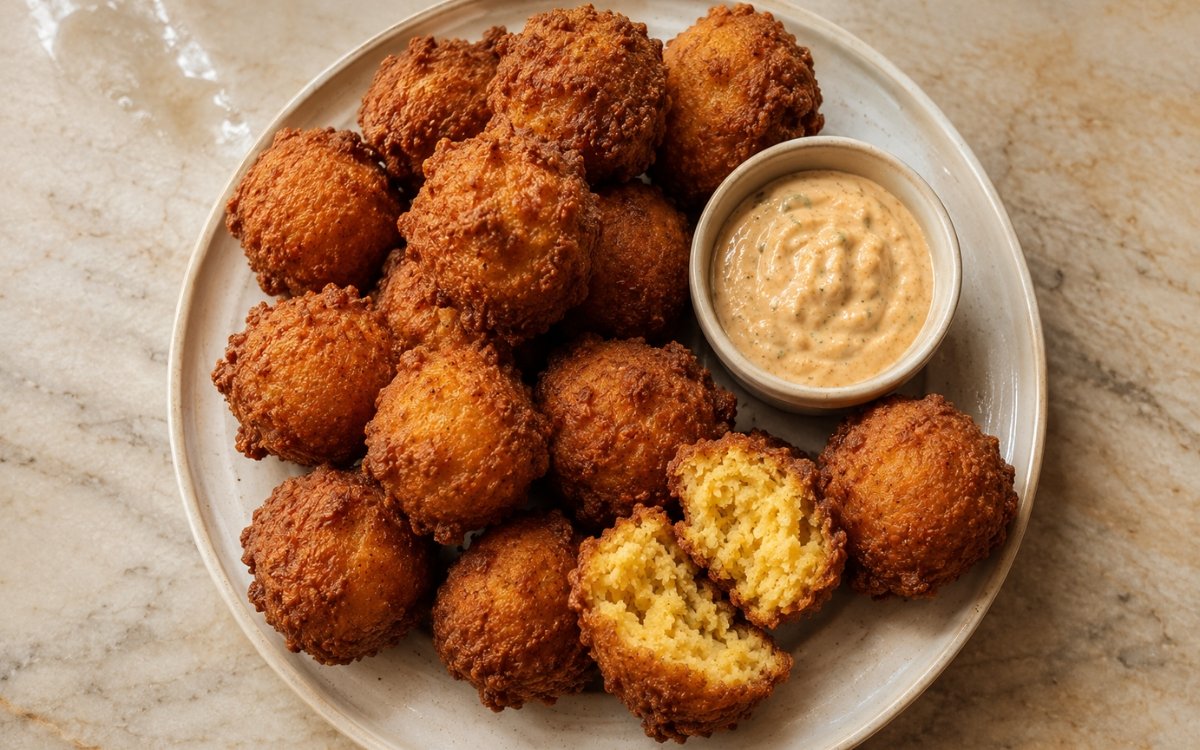
- Pile the hush puppies onto a serving plate while still hot. Serve immediately with the chilled remoulade on the side. The best texture contrast comes in the first minutes after frying: crisp crust outside, soft steaming yellow interior inside. That contrast between the crackling crust and the still-steaming interior fades within a fairly short window once the hush puppies cool, so serving without delay is what preserves it.
Notes
The batter's resting period deserves real respect despite its brevity, since it's directly responsible for the finished hush puppy's interior texture. Cornmeal doesn't fully hydrate the instant it meets liquid — it continues absorbing moisture for a period afterward, and frying a batter that hasn't had that time produces a coarser, grittier centre than one that's been allowed to properly rest and thicken. The 10 minutes specified here is enough to make a genuine, noticeable difference.
Mincing the onion very finely, rather than dicing it into more visible pieces, is worth treating as a deliberate textural choice specific to this recipe. The goal is for the onion's flavour to disperse evenly throughout the batter, seasoning every bite consistently, rather than concentrating sharp, occasionally raw-tasting onion in isolated pockets. Larger pieces would also interfere with the batter's ability to hold its shape cleanly when dropped into the oil.
The oil temperature window here matters more than it might for a thinner batter, precisely because hush puppies are dropped in as thick, substantial spoonfuls rather than thin coatings around another ingredient. That thickness means there's real distance for heat to travel from the exterior to the centre, and the specified 175°C is calibrated to let that happen at a pace where the crust and interior finish at roughly the same time — too hot, and the outside sets and darkens well before the centre has caught up.
Frying in genuinely small batches protects the oil's temperature stability, which in turn protects the specific texture contrast this dish depends on. Each spoonful of batter dropped into the oil pulls some heat from the surrounding oil as it cooks; too many at once drops that temperature enough to produce hush puppies that absorb oil and turn greasy rather than crisping cleanly.