Ingredients
Method
Make the Black Beans
- Heat the oil or lard in a skillet over medium heat. Add the onion and cook for 4–5 minutes until softened but not browned. Add the garlic and cook for 30 seconds. Add the black beans and about 180ml of the reserved bean liquid. Mash with a potato masher or the back of a spoon until mostly smooth but still a little rustic. Simmer 5–8 minutes, stirring often, until thick, creamy, and spreadable. Add a little more bean liquid if they tighten too much. Season with salt and black pepper. Keep warm. Using the reserved bean liquid to loosen the mash, rather than plain water, keeps real bean flavour concentrated in the finished spread rather than diluting it with something neutral.
Make the Tomato Sauce
- Heat the oil in a saucepan over medium heat. Add the onion and cook 4–5 minutes until softened. Add the garlic and cook 30 seconds. Add the tomatoes, salt, black pepper, and 60ml water or stock. Simmer uncovered for 12–15 minutes until the sauce is lightly thickened and the raw tomato taste is gone. It should be spoonable, not watery. If needed, add a pinch of sugar to balance acidity. Stir in the diced ham and peas and simmer 2–3 minutes just to warm them through. Keep warm. Adding the ham and peas only at the very end, once the tomato base is already fully cooked, keeps both from overcooking — they need only a brief warm-through, not the full simmering time the sauce itself required to develop.
Fry the Plantain
- Peel the plantains and cut into medium dice or thick half-moons. Heat the oil in a skillet over medium heat and fry the plantain pieces for 2–3 minutes per side until golden, lightly caramelized, and tender in the centre. Season lightly with salt and set aside. They should be sweet and browned, not hard. Using genuinely ripe plantains, with real black spotting, matters directly here — their natural sugars are what allow this frying stage to properly caramelise the exterior, a result unripe, starchier plantains wouldn't produce in the same way.
Crisp the Tortillas
- Pour a thin layer of oil into a skillet and heat over medium. Fry the tortillas one at a time for about 30–45 seconds per side until lightly crisp, golden, and flat, like small tostadas. Do not over-fry to the point of being hard and brittle. Drain briefly on a rack or paper towel. This genuine, deliberate crisping is what gives the tortilla the structural strength to hold beans, egg, and sauce without collapsing — stopping short of true brittleness, though, keeps it cuttable rather than shattering under a fork.
Fry the Eggs
- Fry the eggs in a lightly oiled skillet over medium heat until the whites are set and the yolks remain runny or just softly set. Lightly season with salt. The edges can be slightly crisp, but the yolks should stay intact. A soft, intact yolk is genuinely part of this dish's identity — once broken at the table, it becomes an unplanned extra sauce mingling with the tomato sauce and beans beneath it, adding richness this classic presentation is specifically built to include.
Assemble
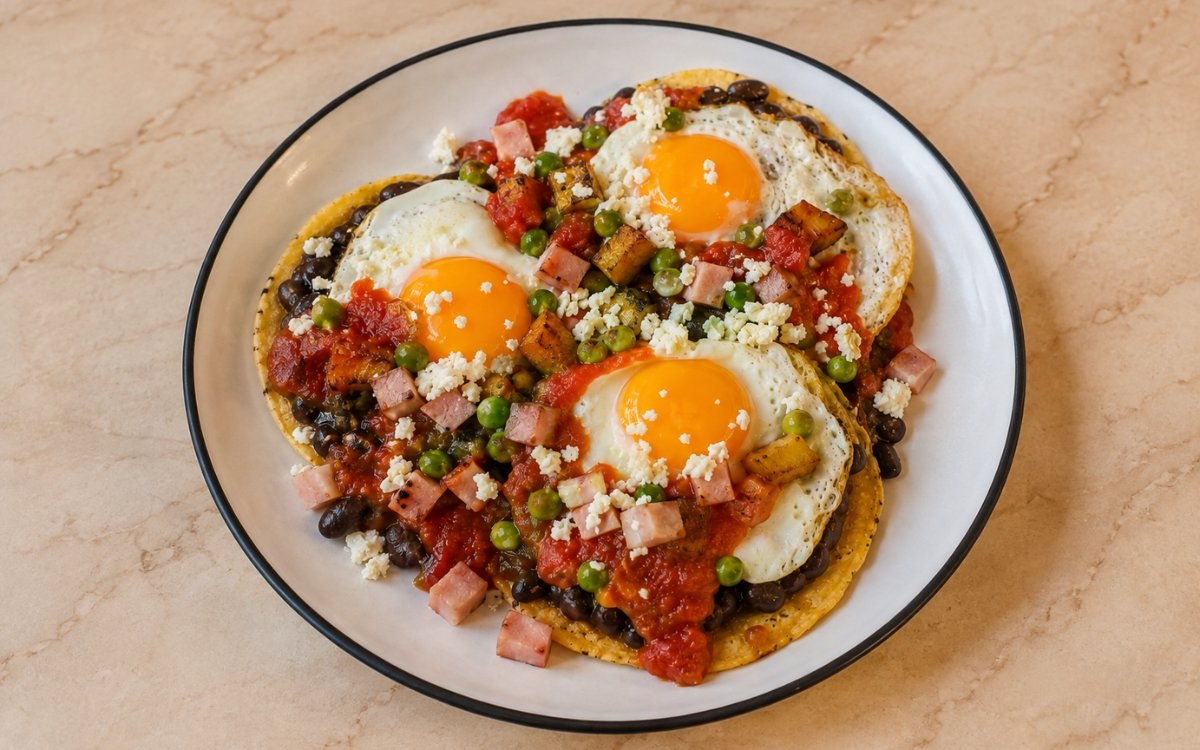
- Place 2 crisp tortillas on each plate. Spread each tortilla with a generous layer of black beans. Top each with 1 fried egg. Spoon the warm tomato sauce with ham and peas over the eggs. Scatter over the fried plantain pieces and finish with crumbled queso fresco. Serve immediately while the tortillas are still crisp underneath, the beans hot, and the yolks soft. This specific layering order — tortilla, beans, egg, sauce, plantain, cheese — builds the plate from its most structural component up to its lightest, freshest finishing touches, protecting the crisp base at the bottom from ever bearing more moisture than it needs to.
Notes
Frying the tortillas to genuine tostada-like crispness deserves recognition as the foundation this entire layered dish depends on structurally. Every component stacked on top — beans, egg, sauce, plantain, cheese — adds real weight and moisture, and only a properly crisp tortilla has the structural integrity to support all of that without collapsing or turning soggy before the plate even reaches the table.
Mashing the black beans to a thick, creamy, spreadable consistency, rather than leaving them loose or soupy, protects that same crisp tortilla from a different direction. Beans that are too thin would soak directly into the tortilla's surface almost immediately, undermining its crispness from below even if the frying itself was done correctly — the specified thick consistency is what lets the beans sit as a proper spread rather than a liquid that seeps through.
Keeping the tomato sauce genuinely light, only lightly thickened rather than reduced heavily, reflects a real understanding of this dish's overall balance. Huevos Motuleños already carries substantial richness from the fried egg, beans, and plantain — a heavy, reduced tomato sauce on top of all that would push the whole plate toward feeling overly dense rather than maintaining the fresher, brighter character a lighter sauce provides.
Using genuinely ripe plantains, with visible black spotting, rather than firmer green or barely-yellow ones, is worth understanding as a real ingredient requirement specific to this dish's flavour profile. That ripeness carries the natural sugar content responsible for proper caramelisation during frying — the sweet-savoury contrast this recipe's own notes specifically call out depends on that genuine ripeness being present from the start.