Ingredients
Method
Prepare the Eggs and Sides
- Crack the eggs into a bowl. Add 8g of the salt and the milk or water if using, then beat just until fully combined and evenly yellow. Do not over-whip. Warm the refried beans gently in a small saucepan or skillet over low heat, stirring occasionally. Keep warm. Warm the tortillas on a dry skillet or comal until soft and pliable with a few light toasted spots, then wrap to keep warm. Slice the avocados just before serving. Beating the eggs only until evenly combined, rather than whipping vigorously, is enough to fully incorporate the salt and optional liquid without introducing excess air that could make the finished eggs less tender.
Cook the Vegetables
- Heat the oil, lard, or butter in a wide nonstick or well-seasoned skillet over medium heat. Add the diced onion and jalapeño with the remaining 2g salt. Cook for 3–4 minutes, stirring often, until the onion softens and turns translucent but does not brown. Add the garlic if using and cook for about 30 seconds, just until fragrant. Add the diced tomato and cook 4–6 minutes, stirring occasionally, until the tomatoes soften, release their juices, and the mixture becomes lightly saucy rather than wet and raw. The tomato-onion-jalapeño mixture should look softened and cohesive, with excess raw moisture mostly cooked off. If it is too wet, the eggs will steam instead of scramble. Stopping the onion and jalapeño at translucent, never letting them brown, keeps this dish's flavour fresh and mild rather than introducing the deeper, sweeter notes browning would bring — a distinction that matters directly for this specific, bright-tasting classic.
Scramble the Eggs
- Lower the heat to medium-low. Pour in the beaten eggs and let them sit for a few seconds. Using a spatula, gently push and fold the eggs across the pan, scraping from the edges toward the center. Cook slowly, folding rather than aggressively stirring, until the eggs are softly set but still glossy and moist. Add the chopped cilantro in the last 30 seconds of cooking. Taste and adjust with black pepper and a little extra salt if needed. Remove the eggs from the heat while they still look slightly softer than you want to serve. Residual heat will finish them. Overcooked huevos a la mexicana become dry and crumbly instead of soft and tender. Gentle folding, rather than constant vigorous stirring, is what produces larger, softer curds — aggressive stirring breaks the eggs into smaller, tighter pieces that cook through faster and dry out more easily.
Plate and Serve
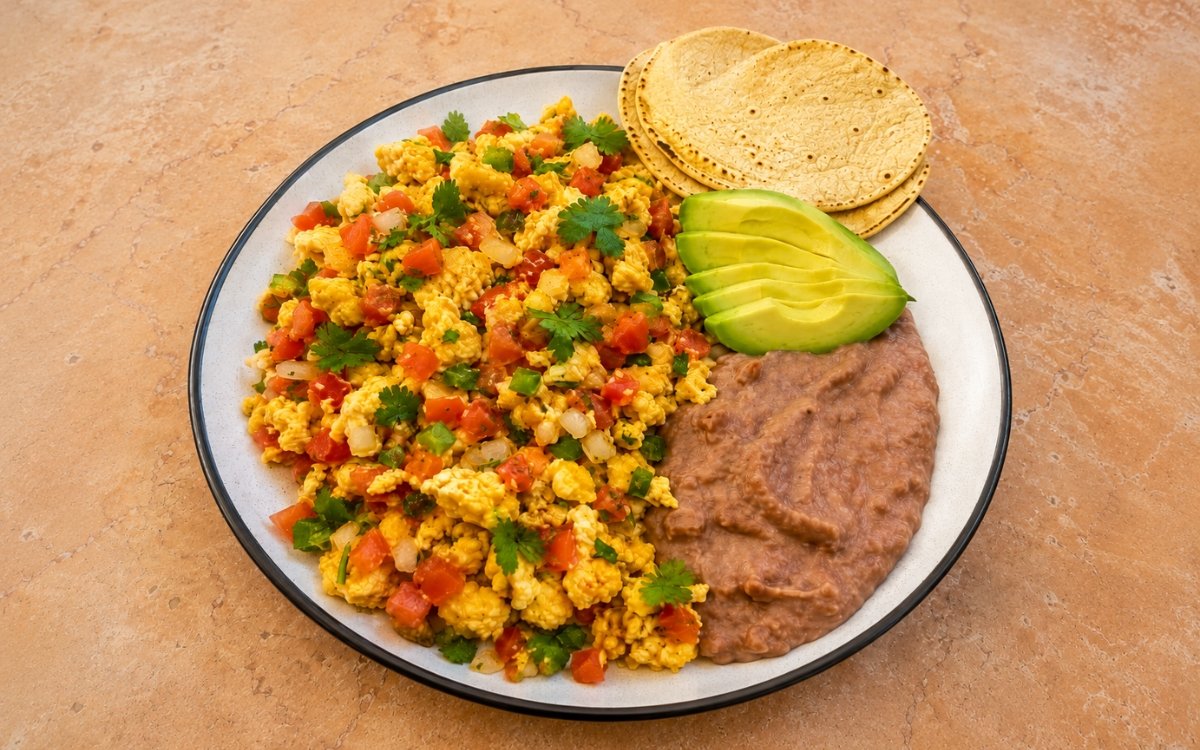
- Divide the warm refried beans among 4 plates and spread into a side portion. Spoon the huevos a la Mexicana alongside. Add sliced avocado and 2 warm tortillas to each plate. Serve immediately while the eggs are soft and hot. Slicing the avocado only right before serving, rather than in advance, keeps it from browning and protects its fresh colour and texture on the finished plate.
Notes
Cooking the tomato-onion-jalapeño mixture until its excess moisture has genuinely cooked off deserves real attention as the step most responsible for whether the eggs turn out properly scrambled or steamed and watery. Tomatoes release a real amount of liquid as they cook, and pouring beaten eggs into a mixture that's still notably wet gives that moisture nowhere to go except directly into the eggs themselves — the eggs end up cooking partly by steam rather than through direct contact with the hot pan, producing a noticeably different, wetter texture than intended.
Keeping the onion and jalapeño at translucent rather than pushing toward any browning reflects a real, deliberate choice about this dish's specific character. Huevos a la Mexicana is meant to taste fresh and bright, with the vegetables contributing clean flavour rather than the deeper, sweeter notes that browning would introduce — that restraint at the vegetable stage protects the dish's whole identity.
The instruction to pull the eggs from the heat while they still look slightly underdone, relying on residual heat to finish them, is worth taking seriously rather than as an overly cautious suggestion. Eggs continue cooking from their own retained heat even off the burner, and waiting until they look perfectly done in the pan means they'll actually be overcooked by the time they're plated and eaten — pulling slightly early accounts for that continued cooking.
Folding the eggs gently rather than stirring aggressively is a genuine technique distinction worth understanding, not simply a stylistic preference. Gentle folding produces larger, softer curds that stay moist longer; vigorous stirring breaks the eggs into smaller pieces with more exposed surface area, which cook through and dry out considerably faster under the same amount of heat.