Ingredients
Method
Prepare Sweet Potatoes
- Preheat oven to 200°C (400°F). Peel 900g sweet potatoes and cut into 2cm cubes so they roast evenly. Pat dry with paper towels to remove surface moisture—dry cubes caramelize; wet cubes steam.
Season and Oil
- In a large bowl, toss sweet potatoes with 30ml olive oil, 5g salt, 2g cinnamon, 2g black pepper, and 1g cayenne pepper until every cube is coated, especially edges. Spread on a parchment-lined baking sheet in a single layer with space between cubes.
Roast Until Tender
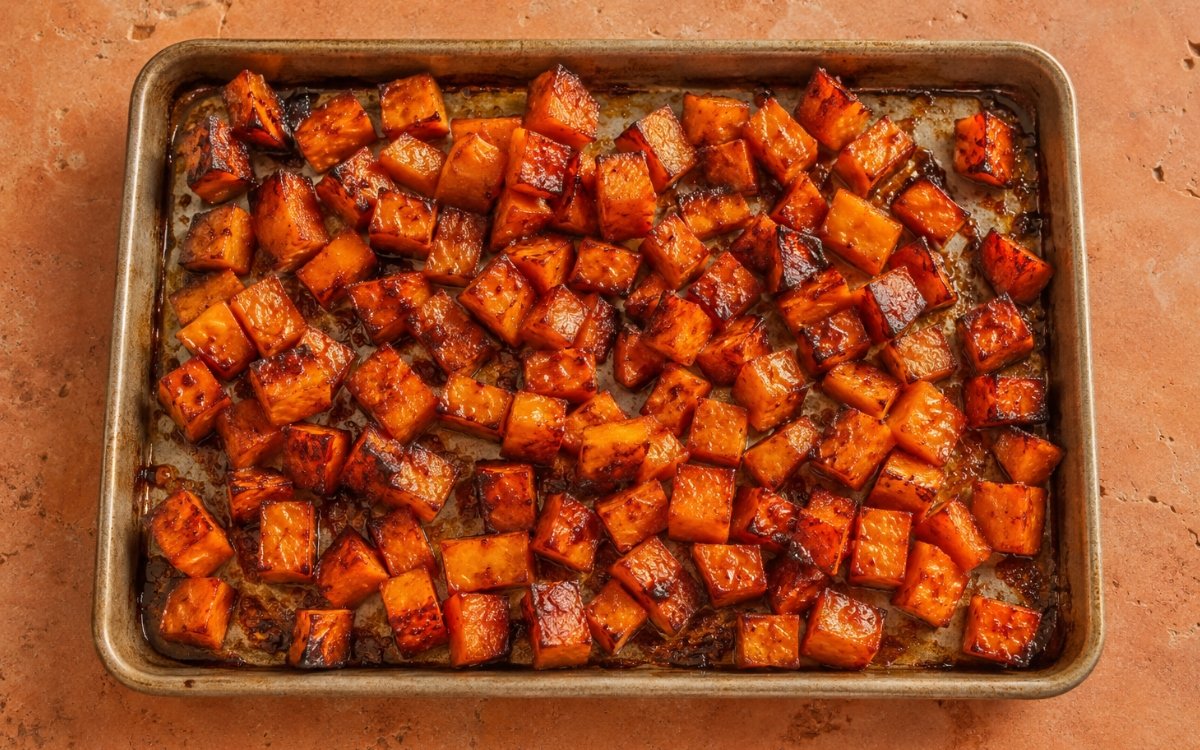
- Roast 25 minutes, stirring halfway through so multiple sides caramelize. Sweet potatoes are ready when fork-tender and the edges are deep golden; if the cubes are still firm in the center, roast 5 minutes longer and re-check.
Add Honey Glaze
- Remove from the oven and drizzle 45ml honey over the hot cubes. Toss gently to coat (avoid mashing the softened cubes), then return to the oven for 5 minutes until honey bubbles and turns glossy. Watch closely in the final minutes—honey can go from caramelized to burnt quickly. Serve hot.
Notes
Drying the sweet potato cubes thoroughly before oiling matters proportionally more here than with a russet potato, given how much more moisture sweet potato flesh naturally holds. Any residual surface water compromises the caramelization this recipe is built around, producing a duller, softer result rather than the deeply golden, crisp-edged cubes the technique is meant to deliver.
Withholding the honey until the final stage is the single most important timing decision in this recipe. Honey's sugars caramelize and then burn rapidly at sustained high heat, and a full 25-minute roast at 200°C would turn honey bitter and dark well before the sweet potatoes finish cooking through. Adding it only for the final 5 minutes lets it glaze and caramelize without crossing into burnt.
Stirring at the halfway point during the initial roast is specifically useful for cubes rather than wedges or fries, since a cube has multiple flat faces that can each develop their own caramelized surface if exposed to direct pan contact — a single undisturbed roast would only brown the one side resting against the tray.