Ingredients
Method
Make the Dough
- In a large bowl or the bowl of a stand mixer, combine the flour, instant yeast, brown sugar, and salt. Add the warm water and melted butter. Mix until a shaggy dough forms, then knead for about 8 minutes in a mixer or 10 minutes by hand until smooth, elastic, and soft. The dough should feel soft and supple, not dry. A slightly soft dough gives the pretzel bites their tender interior. That retained softness is directly what allows the finished bites to bake up genuinely tender inside their chewy, deeply coloured crust, rather than dense throughout.
First Rise
- Shape the dough into a ball and place it in a lightly greased bowl. Cover and let rise in a warm spot for about 1 hour, or until doubled in size. The dough should look puffy and airy and should spring back slowly when pressed lightly. That slow spring-back is a genuine, reliable readiness cue — dough that springs back instantly hasn't yet built enough structure, while dough with no spring-back at all has likely overproofed.
Portion and Shape
- Line a baking sheet or tray with parchment. Turn the dough out onto a clean surface and divide it into 6 equal pieces. Roll each piece into a rope about 45–50cm long. Cut each rope into bite-size pieces about 2.5cm wide. You should get about 56 to 60 pretzel bites, depending on how evenly you cut them. Keep the pieces fairly even so they bake at the same rate. That consistent sizing matters directly given how many individual pieces this recipe produces — mismatched pieces would force some to overcook while others stay underdone, all within the same brief bake time.
Preheat and Prepare the Baking Soda Bath
- Preheat the oven to 220°C. Bring the 2 liters water to a gentle boil in a medium pot. Carefully add the baking soda. It will foam up briefly, so add it slowly. Prepare the egg wash by whisking the egg with 15ml water. Adding the baking soda slowly and carefully, rather than all at once, manages that initial vigorous foaming reaction safely rather than risking a sudden overflow of hot, alkaline water.
Give the Pretzel Bites Their Bath
- Working in batches, drop the pretzel bites into the baking soda bath for 20 to 30 seconds. Lift them out with a slotted spoon and place them back on the parchment-lined tray. Do not leave them in the bath too long. A short bath is enough to create the classic pretzel crust and deep color without making the bites taste harsh or bake up wrinkled. That brief, genuinely timed dip is what alters just the dough's outer surface, raising its pH enough to produce real pretzel character during baking — a longer soak would push that alkaline effect too far, introducing bitterness and compromising the dough's own structure.
Egg Wash and Salt
- Brush the tops lightly with the egg wash and sprinkle with coarse pretzel salt. Salt them right after the egg wash so the crystals stick well. That still-wet egg wash acts as a genuine adhesive for the salt — waiting even briefly would let the surface begin drying, giving the coarse crystals considerably less to hold onto.
Bake
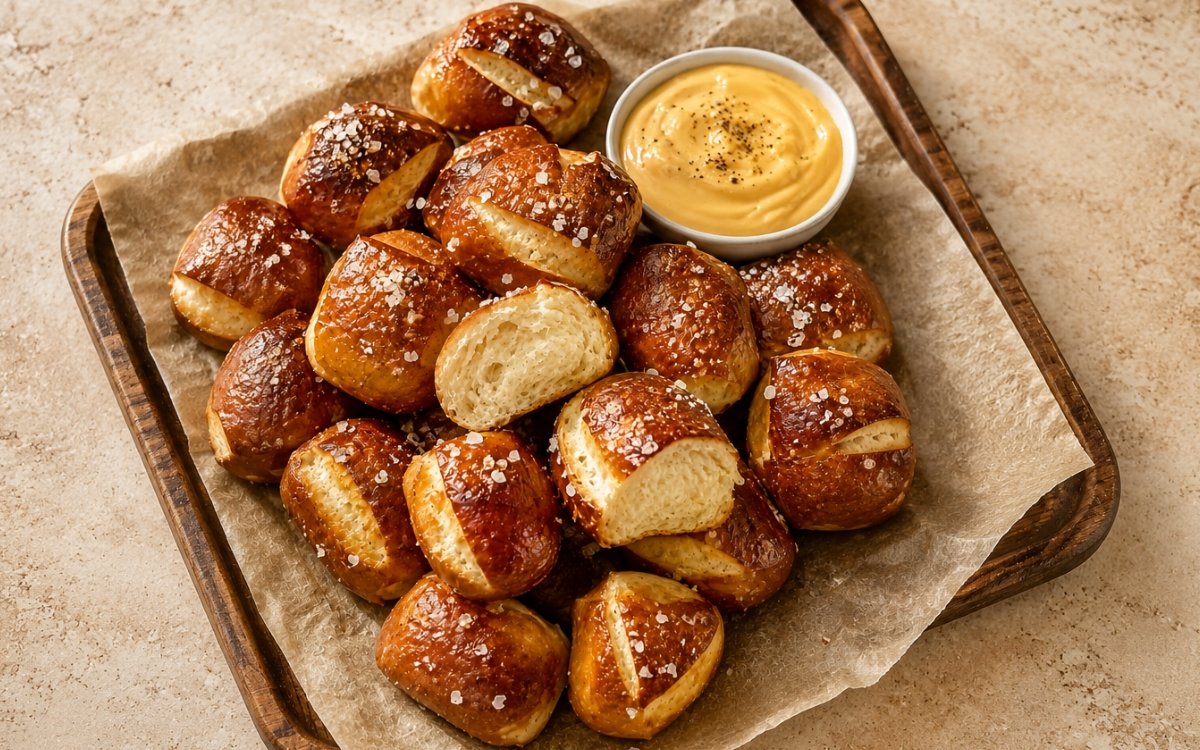
- Bake for 12 to 15 minutes, or until the pretzel bites are a deep golden brown with glossy tops. Let them cool for about 5 minutes before serving. They should be richly browned, not pale. That deeper color gives the best pretzel flavor. That real, deep colour reflects the baking soda bath's own chemistry actually doing its work during baking — a paler result would mean the bites hadn't developed the full depth of flavour and colour the alkaline bath is specifically meant to produce.
Make the Cheese Dip
- While the pretzel bites bake, melt the butter in a small saucepan over medium heat. Add the flour and whisk for about 1 minute. Slowly pour in the warm milk, whisking constantly, until smooth. Cook for 2 to 3 minutes, until lightly thickened. Lower the heat and add the cheddar and optional Monterey Jack a handful at a time, whisking until melted and smooth. Stir in the Dijon, garlic powder, paprika, and a little salt and black pepper to taste. Keep the heat low once the cheese goes in. If the sauce gets too hot, it can turn grainy or split. Adding the cheese gradually, rather than all at once, gives each handful genuine time to melt smoothly into the base before the next joins — dumping it in together risks the proteins seizing and the sauce turning grainy rather than staying silky.
Serve
- Pile the warm pretzel bites onto a tray or board and serve with the warm cheese dip on the side. Serving while both the bites and the dip are still genuinely warm delivers the pairing at its best — the bites' chewy crust and soft interior, and the dip's smooth, glossy consistency, both begin to change noticeably as they cool.
Notes
Giving each pretzel bite that brief baking soda bath deserves genuine recognition as the technique responsible for this recipe's entire identity as a proper pretzel rather than simply a shaped roll. That alkaline bath raises the dough's surface pH in a way that fundamentally changes how it browns and tastes during baking — without it, these would bake up as pale, mild bread bites rather than developing the distinctive deep colour, chewy crust, and unmistakable flavour that define an actual pretzel.
Keeping that bath genuinely brief, watching the clock for just 20 to 30 seconds, deserves the same careful attention this collection gives to any technique with a narrow window for success. The alkaline solution works quickly, and while a brief dip produces real pretzel character, an extended soak pushes that same chemistry too far, introducing genuine bitterness and risking a wrinkled, compromised surface rather than the smooth, glossy crust this recipe depends on.
Adding the baking soda to the boiling water slowly, rather than all at once, deserves attention as a real safety consideration worth taking seriously. That reaction foams up vigorously and quickly, and a careful, gradual addition manages that foaming safely rather than risking a sudden, hot overflow.
Building the cheese dip by adding cheese gradually over genuinely low heat deserves the same respect this technique receives throughout this collection's other cheese-based sauces. That incremental approach gives each addition real time to melt smoothly into the base before the next joins, protecting the sauce from the grainy, split texture that too much heat or too hasty an addition would cause.