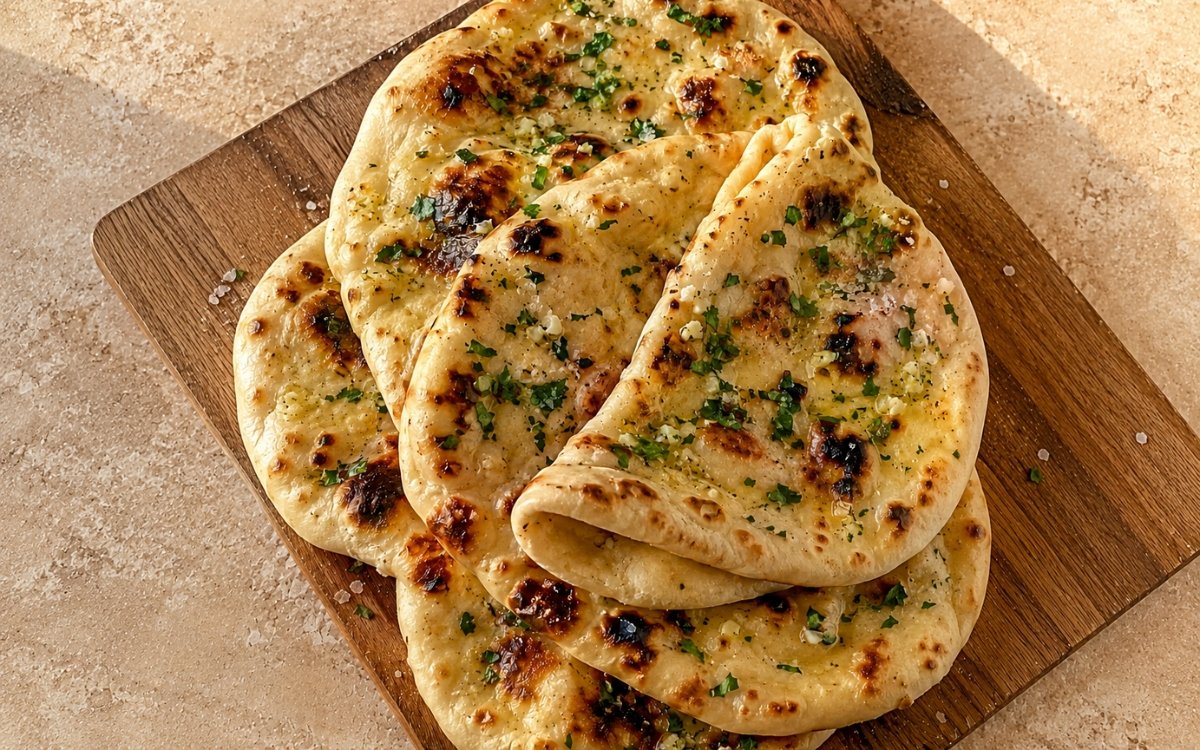
Ingredients
Method
Activate the Yeast
- In a large bowl, mix the warm water, warm milk, sugar, and yeast. Let sit for 5 to 10 minutes, until slightly foamy. The liquid should be warm, not hot. If it feels hot to the touch, it can weaken the yeast and slow the dough. Letting the mixture sit until genuinely foamy before proceeding confirms the yeast is actually active — moving forward with dead or sluggish yeast would leave the whole dough underrisen regardless of how carefully everything else is handled.
Make the Dough
- Add the yogurt, oil or melted ghee, flour, and salt. Mix until a rough dough forms, then knead for 8 to 10 minutes by hand or about 6 minutes in a stand mixer on low speed. The dough should be soft, smooth, and slightly tacky, but not wet. Do not keep adding flour until the dough feels dry. Soft dough gives soft naan. Dry dough gives stiff flatbread. That extra moisture retained in a properly soft dough is what allows the bread to stay genuinely tender once cooked — a dough worked drier for easier handling trades away exactly the softness this recipe depends on.
First Proof
- Place the dough in a lightly oiled bowl. Cover and let rise at room temperature for 1 to 1½ hours, until doubled and puffy. That extended rise gives the yeast real time to build the structure responsible for the dough's eventual lightness, while also letting the gluten network relax and develop full elasticity.
Divide the Dough
- Turn the dough out onto a lightly floured surface. Divide into 12 equal pieces, about 90 to 95g each. Shape each piece into a smooth ball. Cover with a towel and rest for 15 minutes. This short rest relaxes the gluten so the naan rolls out easily instead of shrinking back. That relaxation matters directly at the next stage — dough that's just been divided and shaped is genuinely tighter and more resistant to rolling than dough that's had a moment to settle first.
Make the Garlic Butter
- Melt the butter or ghee gently in a small pan. Add the minced garlic and cook over low heat for 30 to 45 seconds, just until fragrant. Remove from the heat and stir in most of the chopped cilantro. Do not brown the garlic. Burnt garlic turns bitter and will dominate the naan. Garlic minced this finely has genuinely little margin between fragrant and burnt, which is exactly why this brief cook happens over low heat and is pulled the moment it's aromatic.
Roll the Naan
- Roll one dough ball into an oval or teardrop shape, about 18 to 22cm long. Keep the remaining dough balls covered while you work. Roll the naan fairly thin but not paper-thin. It should still have enough thickness to puff and stay soft inside. That specific thickness matters directly for the naan's final texture — rolled too thin, the bread would have nothing left to puff into once it hits the hot pan, producing something closer to a cracker than the soft, pillowy result this recipe is built around.
Heat the Skillet
- Heat a cast iron skillet, heavy pan, or griddle over high heat until very hot. The pan should be hot enough that the naan starts bubbling within the first minute. That specific, aggressive heat is what actually produces real puffing and blistering — a pan that's merely warm would toast the naan's surface slowly without ever generating the burst of steam responsible for the bread's characteristic rise and bubbled texture.
Cook the Naan
- Place one rolled naan into the dry hot skillet. Cook for 60 to 90 seconds, until bubbles form and the bottom has dark golden spots. Flip and cook the second side for 45 to 75 seconds, until puffed, blistered, and lightly charred in spots. Transfer to a plate or tray and immediately brush with garlic butter. Repeat with the remaining naan. Naan should cook fast. If it takes too long to brown, the pan is too cool and the bread will dry out. If it burns before bubbling, the pan is too hot. This genuinely brief cook time is what protects the naan's own moisture — extended time in the pan, even at the right heat, would dry the bread out well before it's actually ready.
Finish and Serve
- Brush the warm naan with more garlic butter if needed. Finish with flaky sea salt and the remaining cilantro. Serve warm. Brushing the butter on immediately, while the naan is still genuinely hot, lets it properly soak into the bread's surface rather than simply sitting on top as a separate, unabsorbed layer.
Notes
Keeping the dough genuinely soft and slightly tacky, resisting the instinct to add extra flour for easier handling, deserves recognition as the technique most responsible for whether this naan turns out tender or stiff. That extra moisture is directly what allows the bread to stay soft once cooked — a dough worked drier, however much easier it might be to roll, trades away exactly the pillowy tenderness this recipe is specifically built around.
Heating the skillet until genuinely very hot, confirmed by the naan bubbling within the first minute, deserves the same careful attention this collection gives to any bread cooked hard and fast on a stovetop. That aggressive heat generates a real burst of steam inside the rolled dough almost immediately, and that steam is specifically what's responsible for the characteristic puffing and blistering a proper naan depends on — a merely warm pan simply can't produce that same effect.
Rolling the naan to a specific, moderate thickness — thin, but genuinely not paper-thin — reflects real understanding of what this particular bread needs structurally. Dough rolled too thin has nothing left to actually puff into once it hits the hot pan, producing something closer to a cracker than a proper naan; the thickness specified here leaves enough dough for that characteristic rise to happen.
Brushing the garlic butter onto the naan the instant it comes off the skillet, rather than waiting, deserves attention as a small but genuinely consequential timing detail. Butter applied to bread that's still hot soaks in properly, becoming part of the naan itself, while butter applied to cooled bread would largely sit on the surface as a separate, less integrated layer.