Ingredients
Method
Make the Hibiscus-Ginger Infusion
- Bring 900ml water just to a boil, then remove from the heat. Add the dried hibiscus and sliced ginger. Cover and steep for 8 minutes. Do not boil the hibiscus for a long time, or the drink can become harsh and muddy. Removing the water from active heat the moment it boils, rather than continuing to boil with the hibiscus already added, is what protects the infusion from extracting hibiscus's harsher tannic compounds alongside its desirable colour and tartness — the residual heat in the just-boiled water is still more than enough to extract properly over the full steep.
Strain and Sweeten
- Strain the infusion into a heatproof bowl or pitcher, pressing lightly on the solids. Add 140 to 180g sugar while still hot and stir until fully dissolved. Let the base cool to room temperature, then chill until cool. Dissolving the sugar while the base is still genuinely hot takes advantage of sugar's much greater solubility at higher temperatures, ensuring it fully dissolves rather than leaving any undissolved granules once the base cools.
Cold-Extract the Raspberry Flavor
- Place the raspberries in a bowl with 40g sugar. Gently mash just enough to break them up without turning them into a full puree. Let sit for 20 to 30 minutes. This cold maceration pulls out fresh raspberry juice and aroma without cooking the berries into a jammy flavor. Sugar draws moisture directly out of the raspberries' own cell structure through osmosis, concentrating real fruit juice into the bowl entirely without any heat ever touching the berries.
Strain the Raspberries
- Pass the raspberries through a fine-mesh sieve, pressing gently to extract the juice and pulp while leaving most of the seeds behind. Discard the solids. Pressing only gently, rather than forcing the fruit hard through the sieve, keeps the bulk of the raspberry seeds out of the finished cooler while still capturing the real, concentrated juice and soft pulp the maceration produced.
Combine
- In a large pitcher, combine the chilled hibiscus-ginger base, the strained raspberry juice, 700 to 800ml cold water, 40 to 60ml fresh lime juice, and the optional pinch of salt. Stir well and taste. Adjust if needed: more lime juice for extra brightness; more water if too intense; a little more sugar if you want a softer finish. The final yield should be about 2 liters. This tasting checkpoint matters directly given how much both hibiscus intensity and raspberry sweetness can vary batch to batch — building in that adjustment stage accounts for that natural variability rather than assuming a fixed recipe always lands at the same balance.
Chill and Serve
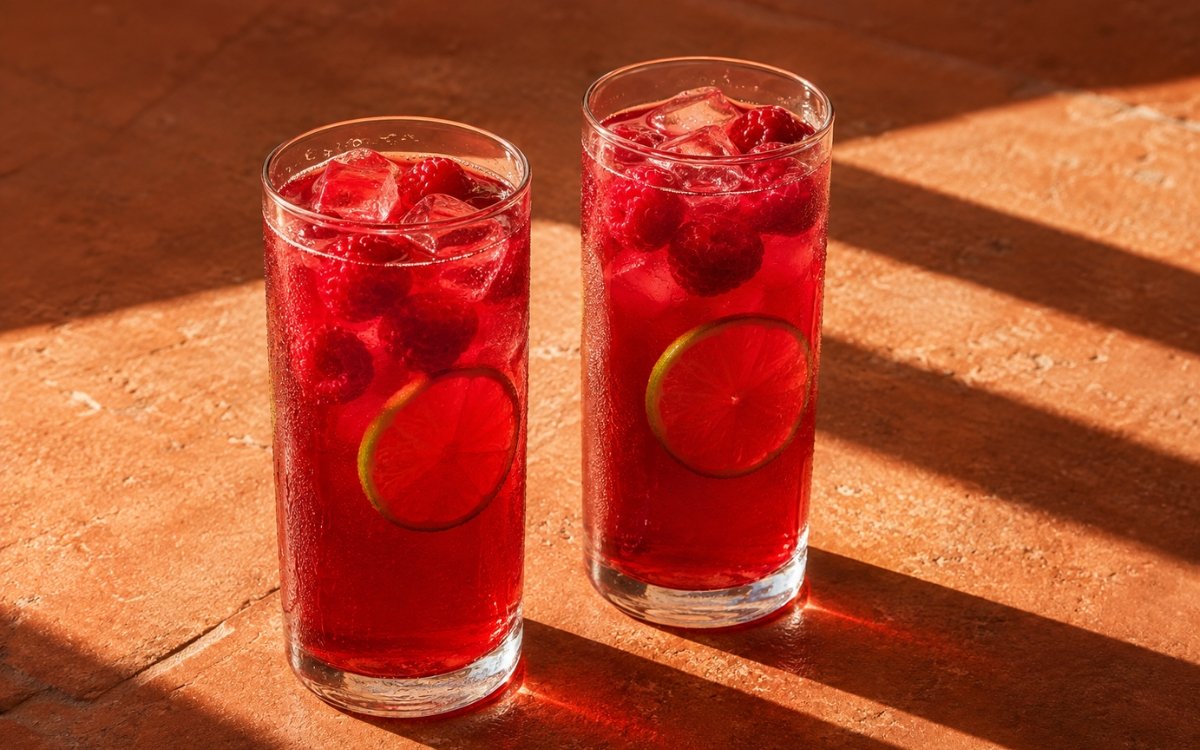
- Refrigerate for 1 hour until fully cold. Fill tall glasses with ice. Add a thin lime wheel inside each glass and a few fresh whole raspberries at the surface. Pour in the cooler and serve immediately. Floating fresh whole raspberries on the surface, rather than mixing them in, keeps them visibly displayed against the vivid ruby-red drink — a simple, effective visual touch that reinforces the cooler's core raspberry identity right at serving.
Notes
Steeping the hibiscus off the heat, rather than boiling it with the flowers already in the water, deserves recognition as the technique most responsible for whether this cooler tastes properly bright and floral or harsh and muddy. Hibiscus's own tannic compounds extract aggressively under sustained direct heat, and removing the water from the burner the moment it reaches a boil, relying instead on that residual heat to carry the full 8-minute steep, is what keeps the extraction gentle enough to stay on the right side of that distinction.
Mashing the raspberries only lightly, and macerating them cold with sugar rather than cooking them into a syrup, follows the same underlying logic that protects delicate fresh fruit throughout this collection. That gentle mash breaks the berries open just enough for the sugar's osmotic draw to pull real juice out, while stopping well short of a full puree that would lose the fruit's own textural character before it's even strained.
Steeping the ginger directly alongside the hibiscus in the same hot water, rather than as a separate infusion, deserves attention as a genuine efficiency built into this recipe without sacrificing quality. Both ingredients benefit from a similar off-heat, extended steep, meaning combining them in one step produces two distinct flavours from a single, well-timed infusion rather than requiring separate handling.
Adding the fresh lime juice only cold, at the very final combining stage, protects its own bright acidity the same way this technique protects citrus throughout every other recipe in this collection. Lime juice added any earlier, while the hibiscus-ginger base still carried real warmth, would lose some of that sharp, vivid freshness before the drink was even fully assembled.