Ingredients
Method
Soak the Chickpeas Overnight
- Place the dried chickpeas in a large bowl and cover generously with cold water — by at least 5–6cm, as they will roughly double in size during soaking. Add ½ tsp of baking soda and stir briefly to dissolve. The alkaline environment raises the water's pH, progressively weakening the pectin in the chickpea skins and cell walls throughout the soaking period and beginning the softening process before any heat is applied. Soak for 8 hours at room temperature or overnight. Drain and discard the soaking water completely — it contains released starches and the spent baking soda solution.
Cook the Chickpeas with Baking Soda
- Transfer the soaked, drained chickpeas to a large pot. Cover with fresh cold water by approximately 5cm and add the remaining ½ tsp of baking soda. Bring to a boil over medium-high heat, skimming any grey foam that accumulates at the surface as the water heats — coagulated proteins and starch that should be removed for a cleaner-tasting result. Once boiling, reduce to medium-low heat, cover with a lid, and cook for approximately 30 minutes. Check at the 25-minute mark by removing a single chickpea and pressing it firmly between your fingers or with the back of a fork. It must crush completely and immediately with zero resistance — any firmness at all means the chickpeas need more time. The double baking soda treatment applied in both soak and cook produces chickpeas soft enough to blend invisibly into the finished hummus without any graininess from intact skin pieces. Drain when fully tender and transfer immediately to the food processor while still warm.
Process the Warm Chickpeas
- Transfer the drained warm chickpeas to the food processor and begin processing immediately. Stop every 30–45 seconds to scrape down the sides and bottom of the bowl with a spatula — any mass adhering to the walls is not being processed and will remain as coarser fragments in the finished hummus. Warm chickpeas process significantly more smoothly than cold ones: the heat keeps the starch in a gelatinised, fluid state that breaks down into a uniform mass easily. Cold chickpeas have starch that has partially retrogradrated back toward a firmer structure that resists smooth processing. Process for 2–3 minutes until the chickpeas form a thick, fairly smooth, dry-looking paste — stiff and compact at this stage, which is correct before the liquid ingredients are added.
Add the Tahini, Harissa, Mint, and Seasonings
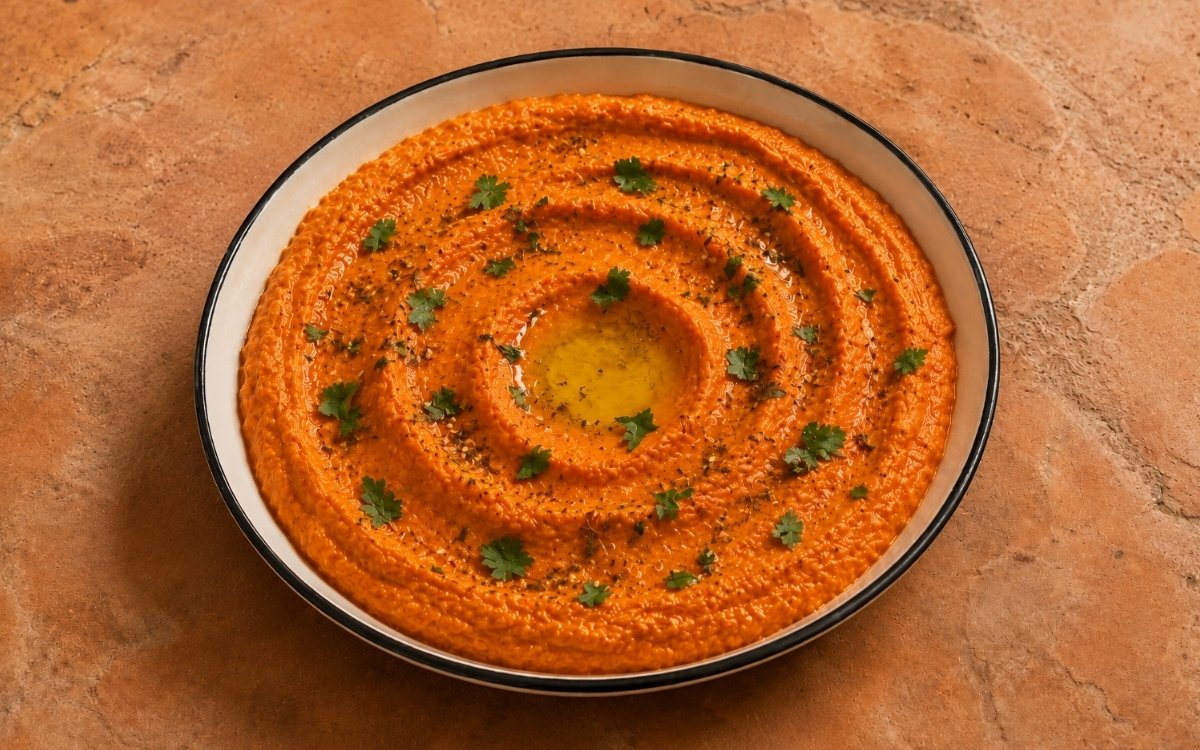
- With the food processor running, add the tahini paste in a steady stream. Add the harissa paste, the fresh mint leaves, the lemon juice, lemon zest, smashed garlic cloves, ground cumin, a conservative starting amount of fine sea salt, and freshly ground black pepper. Harissa is the defining ingredient of this variation — a North African chili paste made from rehydrated dried red chilies, olive oil, garlic, and a blend of warm spices that typically includes cumin, coriander, and caraway. Its heat profile is different from the chipotle variation's smoky fruitiness: harissa delivers a warm, complex, building heat with an earthy, spiced depth and a distinctive floral note from the dried chilies and caraway that is specifically associated with Tunisian and Moroccan cooking. The 1½ tablespoons specified produces a hummus with clearly present, building warmth that is noticeable but not aggressive — the heat level that most people would describe as pleasantly spicy rather than hot. Harissa brands vary significantly in heat intensity, so the calibration step is particularly important here. The fresh mint is the precise counterpoint to the harissa's warmth — its cooling, clean, slightly sweet aromatic compounds create a contrast with the chili heat that makes each spoonful more interesting than either element alone would produce. Mint is added during processing rather than only as a garnish so its character is distributed throughout the hummus rather than present only at the surface. Some of the volatile aromatic compounds in fresh mint are lost during the extended processing — the garnish of additional mint on serving restores the fresh aromatic presence at the top. Process for 2–3 minutes, scraping down the sides frequently, until the mixture is as smooth as the dry base will become before water is added. The hummus will show the characteristic reddish-orange colour of harissa distributed through the chickpea base.
Emulsify with Ice-Cold Water
- With the food processor running, begin adding the ice-cold water one tablespoon at a time, allowing each addition to fully incorporate before adding the next. The cold water emulsifies with the tahini's fat during mechanical processing, dispersing the fat molecules and producing the light, creamy, aerated texture that distinguishes well-made hummus from a dense paste. Harissa contributes a small amount of its own liquid to the mixture during processing, which means the water requirement may be marginally lower than for the classic version. Add gradually, assess after each tablespoon, and stop when the consistency is right. For a dense, spreadable hummus, stop at less water. For a looser consistency that flows from a spoon, continue to approximately 100ml.
Taste and Calibrate
- Stop the processor and taste carefully, evaluating several dimensions simultaneously. Heat level: if the harissa's warmth is not sufficiently present, add additional harissa paste in small increments — ½ tsp at a time — processing briefly after each addition. Be aware that adding more harissa also adds more liquid, which slightly loosens the consistency. Acidity: if the hummus tastes heavy or flat despite adequate salt, it needs more lemon juice — the lemon's brightness is what makes the harissa's complex spice character vivid rather than muted. Herbaceousness: if the mint character is not noticeable, add 3–4 additional fresh mint leaves and process for 30 seconds — the fresh addition restores the volatile aromatic compounds that the extended processing partially dissipated. Earthiness: if the background warmth and depth need amplifying, add a small additional pinch of cumin and black pepper. Salt: always the first adjustment if the hummus tastes flat in any direction — season generously and incrementally until all other flavours sharpen.
Serve
- Transfer to a wide, shallow serving bowl and create the characteristic hummus well by sweeping the back of a spoon from the centre outward in a single smooth circular motion. Drizzle generously with extra-virgin olive oil. Scatter za'atar or sumac across the surface — za'atar's earthy thyme and sesame character has a particularly natural affinity with the North African spice profile of harissa, complementing rather than competing with it. Scatter the roughly chopped fresh parsley across the surface. Serve immediately with warm Homemade Lavash or fresh pita bread.
Notes
Harissa varies more dramatically between brands than almost any other prepared condiment, and understanding this variation is essential for this recipe. Mild harissa pastes — rose harissa, for example — contain a significant proportion of dried rose petals alongside the chili, producing a more floral, less aggressively spiced paste with moderate heat. Standard harissa pastes are more straightforwardly chili-forward with clean, direct heat and deep red colour. Very hot harissa pastes can be several times more intense than standard versions. The 1½ tablespoon quantity in this recipe is calibrated for a standard harissa — if using a mild rose harissa, increase to 2½ tablespoons; if using a very hot version, start with 1 tablespoon and adjust upward. Always taste the harissa before adding it to the hummus and calibrate accordingly.
The mint-harissa pairing in North African cooking is not a contemporary fusion concept — it is a deeply rooted traditional combination found throughout Tunisian and Moroccan cooking, where the cooling aromatic quality of fresh mint is specifically used to balance the heat and complexity of chili-based spice preparations. The same pairing appears in North African mint tea served alongside spiced dishes, in harissa-dressed salads finished with mint, and in the herb garnishes used on spiced meat preparations across the region.
Fresh mint rather than dried is essential for the same reasons as fresh basil in the sun-dried tomato variation. Dried mint has a completely different aromatic profile — dusty, faintly medicinal, without the clean, bright, cooling freshness of fresh mint. In a blended preparation where the mint's volatile aromatics are already partially lost during processing, using dried mint would make the mint character nearly imperceptible in the finished hummus. Fresh leaves only, and a small additional garnish on serving to restore the volatile freshness.