Ingredients
Method
Dry-Brine the Steak
- Pat both sirloin steaks completely dry with paper towels. Sprinkle the 6g of kosher salt evenly over both flat sides and all the edges, about 3g per steak, which is 1% of the 600g of meat. Set the steaks on a wire rack over a plate and slide them uncovered into the refrigerator for 2–4 hours. The salt draws moisture to the surface, dissolves in it and is reabsorbed into the meat, while the cold, circulating air dries the exterior. Never rinse the steaks and do not add more salt. At grilling time, pat them with paper towels only if surface moisture remains, then season with freshly ground black pepper. That dry surface is what lets the steak brown and char on the grill instead of steaming.
Make the Pickled Red Onions
- Do this straight after the steaks go into the refrigerator so the onions have the longest pickling time. In a heatproof jar or bowl, stir the boiling water, vinegar, sugar, 5g salt, coriander seeds and peppercorns until the sugar and salt dissolve. Add the red onion rings, pressing them down until completely submerged, and leave at room temperature. They are ready within 30 minutes but keep improving over the following hours, turning from sharp and raw to sweet, tangy and vividly pink-purple. That slow pickling is what gives the salad a sharp, sweet acid note, with the coriander linking it to the chimichurri’s herbs.
Make the Chimichurri
- Rinse the parsley under cold water, dry it completely in a salad spinner or with a clean towel, and strip the leaves from the thick lower stems. Chop the leaves finely with a sharp knife, coarse enough to stay textured and rustic rather than a paste. Crumble the bay leaves and mince or grate the garlic. Combine the parsley, garlic, bay leaves, chili flakes, oregano, salt and pepper in a bowl, stir in the red wine vinegar, then pour in the 90ml olive oil and mix. Taste and adjust the salt, then set aside at room temperature. That resting time is what lets the garlic infuse the oil and the sauce turn bold, sharp and generously herby.
Light the Grill and Prepare the Peaches
- Light the grill and bring it to high heat, hot enough to sear steak and caramelise peach sugars quickly on contact. While it heats, toss the peach wedges in a bowl with the 20ml olive oil until every cut surface is coated. Do not season them with salt or anything else, because their role is sweet, caramelised contrast. The wedges should be thick enough to hold their shape on the grates yet thin enough to caramelise fast. That thin film of oil is what stops the peach sugars from burning and sticking to the grill grates.
Make the Light Vinaigrette
- In a small bowl or jar, combine the white wine vinegar, Dijon mustard, honey, lemon juice, and a little salt and pepper. Whisk until combined, then add the 60ml extra-virgin olive oil in a thin stream while whisking to form a light emulsion. Taste it: the dressing should be bright, clean and barely-there rather than assertive, and can be set aside while the grill heats. That restraint is what keeps the greens from tasting plain without competing with the chimichurri that finishes the bowl.
Grill the Peaches and Steak
- Place the peach wedges on the hot grates and leave them undisturbed for about 2–3 minutes per side, until they have dark char marks, feel fully soft when pressed at the tip and smell of caramelised fruit. Set them aside. Put the steaks on the hottest part of the grill and leave them for 3–4 minutes to build char and crust, rotating 45 degrees for cross-hatch marks if you like, then flip once and repeat on the second side. Pull at 54–57°C internal temperature for medium-rare, then rest on a cutting board for at least 8 minutes. That rest is what lets the juices settle back into the meat instead of running onto the board.
Assemble the Steak Salads
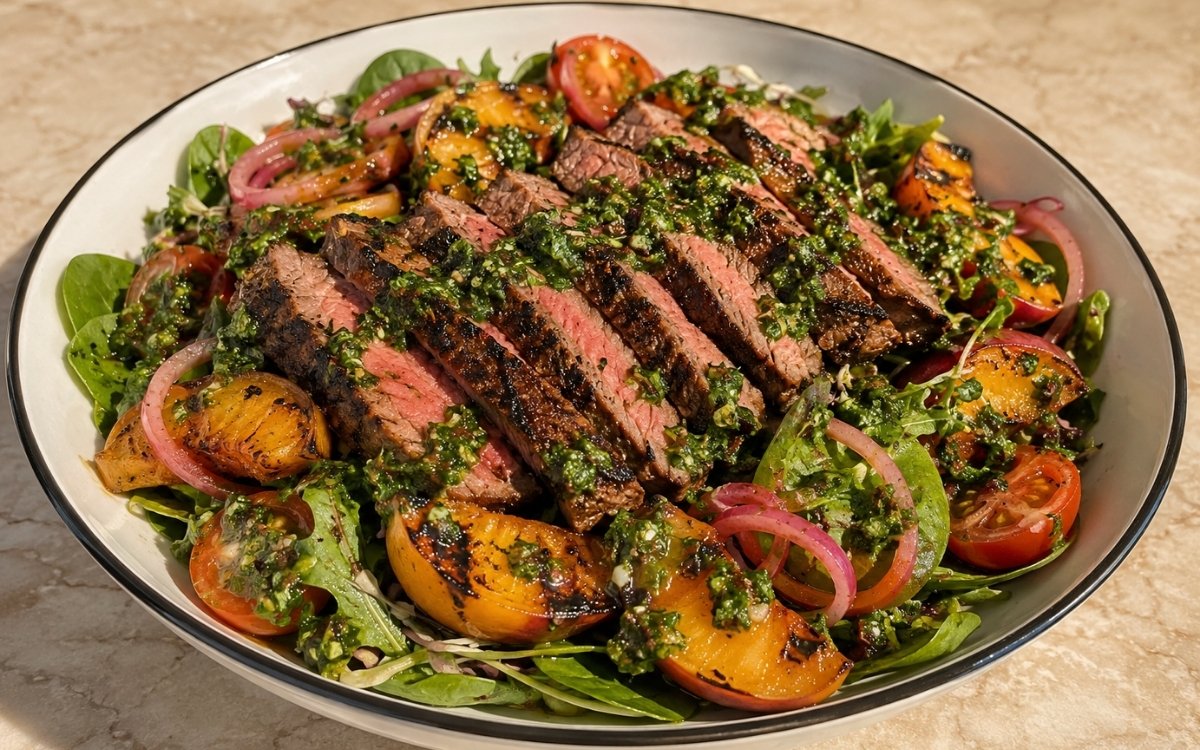
- While the steak rests, toss the mixed greens with enough vinaigrette to lightly coat every leaf and divide them among four wide, shallow bowls. Scatter the halved cherry tomatoes over the greens, season them with a small pinch of salt and pepper, and tuck in the peach wedges evenly so every portion matches. Drape the pickled onion rings over the top rather than piling them. Slice the rested steak against the grain into strips about 5–7mm thick and fan the slices across the centre of each bowl so the pink interior shows. Spoon the chimichurri generously over the steak and let it run down into the salad. That heavy drizzle is what ties every component together.
Notes
The 6g dry-brine, 1% of the 600g of sirloin, deserves genuine recognition as the technique most directly responsible for both the crust and the even seasoning. Salt pulls moisture out, dissolves in it and is reabsorbed while the uncovered refrigerator air dries the surface, which is why the brine is never rinsed away — washing would rewet the exterior and undo the dryness that makes a proper sear possible.
Ripe peach selection deserves the same attention that any grilled fruit receives, because the fruit is what turns this from a standard steak salad into something memorable. Peaches that yield slightly at the stem end carry enough sugar to caramelise before collapsing, while underripe fruit turns sour and harsh and overripe fruit falls apart on the grate — ripe nectarines are the closest substitute.
The half-batch chimichurri deserves genuine respect as the detail most directly responsible for the balance of the bowl. Ninety millilitres of oil to half a bunch of parsley gives a potent, spoonable sauce that covers four servings while leaving the peaches, onion and greens audible beneath it, whereas a full batch would flood the salad.
The 54–57°C pull temperature, paired with the 8-minute rest, deserves attention as a genuine, checkable readiness cue rather than a loose approximation of medium-rare doneness. A probe in the thickest part of each steak confirms the centre, and the rest lets the juices redistribute so the slices stay moist instead of bleeding onto the board.