Ingredients
Method
Make the Honey-Lemon Syrup
- Combine the 180ml of water and 90g of honey in a small saucepan over low heat. Stir until completely dissolved without boiling. Remove from heat. Add the lemon zest. Cover and steep for 5–8 minutes. Strain and cool completely.
Brew the Green Tea at the Strictly Controlled Temperature
- Heat the 500ml of water to 75–80°C. This is the most strictly controlled temperature of the three tea lemonade preparations — tighter than black tea's 90–95°C window and requiring specific attention because green tea's bitterness threshold is lower and its extraction faster than black tea's at any temperature. At 75–80°C, the pleasant catechin fractions responsible for Sencha's characteristic fresh, grassy, slightly vegetal character extract ahead of the harsher polyphenols. At any temperature above 85°C the harsh fraction extraction accelerates rapidly; at boiling (100°C) green tea produces a specifically unpleasant, strongly bitter result within 2 minutes. If no thermometer is available: bring the water to a full boil, then allow to stand uncovered for 6–8 minutes at room temperature — the temperature will have dropped to approximately 75–80°C at this point. Add 2 or 3 green tea bags depending on the desired tea intensity. Steep for exactly 2–2½ minutes — the shortest of the three tea lemonade preparations. Green tea's extraction is faster than both black and white tea at this temperature range: pleasant compounds extract within the first 2 minutes; harsh compounds begin extracting as early as 2½–3 minutes. Always set a timer. Remove the bags immediately at 2–2½ minutes without squeezing. Allow to cool completely.
Build the Lemonade
- Segment 2–3 lemons, removing seeds, membranes, and all pith with clean pulp retained. Add to the large pitcher and mash gently. Add the 240ml of fresh lemon juice, 120ml of cooled honey-lemon syrup, the 500ml of completely cooled green tea, and the 500ml of ice-cold water. Add the pinch of fine sea salt. Stir thoroughly. Taste with the lemonade-first assessment. The primary flavour impression should be lemon — vivid, bright, specifically clean. The green tea should be perceptible as a barely-there freshness and herbal coolness behind the lemon: more specifically present than white tea's nearly invisible contribution, slightly less warm and structural than black tea's tannic depth. The green tea's character in lemonade is specifically cool and fresh rather than warm and structured — a different sensory register from black tea's contribution, and one that specifically amplifies lemon's own bright, clean character through a shared cool-and-clean aromatic space. If the green tea is not perceptible at all, a small additional cold-steeped tea can be added. If the green tea is specifically grassy or bitter rather than fresh and clean, over-extraction has occurred — dilute with additional cold water.
Chill and Serve
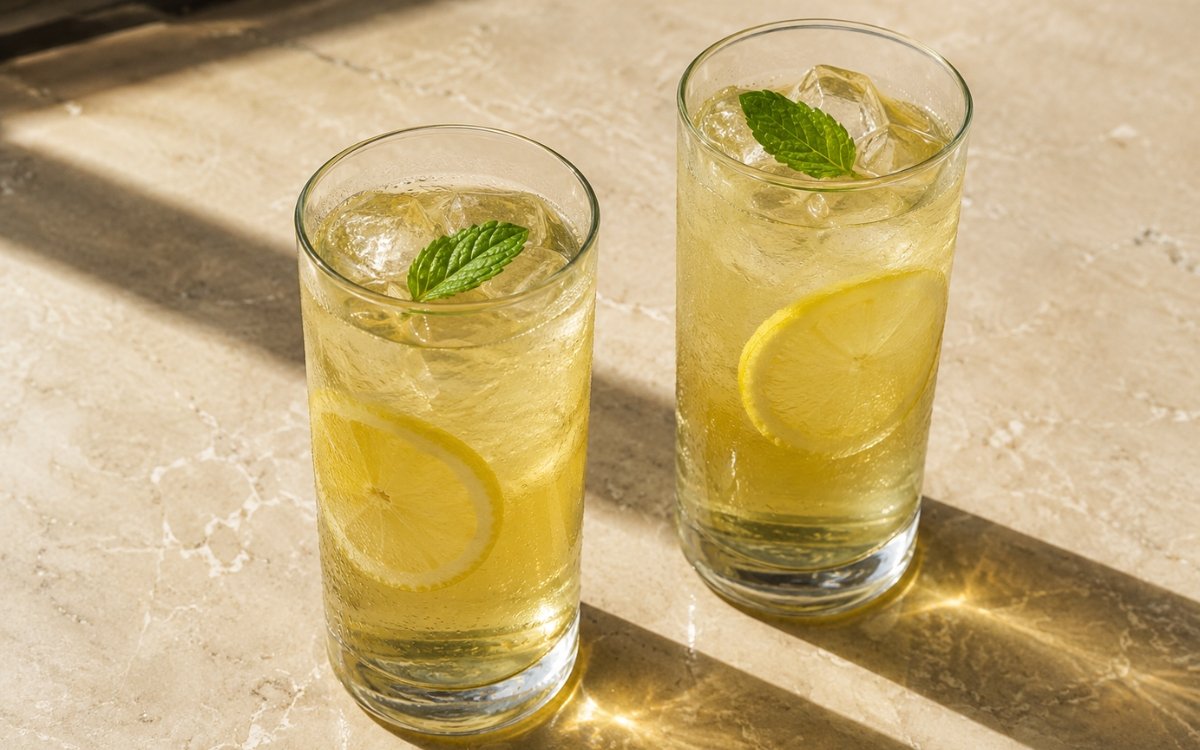
- Refrigerate for 1–2 hours. Fill glasses with ice. Pour the chilled green tea lemonade over the ice. Garnish with a lemon slice. Serve immediately.
Notes
Sencha is the most widely consumed tea in Japan, produced from the same Camellia sinensis plant as black and white tea but processed differently — the freshly picked leaves are immediately steamed or pan-fired to prevent oxidation (in contrast to the wilting and oxidation of black tea production), preserving the chlorophyll responsible for the green colour and the fresh, grassy, slightly vegetal character of Japanese green tea. This specific processing produces the fresh, cool, herbal character that makes Sencha specifically appropriate for lemonade combination rather than the more toasty, nutty character of Chinese green teas.
Matcha — powdered Japanese green tea — is specifically excluded from this preparation because matcha in cold liquid does not dissolve cleanly, producing a suspension rather than a clear infusion, and its flavour is significantly more assertive, more specifically umami-forward, and more specifically green tea-dominant than a supporting-character ingredient should be in a lemonade-led preparation.