Ingredients
Method
Marinate the Chicken
- If the chicken breasts are thick, slice them horizontally into thinner cutlets or lightly pound the thickest parts so they cook evenly. In a bowl, mix the olive oil, lemon juice, garlic, salt, black pepper, oregano, and paprika if using. Add the chicken and coat well. Marinate for 30 minutes. Do not marinate chicken breast in lemon for many hours. The acid can tighten the surface and make the chicken less tender. Lemon juice's own acidity begins actively working on the chicken's protein structure the moment it makes contact, and that specifically brief 30-minute window is calibrated to season and lightly tenderize without giving the acid enough time to compromise the meat's own texture.
Make the Tzatziki Dressing
- Grate the cucumber, then squeeze it very firmly in a clean kitchen towel or with your hands until most of the water is removed. In a bowl, mix the Greek yogurt, squeezed cucumber, garlic, lemon juice, olive oil, dill, mint, and salt. Add cold water a little at a time until the tzatziki becomes thick but drizzleable. The dressing should be creamy and spoonable, not watery. If the cucumber is not squeezed dry, the dressing thins out and loses its clean texture. That aggressive squeezing removes the cucumber's own considerable water content before it ever has the chance to dilute the yogurt base, protecting the dressing's real, thick body.
Cook the Chicken
- Heat a grill pan, cast iron pan, or outdoor grill over medium-high heat. Cook the chicken for 3 to 5 minutes per side, depending on thickness, until lightly charred and cooked through. The internal temperature should reach 74°C. Transfer to a board and rest for 5 to 10 minutes, then slice across the grain. Thinner cutlets cook fast and evenly. Pull them as soon as they reach temperature; dry chicken ruins the whole salad. Slicing the breast into thinner cutlets before cooking gives every piece a genuinely consistent thickness, letting it all reach the same doneness together rather than some parts overcooking while others lag behind.
Prepare the Salad Base
- Wash and dry the romaine and lettuce very thoroughly. Chop into bite-size pieces. Add the lettuce to a large wide bowl with the cherry tomatoes, cucumber, red onion, Kalamata olives, and feta. The greens must be dry. Wet lettuce makes the tzatziki slide off instead of coating the salad. Any residual surface water on the greens would dilute the already-thick tzatziki on contact and prevent it from properly clinging to the leaves.
Dress the Salad
- Add part of the tzatziki dressing to the salad and toss gently. Start with less than you think you need. Add more only until the vegetables are lightly coated. This salad should look fresh and creamy, not heavy. Keep extra tzatziki for drizzling over the chicken. Adding the dressing gradually, checking coverage as you go, protects against oversaturating vegetables that were specifically dried to actually hold a light, even coat rather than turning heavy and wet.
Assemble
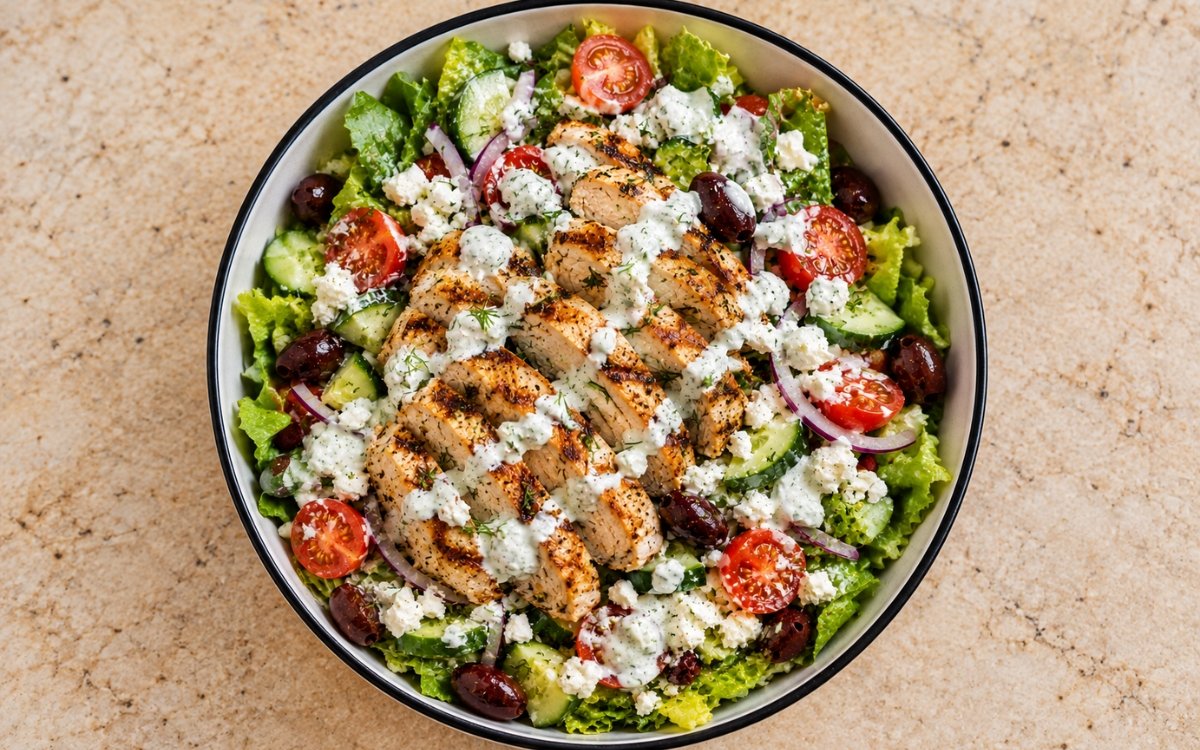
- Arrange the sliced grilled chicken over the dressed salad. Drizzle more tzatziki dressing over the top. Finish with extra feta, herbs if using, and a little black pepper. Reserving a portion of the tzatziki specifically for the chicken, rather than mixing it all into the salad base, lets the warm meat receive its own generous coating right at the surface where it's tasted first.
Serve
- Serve immediately while the chicken is still warm and the vegetables are cold and crisp. This salad's whole appeal depends on that direct contrast between warm, juicy chicken and cold, crisp vegetables — any real delay lets both drift toward the same temperature, losing exactly the distinction the dish is built around.
Notes
Squeezing the grated cucumber firmly before it ever meets the yogurt deserves genuine recognition as the technique responsible for whether the finished tzatziki achieves real, clean body or turns watery and thin. Cucumber carries considerable water content of its own, and left unsqueezed, that liquid would release directly into the yogurt base — the recipe's own explicit distinction between "proper tzatziki and watery yogurt sauce" reflects exactly how much this single step matters.
Keeping the chicken's marinating time genuinely brief, at 30 minutes rather than an extended soak, deserves the same attention this technique receives throughout this collection's other citrus-marinated proteins. Lemon juice's acidity works on protein structure much the way heat does, and a longer marinade would begin tightening and toughening the chicken's own surface rather than simply seasoning it.
Slicing the chicken breast into thinner cutlets before cooking deserves genuine respect as the detail most directly responsible for keeping the meat juicy. That consistent thickness lets every piece cook through at the same rate, protecting against the uneven doneness a single thick breast would produce — some parts still raw while others have already dried out.
Adding the tzatziki dressing gradually, both to the salad and reserved separately for the chicken, deserves attention as a deliberate technique for controlling this dish's overall richness. Starting with less than seems necessary and adding more only as needed protects the salad from turning heavy, while reserving a portion specifically for the warm chicken lets that component receive its own generous, fresh coating.