Ingredients
Method
Blanch and Dry the Cauliflower
- Bring a large pot of water to a rolling boil and add the 1 tsp salt. Add the 1kg cauliflower florets and blanch for 2 minutes only, then drain immediately and spread them in a single layer on a tray or clean kitchen towel to steam off and dry. The florets should be just slightly tender on the outside but still firm and raw at the centre — never soft enough to bend. While they dry, chop the sauce aromatics and vegetables, keeping the spring onion whites and greens separate. Pat away any remaining surface moisture before battering. That thorough drying is what lets the batter cling in an even layer, since wet florets dilute the coating and make the oil spit violently.
Mix the Batter
- In a mixing bowl, combine the 120g all-purpose flour, 70g cornstarch, 2 tbsp rice flour, 1 tsp ginger-garlic paste, ½ tsp Kashmiri chilli powder, ¼ tsp black pepper and ½ tsp salt. Add the 180–220ml cold water gradually, whisking until the batter is smooth and medium-thick, with no dry pockets of flour. It should coat a floret fully without running off too fast — thicker than pancake batter, but never pasty. If it is too thin, whisk in a little extra cornstarch; if too thick, loosen it with a splash of cold water. That balanced consistency is what fries into a light, even crust, since thin batter fries flat and patchy while thick batter turns heavy and doughy.
Fry the Florets in Batches
- Heat the neutral oil in a deep, heavy pot or wok to 175–180°C, keeping the pot no more than half full. Dip the dry florets in the batter, letting the excess drip off lightly, then lower them into the oil in 4 batches, separating any pieces that touch. Fry each batch for 4–5 minutes, turning occasionally, until crisp, lightly to medium golden and cooked through when pierced with a knife. Lift out onto a wire rack or paper towel-lined tray, and let the oil return to 175–180°C before adding the next batch. Every floret should feel genuinely crisp and sound hollow when tapped before it leaves the oil. That uncrowded, steady-temperature frying is what sets the coating fast, since crowding drops the oil temperature and the batter absorbs oil instead of crisping.
Build the Sauce Base
- In a small bowl, mix the 2 tsp cornstarch with 2 tbsp water and set aside. Heat the 2 tbsp neutral oil in a wok or wide frying pan over high heat until shimmering. Add the ginger, garlic and green chillies and stir-fry for 20–30 seconds, until fragrant. Add the spring onion whites, onion and green bell pepper and stir-fry for 1–2 minutes, until they soften slightly and catch a little char at the edges but still keep some bite. Add the 2 tbsp soy sauce, 1 tbsp dark soy sauce, 1½ tbsp ketchup, 1½ tbsp red chilli sauce, green chilli sauce if using, 1 tbsp vinegar, 1 tsp sugar and ½ tsp black pepper, and stir well. Add 2–4 tbsp water only if needed to loosen the sauce slightly — it should look intense, shiny and concentrated, never watery. Taste, adding salt only if genuinely needed. That fast, high-heat cooking is what gives the aromatics their light charring, a defining part of the Indo-Chinese flavour profile.
Thicken the Sauce and Toss
- For the crispest result, bring the frying oil up to 185°C and refry the florets in batches for 45–60 seconds just before tossing, then drain well. Stir the slurry again and pour it into the sauce over high heat, stirring constantly, and cook for 15–30 seconds until glossy and lightly thickened. Add all the fried cauliflower and toss quickly over high heat for 30–60 seconds, until every floret is coated, then add the spring onion greens and toss once more. The sauce should cling in a sticky glaze, not pool in the pan; loosen with 1 tbsp water if it tightens too much, or cook a few seconds longer if it looks loose. That brief toss is what glazes the florets without simmering them, since lingering in the sauce softens the crust within minutes.
Finish and Serve
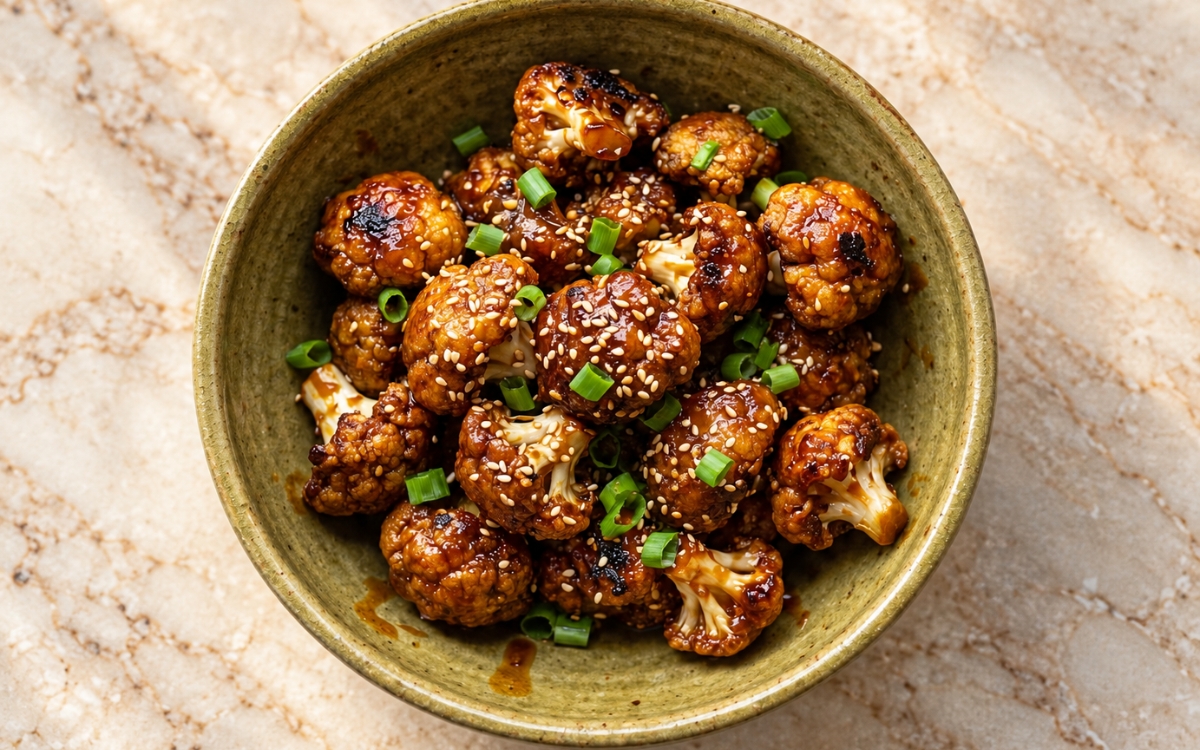
- Transfer the Gobi Manchurian straight to a warm serving bowl, scraping out any glaze that clings to the wok. Scatter over the extra spring onion greens and the 1 tsp toasted sesame seeds, if using. Check that the florets still look distinct and glossy, with visible scallions and charred edges and no puddle of sauce gathering at the bottom of the bowl. Serve immediately, as a starter or alongside fried rice, while the coating is still lightly crisp and the sauce shines. That immediate serving is what preserves the contrast between crisp shell and sticky glaze, since even 10 minutes of standing lets steam from the cauliflower soften the coating.
Notes
Frying the florets until properly crisp before saucing deserves genuine recognition as the technique most directly responsible for whether this Gobi Manchurian stays dry-style or turns soggy. A fully set crust is dry and rigid enough to hold a thin glaze on its surface for several minutes — an under-fried coating is still moist inside, so it absorbs the sauce immediately and collapses before the bowl reaches the table.
The rice flour and cornstarch in the batter deserve the same attention this technique receives throughout this collection's other fried, batter-coated recipes, because the flour blend decides whether the crust is light or bready. The recipe's own note that "Rice flour is optional but strongly recommended; it improves crispness and helps the coating stay lighter" holds because rice flour and cornstarch contain no gluten, so they fry up brittle and crisp rather than chewy.
The 2-minute blanch deserves genuine respect as the detail most directly responsible for cauliflower that is tender at the centre by the time the crust turns golden. Raw florets would need far longer in the oil than the batter can tolerate, while over-blanched florets turn waterlogged — the short blanch and thorough drying give a just-softened surface that cooks through in 4–5 minutes and still holds its shape.
The thickness of the final glaze deserves attention as a genuine, checkable readiness cue rather than a loose approximation. The sauce should cling to the florets in a sticky coat with nothing pooling in the pan — the recipe's own reminder that "The sauce should coat the florets, not turn into a curry" is the reason the water stays at 2–4 tbsp and the slurry cooks for only 15–30 seconds.