Ingredients
Method
Check the Gnocchi Size and Package Style
- Before cooking, look at the size and density of the gnocchi. Ready dried or shelf-stable gnocchi can vary a lot: some are small and cook very fast, while larger ones need slightly longer. Do not blindly boil all gnocchi for the same time. The goal is to cook them just enough that they soften, then let them finish in the sauce and oven. That upfront visual check accounts for real, genuine variability between different brands and styles of dried gnocchi — a fixed cooking time simply can't reliably account for that range on its own.
Make the Tomato Sauce
- Heat the olive oil in a wide pan over medium-low heat. Add the garlic and cook for 30 to 60 seconds, just until fragrant. Add the passata or crushed tomatoes, salt, black pepper, and chili flakes if using. Simmer gently for 15 to 20 minutes, stirring occasionally, until the sauce thickens slightly but is still loose enough to coat the gnocchi. Tear in the basil leaves near the end. Taste and add a small amount of sugar only if the tomatoes taste too sharp. The sauce should be rich and lightly thickened, not watery and not reduced into paste. If it is too thin, the bake will be loose. If it is too thick, the gnocchi will absorb too much and the dish will dry out. That specific, lightly thickened target protects the dish from both directions at once — either extreme would compromise the finished bake's own texture in a genuinely different way.
Prepare the Baking Dish
- Preheat the oven to 220°C. Lightly oil a medium baking dish with the olive oil. Keep the mozzarella and Parmesan ready before boiling the gnocchi. Having every component fully staged before the gnocchi even hit the boiling water is what lets the whole assembly happen quickly once they're drained, protecting them from sitting too long before they're coated and baked.
Boil the Gnocchi Briefly
- Bring a large pot of water to a boil and salt it. Add the gnocchi and cook according to the package, but stop as soon as they float and feel just tender. For many ready dried gnocchi, this is about 1 to 3 minutes, but size matters. Test one piece before draining. Drain immediately. Do not keep boiling the gnocchi after they are tender. Overcooked gnocchi become swollen, sticky and heavy after baking. That real, physical readiness cue — floating and just tender — is a considerably more reliable signal than a fixed timer, given how much genuine variation exists between different gnocchi products.
Coat the Gnocchi in Sauce
- Add the drained gnocchi directly to the tomato sauce. Toss gently so the gnocchi are fully coated without being crushed. Add about half of the Parmigiano-Reggiano and stir gently again. The mixture should look saucy. If it looks dry before baking, add a small splash of hot water. If it looks soupy, simmer for 1 to 2 minutes before transferring to the baking dish. Tossing gently, rather than stirring vigorously, is what protects the gnocchi's own delicate, just-boiled structure from breaking apart before it ever reaches the oven.
Assemble
- Spoon half of the sauced gnocchi into the baking dish. Scatter over about half of the mozzarella. Add the remaining gnocchi, then top with the remaining mozzarella and the remaining Parmigiano-Reggiano. Add the grated low-moisture mozzarella if using for extra stretch and browning. Keep some mozzarella on top for bubbling and browning, but do not bury the dish under too much cheese. The gnocchi should still be visible through the sauce and cheese. That layered approach, rather than piling all the cheese on top at once, distributes real melted cheese pull throughout every spoonful rather than concentrating it only at the surface.
Bake
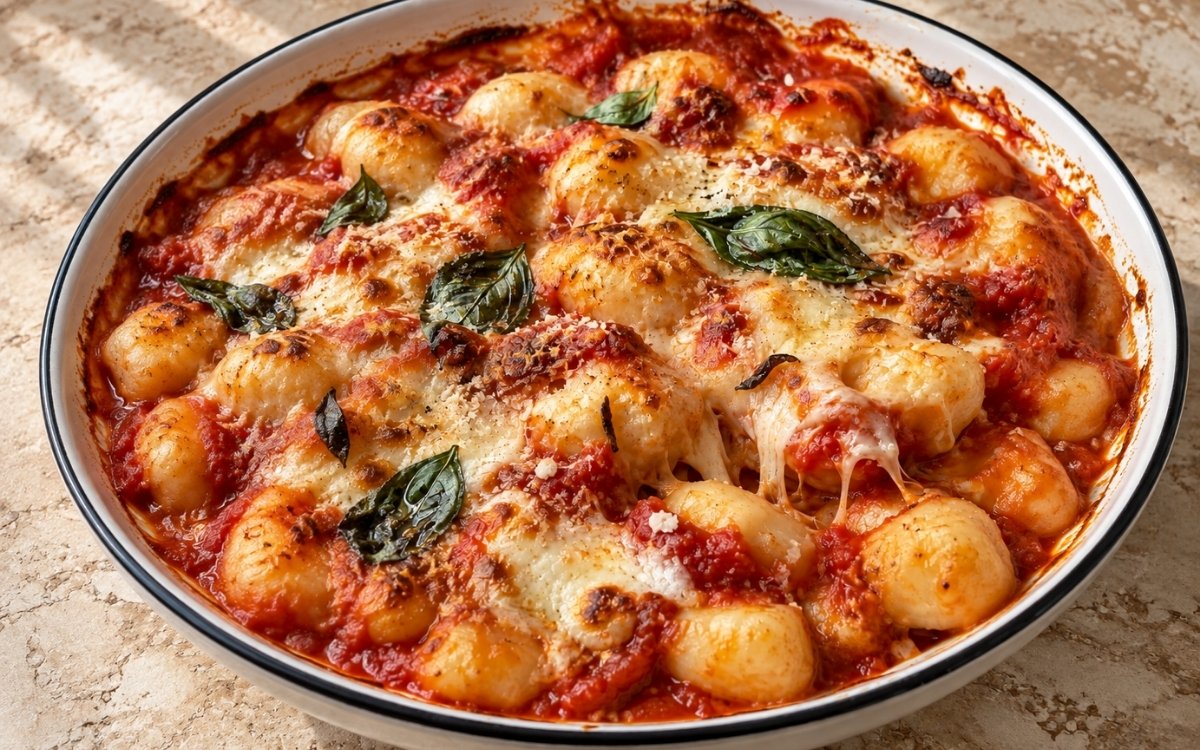
- Bake uncovered for 15 to 18 minutes, until the sauce is bubbling around the edges and the mozzarella is fully melted. For a more browned top, switch to the broiler for 1 to 2 minutes, watching constantly. The dish is done when the cheese is melted and browned in spots, not when the gnocchi have baked for a long time. Too much oven time makes them dense and gummy. That specific readiness cue — the cheese's own visible melt and browning, rather than a fixed bake time — protects the already-tender gnocchi from overcooking further under continued, unnecessary heat.
Rest and Serve
- Let the gnocchi rest for 5 minutes before serving. Finish with fresh basil and serve hot. The gnocchi should be tender and coated in sauce, with melted cheese pulling between spoonfuls. The sauce should cling to the dumplings, not pool like soup at the bottom. That brief rest lets the sauce settle and thicken just slightly against the gnocchi's own surface, protecting the dish from looking loose and soupy the moment it's served.
Notes
Boiling the gnocchi only until they float and feel just tender, rather than for a fixed amount of time, deserves genuine recognition as the technique most responsible for whether the finished texture stays soft or turns gummy. Ready dried gnocchi vary considerably in size and density between brands and even batches, and the recipe's own explicit instruction to test a single piece before draining reflects real, practical awareness that a package's suggested cooking time is often only an approximation.
Keeping the tomato sauce at that specific, lightly thickened consistency deserves the same attention this collection gives to any sauce that still has real cooking ahead of it in the oven. That deliberate middle ground — rich but not reduced to paste — protects the finished dish from either failure mode the recipe names directly: a sauce too thin bakes up loose, while one too thick gets absorbed entirely by the gnocchi, drying the whole dish out.
Judging the bake's doneness by the cheese's own melted, browned appearance, rather than simply by elapsed oven time, deserves genuine respect as a real, functional distinction. The gnocchi are already fully softened before they ever reach the oven, and continued baking past the point the cheese signals readiness only works against their texture, pushing them toward the dense, gummy result the recipe's own notes specifically warn against.
Layering the mozzarella between two portions of sauced gnocchi, rather than scattering it all across the top at once, deserves attention as a deliberate technique for this dish's overall texture. That approach distributes real, melted cheese pull throughout every spoonful, rather than concentrating it only at the visible surface where a single top layer would sit.