Ingredients
Method
Prep the Steak
- Cut the steak into 3cm cubes. Pat very dry with paper towels. Season with the salt, black pepper, and garlic powder if using. Let sit at room temperature for 15 to 20 minutes while the skillet heats. Do not cut the steak too small. Tiny cubes overcook before they can build a proper crust. Larger cubes give you dark sear outside and juicy centers. That genuine cube size matters because it gives the interior enough mass and time to stay pink and juicy while the exterior is still developing real colour — a smaller cube simply reaches full doneness throughout well before a proper crust has had time to form.
Heat the Skillet
- Place a cast iron skillet over medium-high to high heat until very hot. Add the neutral oil and let it shimmer. The pan should be hot enough that the steak sizzles hard as soon as it touches the surface. That immediate, aggressive sizzle on contact is the clearest confirmation the pan has actually reached the temperature real searing depends on — steak added to a pan that's merely warm won't develop the same crust regardless of total cooking time.
Sear the Steak Bites
- Add the steak in a single layer, working in batches if needed. Do not crowd the skillet. Sear for 1½ to 2 minutes on the first side without moving. Turn the pieces and sear for another 1 to 2 minutes, until browned on several sides but still juicy inside. Transfer the seared steak bites to a plate. If the steak releases a lot of liquid, the pan is overcrowded or not hot enough. Stop, remove some steak, let the pan reheat, then continue in smaller batches. A crowded pan traps the collective moisture the steak releases, and that trapped moisture is exactly what prevents real searing from happening — the recipe's own built-in troubleshooting step exists specifically to catch and correct that problem mid-cook rather than pushing through with a compromised batch.
Build the Garlic Butter
- Lower the heat to medium-low. Add the butter to the skillet. Once melted and foaming, add the minced garlic and chili flakes if using. Cook for 30 to 45 seconds, stirring constantly, until fragrant. Do not brown the garlic heavily. Garlic burns fast in cast iron. The steak is already cooked, so this stage is about flavoring the butter, not frying the garlic hard. Lowering the heat before the butter and garlic ever go in protects both from the same aggressive heat that was specifically needed for the earlier sear — cast iron retains heat stubbornly, and garlic added without that heat reduction would scorch within seconds.
Toss the Steak in the Butter
- Return the steak bites and any juices from the plate to the skillet. Toss for 30 to 60 seconds, just until coated in the garlic butter. Add the parsley, lemon juice, lemon zest if using, and extra black pepper. Toss once more. Stop as soon as the steak is glossy and hot. Do not keep cooking it in the butter or the centers will tighten and lose their juiciness. Because the steak was already properly seared and rested on the plate, this final toss exists purely to coat and reheat it — any extended time in the pan at this stage works only against the juicy centre the earlier sear was specifically calibrated to protect.
Serve
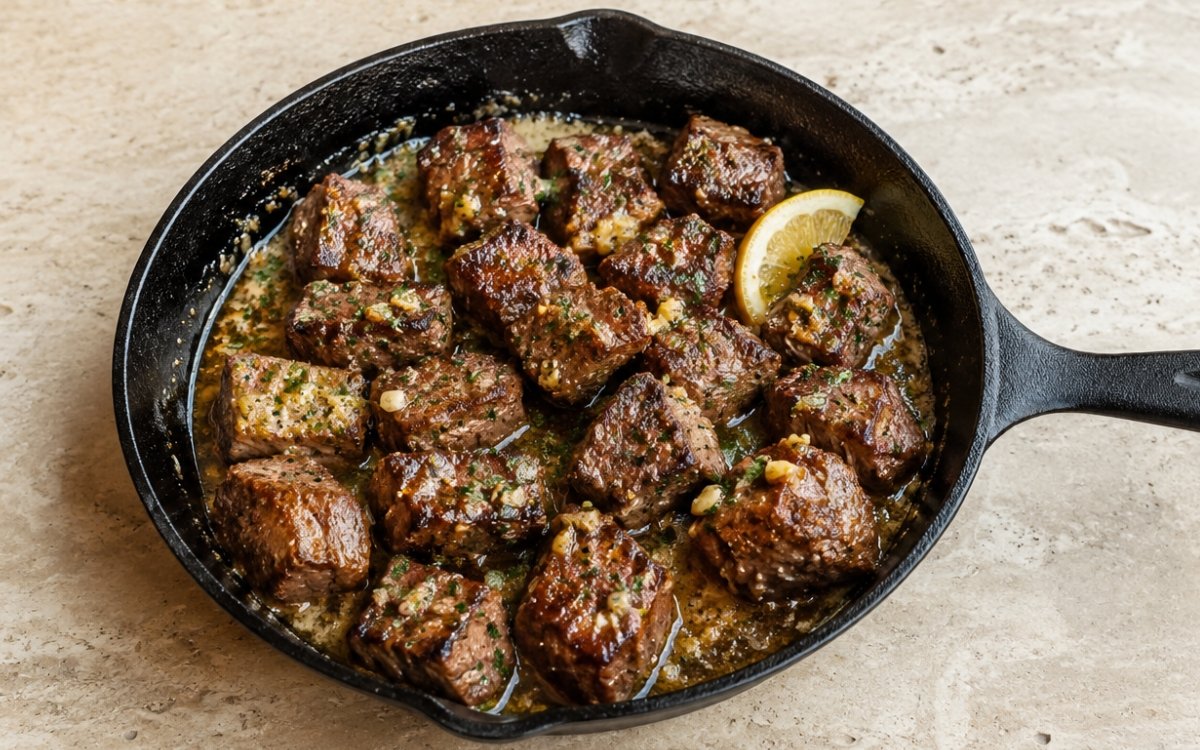
- Serve immediately in the skillet with extra parsley and lemon wedges. Spoon the garlic butter from the bottom of the pan over the steak bites. Serving directly from the hot skillet, spooning the pooled butter back over the meat, delivers the dish at its glossiest and most flavourful, right before that butter has any chance to separate or cool.
Notes
Cutting the steak into genuinely large cubes deserves recognition as the single detail most responsible for whether this dish achieves real contrast between a dark crust and a juicy centre. Smaller pieces simply don't have enough mass to stay pink inside while their exterior develops proper colour — they reach full doneness throughout well before a real sear has had time to form, producing steak bites that are uniformly grey rather than genuinely seared.
Searing in properly spaced batches deserves the same attention this technique receives throughout this collection's other seared proteins. A crowded pan traps the steak's own collective released moisture, and that trapped moisture is directly responsible for steaming rather than browning the meat — the recipe's own troubleshooting guidance, stopping to reheat the pan if too much liquid appears, reflects real, practical awareness of exactly how this failure happens.
Adding the garlic butter only after the steak is fully seared, and only once the heat has been deliberately lowered, protects two distinct things at once. Garlic burns within seconds in a cast iron pan still holding its earlier high heat, and building the butter sauce at this later, cooler stage is what lets it flavour properly rather than scorching before it ever has a chance to coat the meat.
The recipe's own explicit warning against continuing to cook the steak once it's back in the butter deserves genuine respect. Because the meat was already properly seared and rested briefly on the plate, this final toss is meant purely to coat and warm it through — any extended time at this stage risks undoing the careful work of the initial sear by tightening and drying out what should be a genuinely juicy centre.