Ingredients
Method
Prep the Shrimp
- Pat the shrimp very dry with paper towels. Toss with the salt and black pepper. Let sit for 10 minutes while you prepare the garlic, lemon, and parsley. The shrimp must be dry before searing. Wet shrimp steam, release liquid, and never get that light golden edge. That thorough drying step matters more here than it might initially seem — any surface moisture left on the shrimp converts instantly to steam the moment it hits hot oil, and that steam actively works against the direct pan contact real browning depends on.
Sear the Shrimp Fast
- Heat a wide stainless steel skillet over medium-high heat. Add the olive oil and 15g butter. When the butter foams, add the shrimp in a single layer. Cook for 60 to 90 seconds per side, just until lightly golden and mostly opaque. Work in two batches if needed. Transfer the shrimp to a plate. Do not crowd the pan. Crowding drops the heat and turns the shrimp watery. A crowded pan releases enough collective moisture from the shrimp to trap it around the batch as a whole, dropping the pan's temperature and letting the shrimp cook in their own released liquid rather than actually searing against the hot surface.
Build the Garlic Base
- Lower the heat to medium. Add the minced garlic and chili flakes to the same skillet. Cook for 30 to 45 seconds, stirring constantly. Do not brown the garlic hard. It should smell sweet and buttery, not bitter. Garlic minced this finely has genuinely little margin between fragrant and burnt — constant stirring at this stage is what keeps every piece moving through the hot fat evenly rather than letting any portion sit still long enough to scorch.
Deglaze the Pan
- Add the white wine or seafood stock. Scrape the bottom of the skillet to lift up the browned bits. Simmer for 1 to 2 minutes, until slightly reduced. Scraping up those browned bits left behind from searing the shrimp works real, concentrated flavour directly into the liquid — that fond carries genuine depth that the sauce would otherwise be missing if the pan were simply wiped clean and started fresh.
Make the Glossy Butter Sauce
- Lower the heat to low. Add the remaining 60g cold butter, one piece at a time, stirring until the sauce becomes glossy. Add the lemon juice and lemon zest. Stir again. The sauce should look shiny and slightly thickened, not separated and oily. Low heat protects the butter emulsion. Adding the butter gradually, piece by piece, rather than all at once, gives each addition time to properly emulsify into the sauce before the next goes in — dumping it in all together risks the fat separating out rather than binding smoothly into that glossy finish.
Return the Shrimp
- Return the shrimp and any resting juices to the skillet. Toss for 30 to 60 seconds only, just until the shrimp are fully coated and heated through. Remove from the heat and stir in the parsley. The shrimp finish with residual heat. If you keep boiling them in the sauce, they will tighten and turn rubbery. Because the shrimp were deliberately pulled from the initial sear before being fully cooked through, this brief final toss is genuinely enough to finish them — any longer risks pushing well past that point into the toughened, rubbery texture overcooked shrimp are known for.
Serve
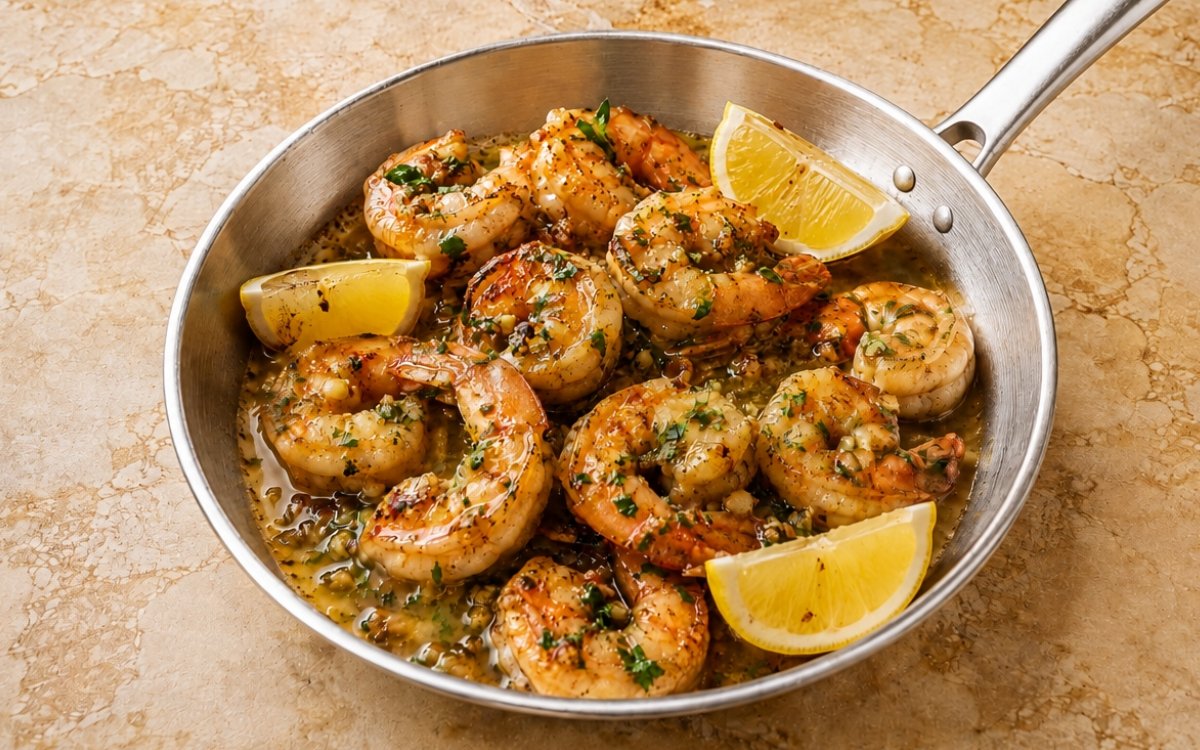
- Serve immediately with lemon wedges and extra parsley. Spoon the garlic butter pan sauce over the shrimp. Serve with bread, rice, pasta, or potatoes to catch the sauce. Serving without delay matters directly here — shrimp continue firming up the longer they sit even off the heat, and this dish is specifically built around catching them at their plumpest, most tender point.
Notes
Patting the shrimp genuinely dry before they ever meet the hot pan deserves recognition as the single detail most responsible for whether this dish achieves real searing or ends up pale and steamed. Any residual surface moisture converts to steam instantly on contact with hot oil, and that steam actively works against the direct pan contact browning depends on — a thorough pat-dry is a small step with outsized consequences for the finished dish's texture and colour.
Searing the shrimp hard and fast, then deliberately pulling them before they're fully cooked through, reflects real understanding of how this dish's two-stage cooking actually works. That initial sear is meant to build colour and flavour quickly, leaving genuine headroom for the shrimp to finish gently later in the sauce — treating the sear as the shrimp's only cooking stage would leave nothing left for the final toss except overcooking.
Building the butter sauce by adding cold butter gradually, one piece at a time, over genuinely low heat deserves the same careful attention this technique receives throughout French-derived pan sauces. That patient, incremental approach is what allows each addition to properly emulsify before the next joins, producing the glossy, cohesive finish this sauce depends on rather than a separated, greasy result.
The recipe's own explicit warning against continuing to cook the shrimp once they're back in the sauce deserves genuine respect. Because the initial sear was deliberately kept brief, the shrimp arrive at this final stage already close to properly cooked — any extended time in the hot sauce pushes them straight past tender and into the tight, rubbery texture this whole two-stage method is specifically designed to avoid.