Ingredients
Method
Prepare and Season Potatoes
- Preheat oven to 220°C (425°F). Halve the 900g potatoes lengthwise, quartering any particularly large ones so all the pieces end up roughly similar in size. Toss the potatoes in a large bowl with the 30ml olive oil, 5g salt, and 2g black pepper until evenly coated — the oil should lightly film the cut surfaces rather than pooling at the bottom of the bowl.
Roast Initial Stage
- Spread the potatoes cut-side down on a large baking sheet in a single layer. Roast for 20–25 minutes without stirring; the cut face needs uninterrupted contact to brown and crisp. You're looking for a deep golden underside and edges that look slightly dry and crisping.
Make the Garlic Butter
- While the potatoes roast, melt the 60g butter in a small saucepan over medium-low heat. Add the 20g minced garlic and cook for 1–2 minutes until fragrant — keep the garlic pale; browning turns it bitter. Remove from heat and stir in the 3g thyme, 3g rosemary, and 1g red pepper flakes if using.
Toss with Garlic Butter
- Remove the potatoes from the oven and pour the garlic herb butter over them. Toss gently with a spatula or by shaking the tray, being careful not to break the softer pieces, then spread everything back into a single layer. Aim to get some butter into the cracks and along the edges of each piece.
Finish Roasting
- Return the tray to the oven and roast for another 15–20 minutes until the potatoes are deeply golden and crisp at the edges and tender in the center. Test doneness by piercing the thickest piece — there should be no resistance. If the edges are browning faster than your oven normally does, rotate the tray once halfway through.
Garnish and Serve
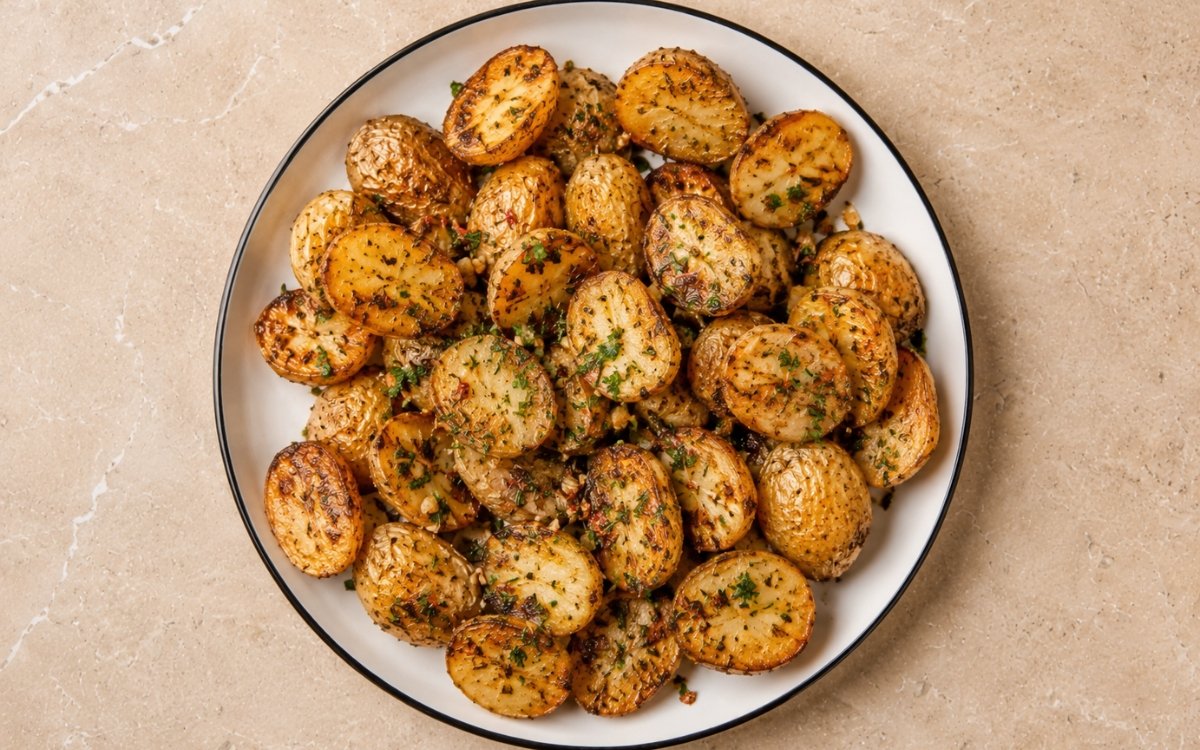
- Remove from the oven and immediately toss with the 5g fresh parsley. Taste and add up to 3g additional salt if needed, since potatoes often need a final adjustment once cooked through. Serve hot while the garlic aroma is at its strongest and the edges are crisp.
Notes
Roasting cut-side down for the first stage is specifically what produces the deep, golden crust on that flat surface. A cut potato face pressed directly against a hot baking sheet browns far more effectively than the same surface exposed to ambient oven air, which is why disturbing the potatoes too early in this stage undermines the whole point of positioning them this way.
Keeping the garlic pale during its brief cook in butter matters more than it might seem for such a short step. Garlic's transition from fragrant to bitter happens quickly once it starts to brown, and since this butter coats every piece of potato in the final dish, even mildly burnt garlic would be noticeable throughout rather than confined to one bite.
Introducing the butter only at the midpoint of roasting, rather than mixing it in from the very beginning, protects it from the full duration of the oven's heat. Butter added at the start would have far more time to brown, separate, or burn before the potatoes finish cooking; adding it partway through gives it just enough time to coat and flavor the potatoes without breaking down.