Ingredients
Method
Start the Hash Browns
- Cook the hash browns according to the package or your usual method until crisp and golden. If baking, use a hot oven around 220°C and cook until deeply golden, usually 18 to 25 minutes depending on size. Hash browns need time to crisp. Start them first so they are not pale or soft when the rest of the breakfast is ready. Starting with the component that genuinely needs the most time is what makes the rest of this plate's tight sequencing actually work — every other element is scheduled backward from the hash browns' own finish time.
Cook the Sausages
- Heat a large skillet over medium heat. Add a little oil only if the pan is dry. Add the sausages and cook for 12 to 15 minutes, turning often, until browned all over and cooked through. Transfer to a warm plate or low oven. Do not blast sausages over high heat. They need steady medium heat so the outside browns without splitting badly before the center cooks. That steady, moderate heat gives the sausage's own interior genuine time to cook through at roughly the same pace the exterior develops colour — high heat would brown and split the casing well before the centre finished.
Cook the Bacon
- In the same pan, cook the bacon rashers over medium to medium-high heat for 3 to 5 minutes per side, depending on thickness, until browned and crisp at the edges. Transfer to the warm plate with the sausages. The bacon should be deeply browned in spots but not dry and brittle unless you are using streaky bacon and want it very crisp. Cooking the bacon in the same pan the sausages just used means it picks up real, residual flavour from whatever fond was left behind, rather than starting from a clean, neutral surface.
Grill or Sear the Tomatoes
- Place the tomato halves cut-side down in the bacon pan. Cook for 2 to 3 minutes, then flip and cook another 2 to 3 minutes, until softened and lightly charred. Season with salt and black pepper. Tomatoes should soften and caramelize slightly, not collapse into sauce. Remove them once the cut side is browned and the flesh is hot. Pulling the tomatoes the moment their cut side browns and their flesh warms through, rather than cooking longer, is what protects them from collapsing into something closer to a sauce than a distinct, structured component of the plate.
Cook the Mushrooms
- Add the butter and oil to the pan. Add the mushrooms and optional crushed garlic. Cook over medium-high heat for 6 to 8 minutes, stirring occasionally, until the mushrooms release their moisture, the liquid cooks off, and the mushrooms brown lightly. Season with salt and black pepper. Remove the garlic before serving if using. Wait for the mushroom liquid to evaporate before seasoning heavily. If you salt too early or stop too soon, the mushrooms will taste watery instead of browned and savory. Salting mushrooms too early actively draws out even more of their own liquid through osmosis, working directly against the browning this step is trying to achieve — waiting until that liquid has already evaporated avoids adding to the very problem the recipe's own guidance warns against.
Warm the Baked Beans
- Place the baked beans in a small saucepan with the optional butter, black pepper, and Worcestershire sauce. Warm gently over medium-low heat for 5 to 7 minutes, stirring occasionally, until hot. Do not boil the beans hard. They should stay glossy and saucy, not reduce into a thick paste. That gentle warming, rather than a hard boil, is what keeps the beans' own sauce properly loose and glossy rather than reducing down into something considerably thicker and pastier than intended.
Make the Toast
- Toast the bread until golden, then butter while hot. Cut into triangles for serving. Keep warm briefly, but do not cover tightly or the toast will steam and soften. Buttering the toast while it's still genuinely hot lets that butter melt in and soak slightly rather than sitting as an unmelted layer, while avoiding a tight cover afterward protects the toast's own crispness from the trapped steam a sealed cover would create.
Fry the Eggs Last
- Heat a large nonstick or well-seasoned skillet over medium heat. Add the butter and oil. Crack in the eggs and fry for 2 to 3 minutes, until the whites are set and the yolks are still glossy and runny. Season with salt and black pepper. The eggs should be cooked last. The whites need to be fully set, but the yolks should still move slightly when the pan is tilted. Every earlier component on this plate was cooked and held warm specifically so the eggs could be the very last thing to hit the pan — that sequencing is what delivers glossy, runny yolks onto a plate where everything else is already properly hot and ready.
Plate the Breakfast
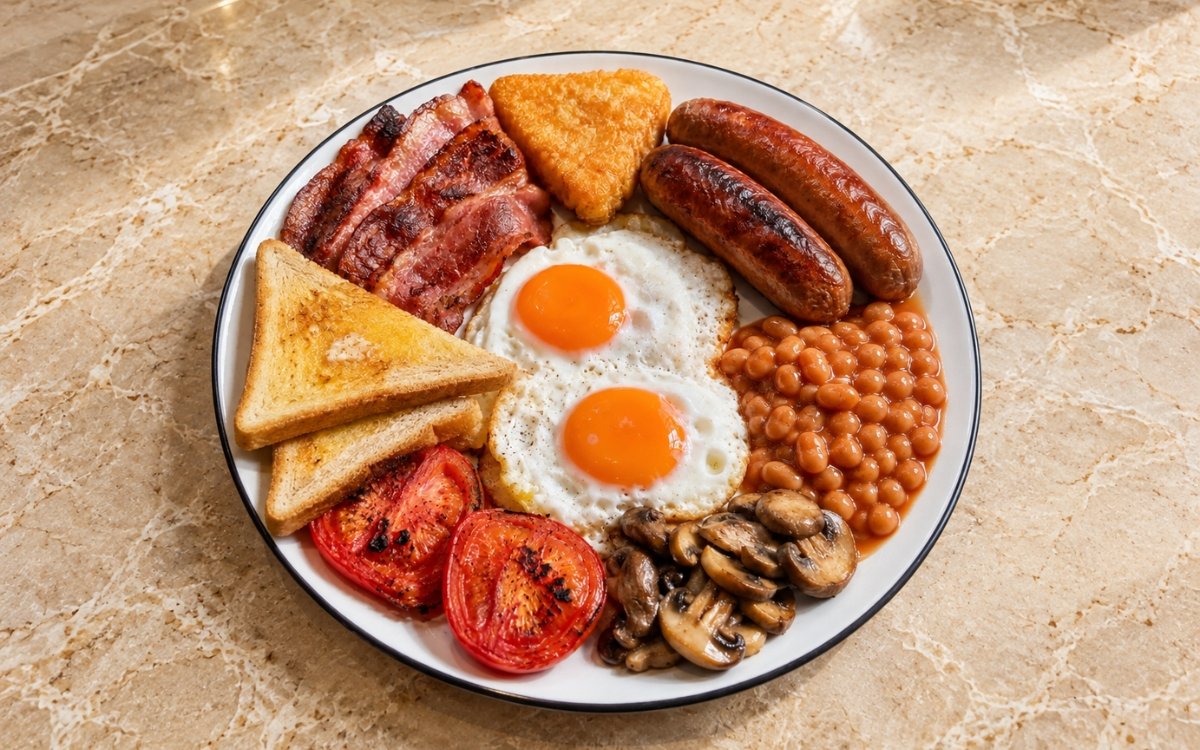
- On each plate, arrange 2 fried eggs, 2 sausages, 2 bacon rashers, 2 tomato halves, a portion of mushrooms, about 200g baked beans, 1 hash brown, and 2 buttered toast triangles. Serve immediately while everything is hot. Serving without any real delay is what actually delivers this plate's whole point — every component, from the crisp hash browns to the glossy, just-set eggs, is at its own individual best only in the moments right after cooking.
Notes
Working through this plate's many components in a genuine, deliberate order — slowest first, eggs strictly last — deserves recognition as the organizing principle behind the entire recipe. A full English breakfast carries real variety, with components ranging from a hash brown needing nearly 20 minutes to eggs needing barely 3 — respecting each one's own real cooking time, rather than starting everything at once, is what lets every element arrive at the final plate properly finished rather than some overcooked while others lag behind.
Waiting for the mushrooms' released liquid to fully evaporate before seasoning deserves genuine attention as a real, specific technique rather than a minor detail. Salt draws moisture out of mushrooms through osmosis, and adding it too early actively compounds the very wateriness the recipe is trying to cook away — patience at this stage is directly what lets the mushrooms brown properly rather than simply simmering in their own exuded liquid.
Frying the eggs only at the very end, after every other component is already cooked and held warm, deserves the same respect this collection gives to any dish built around a final, time-sensitive centrepiece. This entire recipe's sequencing exists to make that possible — every earlier stage is deliberately timed backward from the eggs' own brief cook, ensuring the whole plate can be served the moment those glossy, runny yolks are ready.
Cooking the bacon and tomatoes in the same pan the sausages and bacon respectively just used deserves recognition as a real, practical efficiency built into this recipe. Each subsequent component picks up genuine residual flavour from the fond and fat left behind by whatever came before it, layering flavour throughout the cooking process rather than starting each stage from a clean, neutral pan.