Ingredients
Method
Select and Prepare the Peaches
- Peach quality and ripeness are the entire basis of this preparation's success — unlike the apricot vanilla sparkler or peach white tea spritzer where the aromatic volatile compounds requiring heat protection produced a specific constraint on technique, this lemonade is specifically a cooked preparation where the flavour develops through the simmer. A ripe peach — yielding to gentle pressure, deeply fragrant, with a blush extending across most of the surface — produces a concentrated, vivid, intensely peachy syrup. An under-ripe peach produces a mild, slightly astringent syrup with insufficient fruit character to carry 1.2 litres of finished lemonade. The skin is left on during cooking — peach skin contains a higher concentration of the flavour compounds and the pink pigmentation that gives the finished lemonade its specific colour — and removed during straining. Roughly chop each peach into 5–6 pieces; precision in the cut size is unnecessary as the cooking will fully break them down.
Cook the Peaches with Sugar and Water
- Combine the 130g of white sugar, 240ml of water, and all the chopped peaches in a medium saucepan. Place over medium heat and bring to a gentle simmer, stirring to begin dissolving the sugar. Cook for 10–12 minutes, stirring occasionally and using the back of a spoon to lightly mash the peaches as they soften — pressing them firmly against the pan's surface to release their juice and break down the flesh progressively during the cooking period. The goal at the end of 10–12 minutes is peaches that have fully broken down into the surrounding sugar-water medium — very soft, yielding completely to pressure, with the majority of each piece having dissolved into the syrup rather than remaining as intact fruit chunks. This is specifically different from the 5-minute low-heat approach of the pear ginger sparkler, where the goal was maximum volatile aromatic preservation at the cost of concentration. Here the 10–12 minute medium-heat simmer develops a concentrated, warm, cooked-peach depth that specifically suits the lemonade format — the lemon juice's brightness will counteract the cooked notes and produce the specifically refreshing combination that defines a proper peach lemonade. The syrup should smell specifically of cooked sweet peach — warm, concentrated, and intensely fruity rather than jammy or caramelised. If the syrup begins to smell caramelised or the edges of the pan show darkening, reduce the heat immediately.
Blend and Strain the Peach Syrup
- Remove from the heat and allow to cool for 5–10 minutes. Transfer the cooled peach mixture to a blender and blend briefly — 20–30 seconds at medium speed is sufficient to break down any remaining large pieces into a uniform mixture without the aggressive aeration that produces a pale, foamy result. The mixture at this stage is a warm, intensely coloured, fragrant peach purée. Strain through a fine-mesh sieve into a clean pitcher, pressing firmly on the purée with the back of a spoon — more firmly than the gentle pressing used for delicate preparations, because this is a cooked purée where the maximum juice extraction is specifically the goal. Press until the solids feel relatively dry. Discard the strained skins, fibres, and remaining dry pulp. The finished peach syrup should be a clear, warm amber-pink — the specific colour of ripe peach juice concentrated by the cooking — and significantly more viscous than plain water from the dissolved sugar and fruit pectin. Allow the strained syrup to cool completely to room temperature.
Build the Lemonade and Adjust
- In a large pitcher, combine the cooled peach syrup, 240ml of fresh lemon juice, and 900ml of ice-cold water. Stir thoroughly until completely combined. The lemon juice is added to the cold, combined base rather than to the warm syrup — preserving the volatile aromatic character of the fresh juice rather than cooking it into the warm peach preparation. Taste and assess carefully, addressing each dimension separately. If the peach character is vivid and the balance needs only brightening, additional lemon juice in 20ml increments up to 300ml total provides the extra acidity. If the combined base is too intensely concentrated, additional cold water up to 1.2 litres total dilutes toward the correct drinking strength. If additional sweetness is needed, make a quick simple syrup — dissolve 2 tbsp of sugar in 2 tbsp of warm water — and stir this into the cold lemonade rather than adding plain sugar which will not dissolve cleanly in cold liquid. The correctly balanced peach lemonade should taste sweet, peachy, and clearly tart — refreshing and clean without heaviness or excessive sweetness.
Chill and Serve
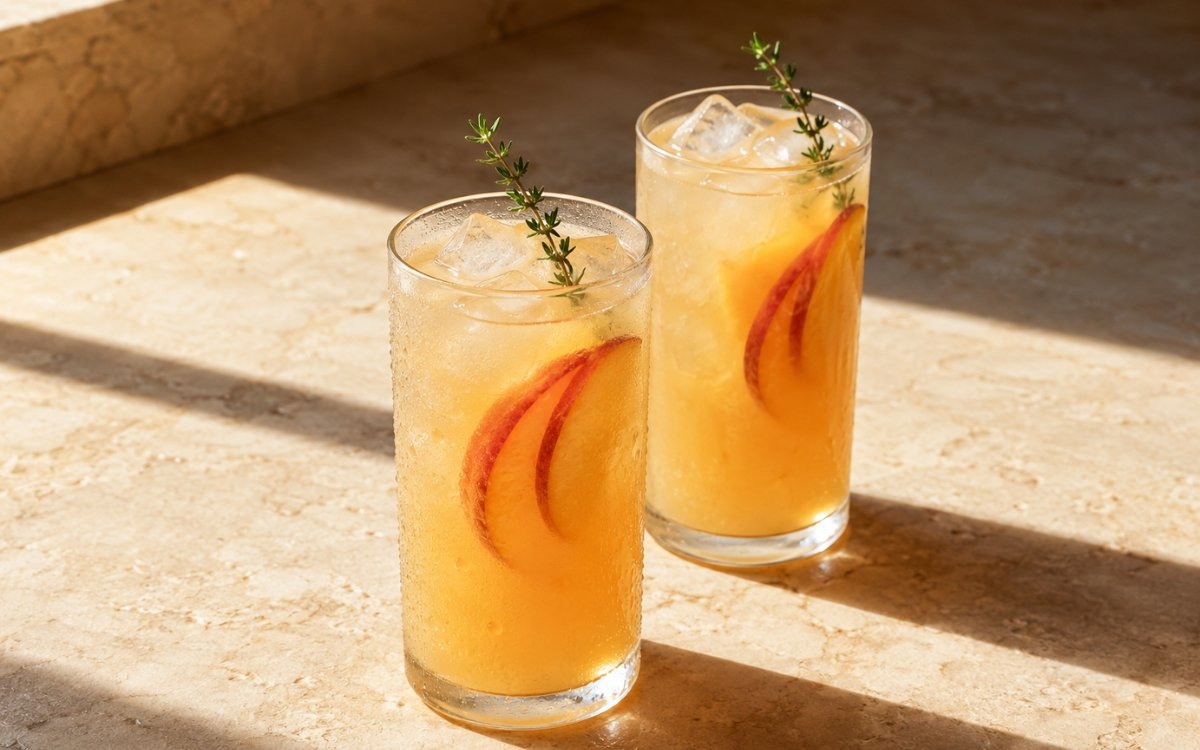
- Refrigerate for 1–2 hours until completely cold. Fill glasses with ice. Pour the chilled peach lemonade over the ice. Garnish with a fresh thyme sprig and a peach wedge if desired. Serve immediately while cold, bright, and specifically peachy.
Notes
White sugar is the specifically correct sweetener for a classic peach lemonade — its neutral sweetness provides no competing aromatic character and allows the peach's own flavour to be the sole sweet register. Honey or brown sugar would add their own aromatic characters, producing more complex but less specifically clean results than a traditional peach lemonade's format requires.
The note in the directions about not adding plain sugar to cold lemonade is a practical technique point: granulated sugar at cold temperatures dissolves very slowly and incompletely in cold liquid, leaving visible sugar crystals that settle at the bottom. Any late sweetness adjustment must be made as a simple syrup — equal parts sugar and warm water, stirred until dissolved — which integrates immediately into cold liquid without this problem.